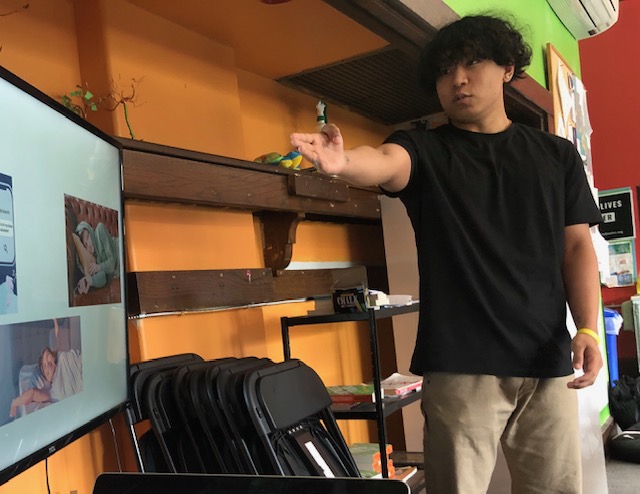
Burlington City & Lake Semester is a cohort program, and the vast majority of our learning takes place as a group. We learn together, and we learn from one another. There is one element of BCL, however, that students take on independently: their Inquiry Projects. Over the course of the semester, students engage in three inquiry cycles. In each one, they begin with an open-ended question. (BCL teachers often say that if the question is something that they can answer in a few weeks, then it’s too narrow a question!) Students then engage in qualitative research methods in pursuit of that question, but not in pursuit of its answer. When they present, they actually end with a new question. Students’ insights are always profound, but by demoting expertise, their sense of wonder expands.
In school, you usually learn in the classroom or do your research based on topics your teacher gives you, but Inquiry Projects give you a chance to learn about whatever you want from wherever you want.
– Djani
Inquiry projects are different from normal school assignments, because they require you to go out in your community and engage. To do an Inquiry Project, it requires you to think about a topic within your community, and get more knowledge about the places or things around you. You get to do your own thing, which is very nice. It’s much less stressful discovering your own learning and takeaways about topics that interest YOU. It’s also a great way to work on organizational/ public speaking skills. What’s challenging, though, is working out interviews or narrowing down thoughts to meet the time requirement.
– Summer
These projects really show what the students are passionate about and how they can teach other people about the topic.
– JB
The range of topics you can explore is much wider and more relevant to our Burlington community.It feels like being an audience member to a TED talk, I see the value in the research other people do for their presentations… It’s impressive and inspiring!
– George
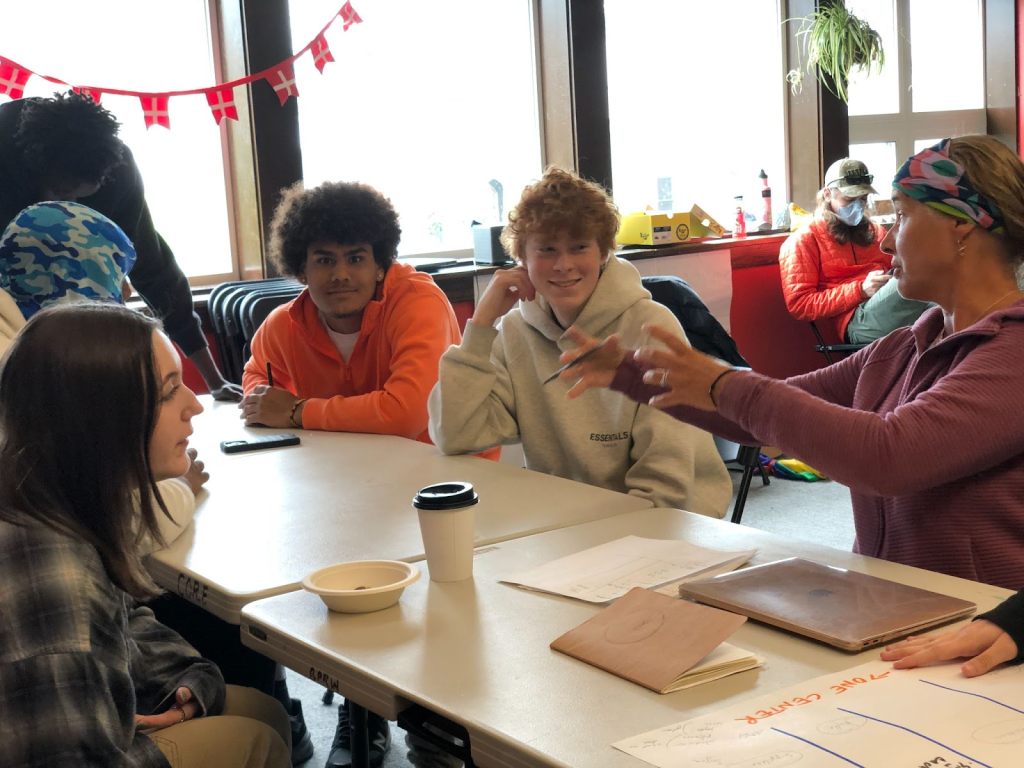
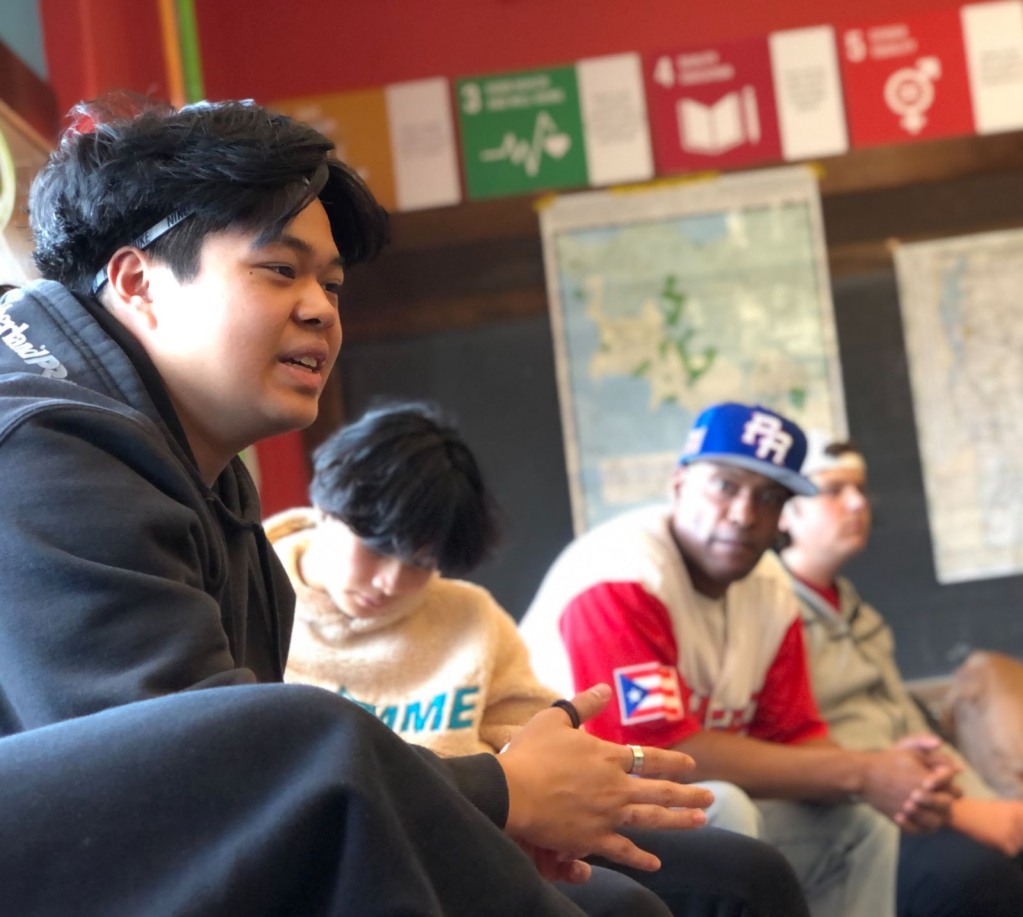

A key element of Inquiry Projects is choice. Students aren’t given a list of topics to choose from. Their learning stems from authentic curiosity. This can be off-throwing at first, since conventional school doesn’t offer much space for open-ended questions. Without practice, it’s understandable why this mindset may have atrophied over time. But human inquiry is irrepressible. It’s our natural state, and the freedom to choose the direction of one’s learning is liberating.
I think it is more motivating and engaging when you choose a topic you are interested in. It is easier to do a topic you’re interested in, rather than a topic that is easy. Interesting topics create interesting presentations.
– Eh Law La
I feel like it’s a lot easier for me to learn because I get to study something I’m already interested in rather than in traditional school where you’re given an assignment and you do the research but forget everything as soon as you press that submit button.
– Ngang
We get to choose what we are interested in and learn more about it. We don’t have to pick a list of project Ideas that we don’t connect with. We also get to talk with people or experience things rather than looking things up online. Having a choice improves my engagement because I get to pick what I am interested in. I don’t have to sit through a lecture about a subject I don’t enjoy or connect to. It makes it so I actually want to continue and do the work.
– Sasha
Choice makes students more engaged as what we pick is supposed to be something we want to pursue. And I think that is the whole point of the way it’s done. To give us space to learn about something we care about.
– Jayde
Choice and freedom influences my motivation and engagement because then it means that I can do a project or research on whatever that INTERESTS me, and not something that a teacher just tells you to do on a random topic that they pick/choose. With my own choice I feel as though I motivate myself to learn the most out of the topic I choose and decide to research on to present or hand in.
– Shayer
It feels good to do an inquiry project because I can put my ideas out there and teach other kids. It motivates me because it’s in the community and not a real type of assignment I’m used to and makes me want to do it more. It’s cool because you can see really what people are thinking of. It’s also fun to hear what people have to say and what they learned about.
– Kiernan
Presenting is kinda nerve racking, but it’s kinda nice to know what people are curious about
– Moe
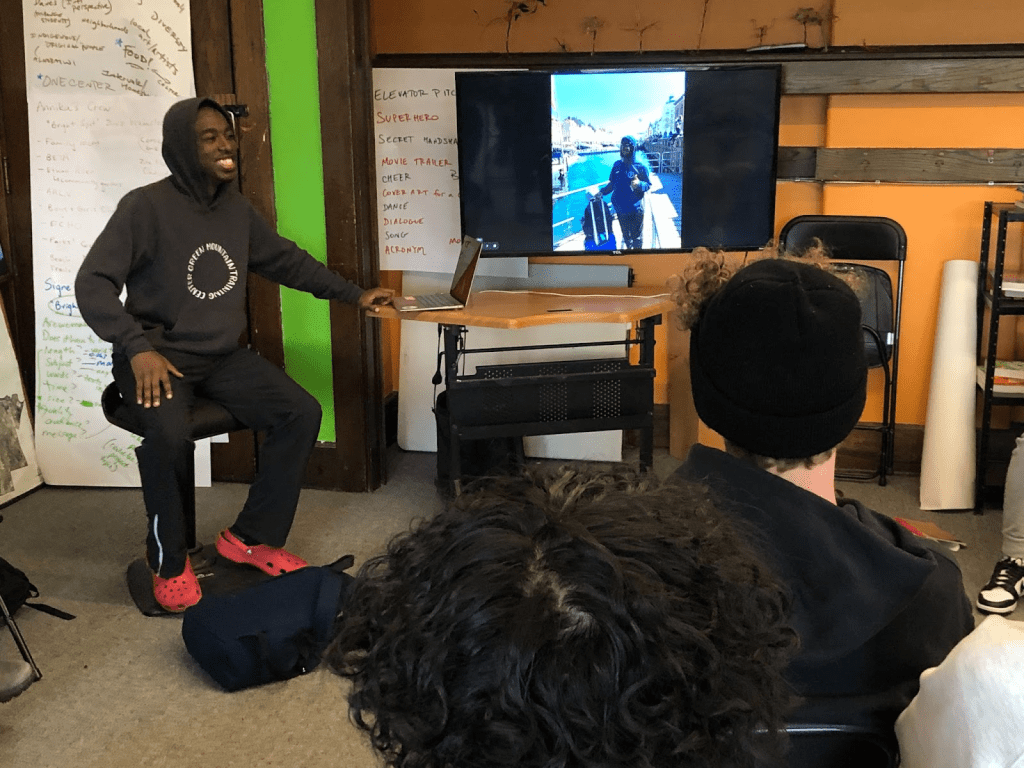
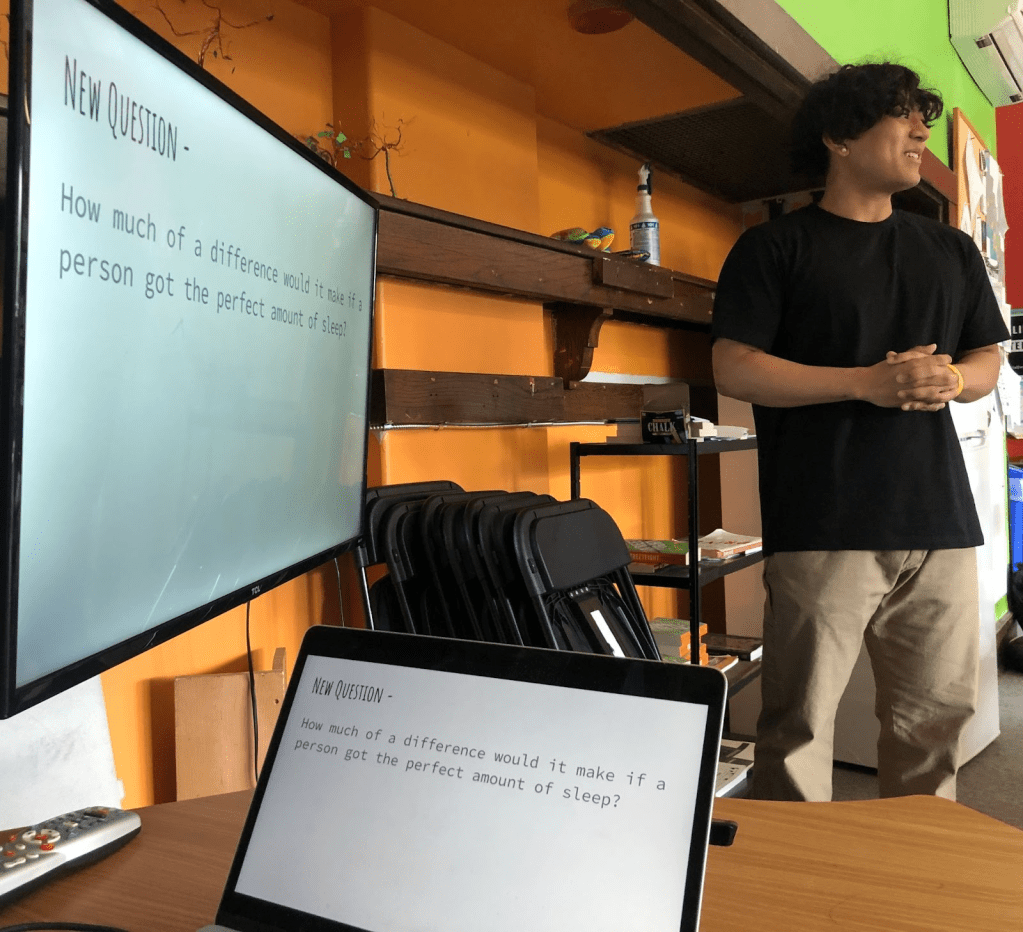
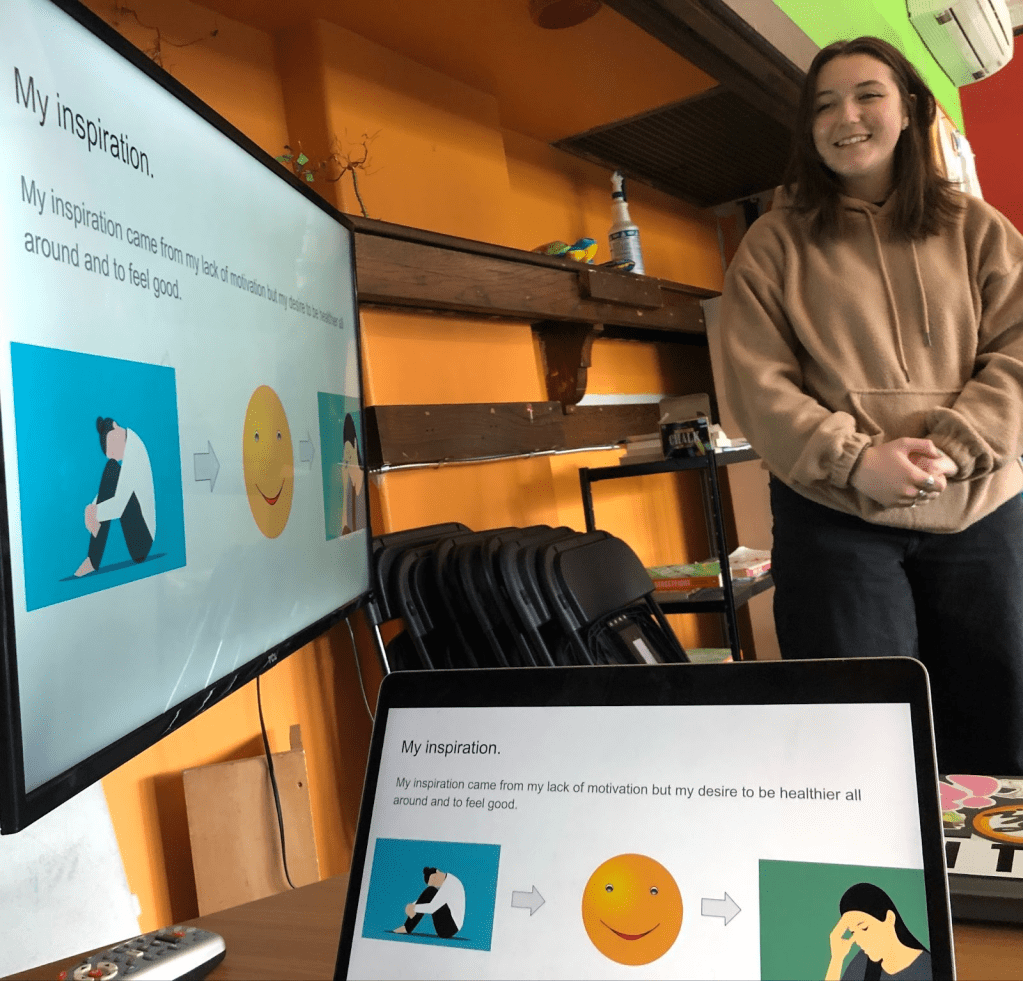
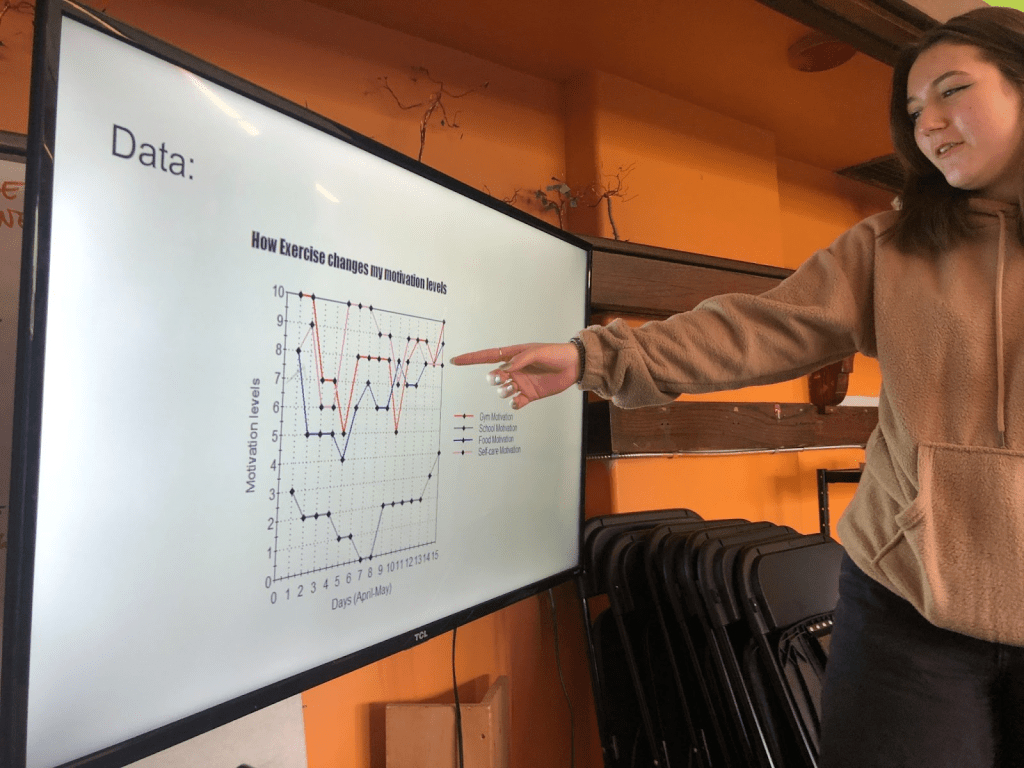
Inquiry Projects always end with a new open-ended question, but for students’ final project, they also need to connect their learning to BCL’s essential question: What Does It Take for a Community to Thrive? Students’ answers to this question were inspired by their interviews, observations and real-world experiences, and were as diverse as the topics they explored.
For a community to thrive you need access to clean natural areas that everyone can use and enjoy.
– Elliot
My Uncle said, “We were all created equal in the eyes of God, so we don’t have the right to judge, only God does.” For a community to thrive, it takes people of all backgrounds and religions to respect, and support each other.
– Majeni
For a college community to thrive, they need people who will positively impact and be a positive influence and member of the community.
– Henry
For a community to thrive, it takes engagement in the school system.
– Walter
For a community to thrive, It takes sacrifice from many people, investments into the land and the youth, and for the people to come together.
– Nevin
What I think it takes for a community to thrive is a bond. What I mean by that is by having relations with the people you surround yourself with… Doing this can allow this bond to be stronger and can help you have a sense of belonging in this community. This bond can also help [because] if you have a problem you can feel comfortable asking for help within the community.
– Khiem
For a community to thrive, the community needs to come together to clean up litter in their neighborhood, on the beach, and in the ocean. We also need to connect with people around the world. With these connections, we can make faster progress, while having a big impact on our environment.
- Moe
For a community to thrive, it needs stability and resources for families, and a positive environment in which to raise children.
- Ethan
Having a thriving community means feeling safe in your home, neighborhood, and city. A thriving community has access to the resources they need and have a sense of belonging and trust within the community. Everyone is given the acknowledgement they need.
- Sofia
 Burlington City & Lake Semester