It’s been quite a few weeks. This is the period in the BCL program when we typically turn our attention to challenges that the city is facing, and the choice of what to study isn’t scripted. The beauty of having an emergent curriculum is that each BCL semester group can respond to whatever is important, urgent, or real.
In past semesters, students have investigated conservation, social justice, land-use planning, the 8|80 city, urban forestry and urban ecology, equity metrics, and Burlington’s toxic legacy. Our emergent curriculum allows us to turn our gaze to whatever deserves attention. This feels like a superpower, especially given the pervasive constraints of the conventional school system, and we’re deeply grateful for our agility. However along with that agility comes a sense of responsibility. This is especially true when an issue is front and center–as police ethics were in 2020. Our responsiveness makes it hard to justify looking away. If it’s real, and it’s within reach, it feels like we need to go there.
Because of this, a significant part of planning a Burlington City & Lake Semester program involves asking a simple place-based question: What is it, right now, that is so compelling, so front-burner, that it deserves our attention? Often, we are drawn to complex dilemmas. (In fact, it seems that we actually have a particular hunger for them.) In some semesters, there are a variety of issues to choose from. In the early months of 2024, however, there is a clear front-runner. It’s something that is inescapable. It frequently finds its way into casual conversation; it’s the topic that dominated the recent mayoral race: the complex, interlocking crises of housing/homelessness, substance use/addiction, mental health/wellness, and justice/public safety.
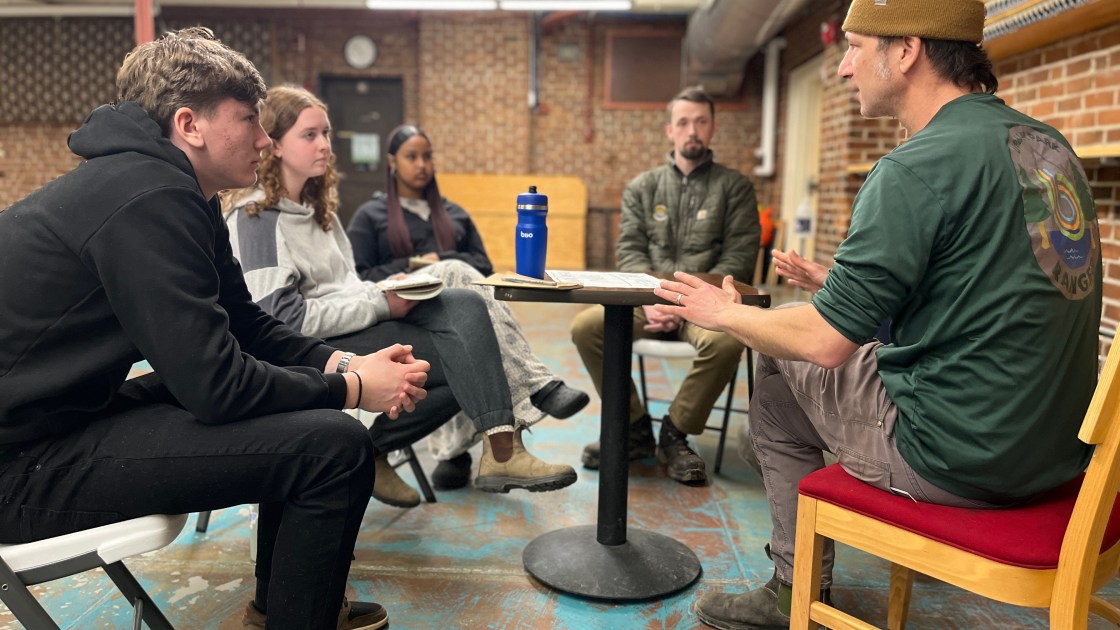
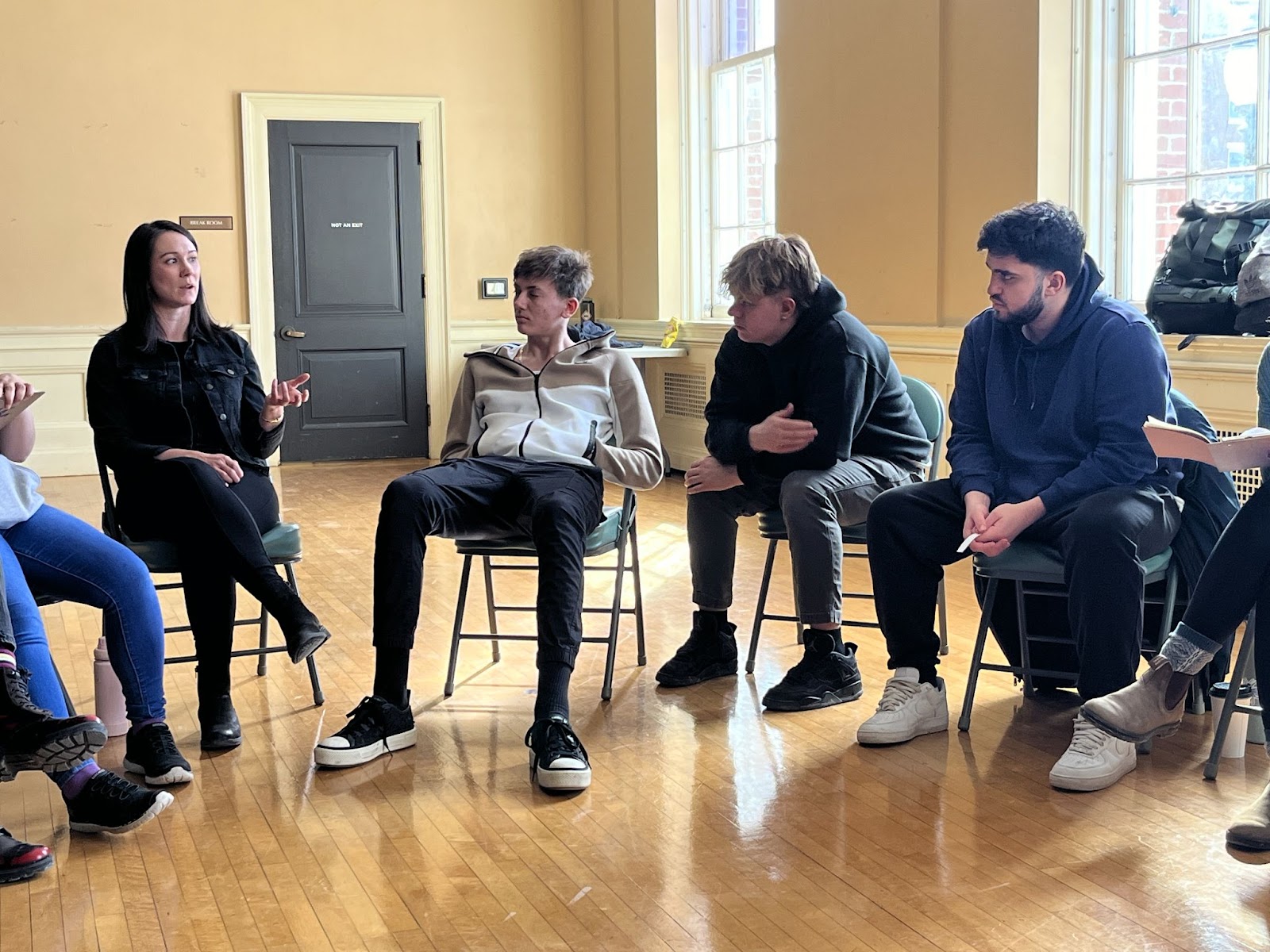
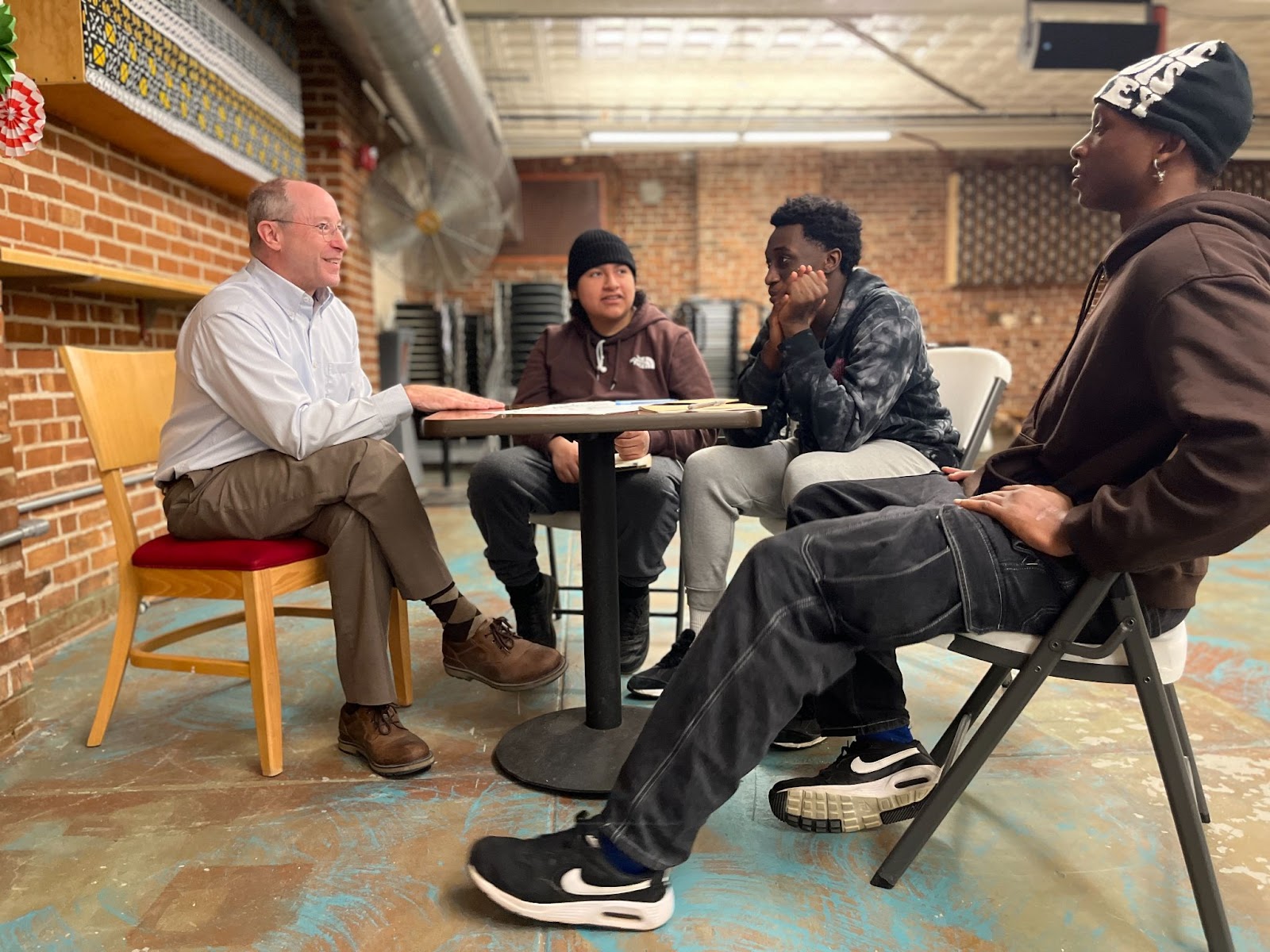
In BCL12, we’ve come to call it “Burlington’s Complex Crisis.” It’s complex enough that no one informant can help us make sense of it…so, in typical BCL fashion, we’ve met with dozens of partners, who represent a wide variety of community organizations:
- Burlington Parks, Recreation & Waterfront
- Seven Days
- Champlain Valley of Economic Opportunity
- Champlain Housing Trust
- Association of Africans Living in Vermont
- City of Burlington – Community and Economic Development Office
- Howard Center – Safe Recovery
- Spectrum Youth Services
- Outright Vermont
- City of Burlington – Community Justice Center
- City of Burlington – Youth Restorative Justice (CJC)
- Burlington City Council
- Burlington Police Department – [CAIP] Crisis, Advocacy, Intervention Programs
- Burlington Police Department – Community Support Liaisons
Our collective inquiry has led us to more questions than answers… How do we even conceptualize the problem? Is it a public safety issue, requiring a public safety response? Is it a systems-failure, requiring a political response? Is it a public health problem, requiring a public health response? Is it a community problem, requiring a neighborhood, or human-scale response?
We may not have answers, but students in BCL12 certainly have a far greater understanding of the complexity of the challenges we’re facing.


It has been enlightening. I think my biggest take away would be how most if not all these issues are interconnected in some way or another.
– Kylee
I think it’s been an interesting experience. I feel like school doesn’t really give students the opportunity to get an understanding about some of the real life issues our community is facing. My biggest take away since I’ve been in BCL is to be more mindful to others or those who are less fortunate.
– Ifrah
It’s been nice to explore these issues because in our everyday lives we’re not really thinking about what’s going on in the real world, and when we’re at the school they’re not taking us on these walks around the city. We’re not meeting with community partners to get the information we need.
– Khamis
Exploring these topics has been very eye opening and insightful. I knew we had a homeless crisis and a drug problem but I didn’t fully understand how bad it was until I got to BCL. My biggest takeaway has to be that running a community is hard…
Burlington has a 0.1% vacancy rate, meaning there are basically no homes available. Landlords can jack up the prices … And speaking on the topic of renters, 60% of Burlington residents are renters. Most of Burlington’s housing stock is very old, and would be better off renovated. Ever since I started BCL I’m beginning to see more and more problems with our city and I feel like the city has its priorities mixed up. What I want to know is how do you even get to a point of 0.1 vacancy rate without realizing beforehand how low the rate is getting?
Even though it’s bad, something that gives me hope is knowing that we have so many people and so many different organizations trying to help people. Another thing that gives me hope is when organizations do things to raise awareness because the more awareness we have, the more people we have that can help.
– Ahmed
I think the police and the public should get along with each other, because in the end we are all just human. Who would we go to if there’s something bad happening or like if someone was being unsafe in public? They’re here to protect us, not to kill us. Yes, I do think some cops abuse their power, but most are there to help others.
I feel like I’m getting more understanding about these topics, which gives me more of a perspective.
– Zeke

It has been an interesting crisis to explore. I feel like I understand the topics really well. My biggest take away would be understanding that people always have a story, wether it be a big or a small one and it’s always important to get to know the person before you judge them and it also helps to get and understand a person so that when your helping them they don’t feel unsafe or unheard.
– Bahja
My big take away is that in the community we should all be equal and have a sense of belonging in whatever we are doing. I took away that in a city filled with so much crisis, we can’t fix everything. We can do what we can to get a deeper understanding of our community. What gives me hope is that I have others around me who see a problem…and are willing to take the time to make a change, and to do what we can to help our community thrive.
– Fataiya
I think learning from actual organizations that are used to help residents of the city taught me more of what Burlington actually needs…It is easy to overlook Burlington and just look at all the bad that is in this city. However connected and talking with people who work so hard to support all aspects of one’s life really does give me hope. Hope that so many people care and are actively trying to make the world a better place. They do not care if they solve the issues, they just care about the individual in front of them. That was incredibly valuable to be able to learn about these organizations that are important resources for the Burlington community. It helps me start to understand what the actual needs of the city are.
– Rory


Neil Preston’s stories amazed me! He has made lasting friendships and connections with the homeless around Burlington, by engaging people thoughtfully and empathetically and helped them get jobs and get back to normal lives. An outside observer would never have guessed those people were “charming, educated, very intelligent,” (as Neil described them) despite having addictions. It’s amazing to be able to talk to experienced, compassionate people working to help Burlington, and I have started to feel more connected and curious about the back stories of everyone in Burlington. I know to have empathy.
– Helen
There is definitely a big crisis in Burlington that needs our attention. But the fact that we meet with people that are doing their best for the community helps us thrives and eliminate the crisis that we face.
– Hilowle
It is overwhelming thinking about mental health, but I am hopeful that the homeless community can receive shelter, food and warmth.
– Riley
My biggest take aways are about housing and homelessness. I think that’s a big one because a home is where you start a lot of things such as family, work, relationships. Addiction is another big thing also, because it’s hard to just tell someone who is addicted to drugs that they’re gonna have to change.
Crime is getting worse in Burlington too…and people are feeling unsafe to go out and do things at certain times. Kids aren’t going out like how it used to be. I want the same experience for my little brother that I had, playing outside, playing in a lot of spots and hanging out in the neighborhood. [For things to get better] in a big community and a thriving community, we need to work things out with each other.
– Mustafa

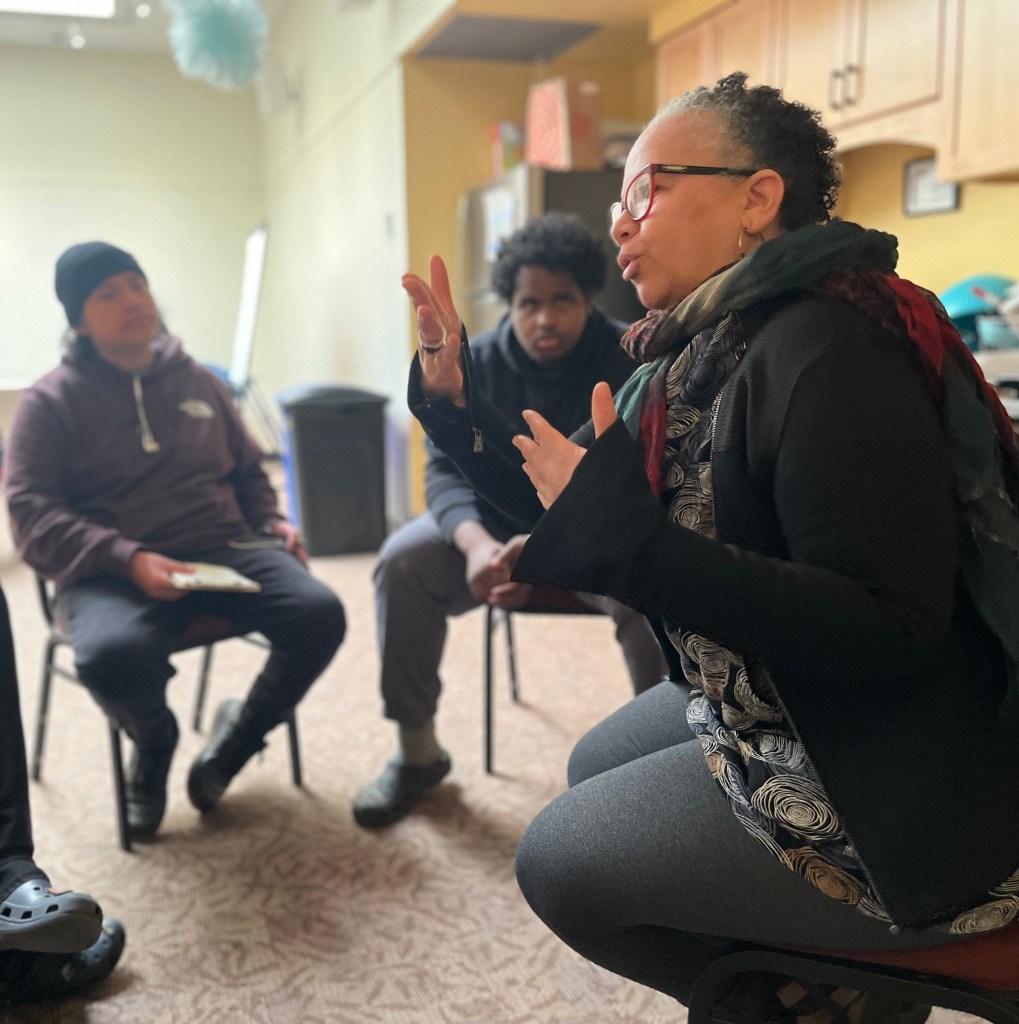


My biggest take away is the connection of all the issues. When we don’t see how different types of community service groups working together is vital to our community, Burlington suffers. As [BPD Assistant Director of CAIP] Lacey Smith pointed out, the “defunding” of the police is not the only reason for the increase in crime. After the cut in the police department passed, there was little else done to cushion the effect on the city. There was almost a 8-month delay in implementing the three community support liaison positions approved by the city council. Even then, had we hired immediately, would those three people have been enough to support the entire city of Burlington?
One highlight was Lacey Smith’s statement, “Yes, and.” It shows how there is no one answer to any issue, and how many solutions must go hand in hand to actually be effective. Yes, we need more police, but at the same time we need more community service liaisons to do proactive outreach in the community. Together they thrive. Another example is that many times providing housing is the first step for people at the margins and allows for people to seek more help and resources.
– Layla
When we met with Kelly, (a youth manager) at the library, she convinced me of the ineffectiveness of punitive justice and need for restorative justice, especially for young people. The victim should work towards a solution together with the crime committer. Within a community, Kelly said “we should all have access to the social services we need and to embrace the humanity and dignity of each other. She said we should be accountable for everyone as if they’re our own children.” I don’t really want to be accountable for kids who commit crimes, but I recognize that it is what the community needs, caring about people even though you’re not personally responsible. And after learning how the housing and justice system works against people, my biases have started to erode. The community should be accountable for me in order to thrive.
– Helen
Something that gives me hope are people like Josh Florucci [from Safe Recovery], people who are able to see the good in people and see the change. Also objective leaders who are standing up in our city to make a difference.
– Dylan
While talking to Josh, someone who has sobered up after 11 years, he mentioned wanting to help people and help his community. He works in at Safe Recovery, and works to have safer drugs that are not tampered with. Josh and his personal experience made me go into deeper thinking about how the drugs got here in the first place. How did it spread? I did more reading, and thought about how people who use drugs are suffering and need help. Some think the drug is healing them…and that it makes me only think that there is one solution: to try and prevent the use of drugs before it even touches a human around me, because people like Josh can only help so much by guiding you on what’s right.
– Fataiya
This has been very eye opening to me. I have learned more information in the past week here than I ever have about Burlington anywhere else. Im now very aware of the situation in Burlington. One thing I still can’t figure out is how do we solve these problems? What gives me hope is the people we meet with. And that’s just the tip of the iceberg, because there are probably hundreds of other people like them out there. It gives me hope that they are trying their best to give people in need a chance to make their life better.
– Semin
 Burlington City & Lake Semester