From January to May, a through line emerged. This often happens in BCL: experiences cohere, topics coalesce, and a powerful theme materializes. In BCL14, that theme was fashion.
Throughout the semester, fashion became a lens through which to understand the local and global economy, labor practices, corporate values, environmental impacts, and creativity and resilience. With the help of dozens of partners — museums, artists, non-profits, and companies — students added remarkable complexity to something they once took for granted.


It was really interesting to hear about fabric at the Mill Museum, because I now know how it’s made and I’ve seen videos of the machine she had there. Seeing the history, I was really amazed.
- Nasra
It was interesting to consider the production of clothes today, mainly microplastics and polyester, which is much different from how the natural fiber clothes were being manufactured at the Champlain Mill.
- Harper


After our time at the Rubenstein Lab and at HULA, I’m left thinking about the production of clothes. It’s crazy to think about how much waste is produced to create prices of clothing. It’s wild to think about how much microfibers can be released by individual pieces of clothing. Everyone should watch for what type of materials they are wearing. We need to think about how materials that are synthetic are harmful to the earth.
- Byron
Our exploration into sustainability of fashion has changed how I think about consumer choices – mostly due to the fact that most clothes use so much oil and chemicals. I now know that this is not sustainable, so I think it’s best to change our habits. Specifically, Cora Ball was a very interesting concept to me, because it reduces any micro fiber/plastic in washing machines in a very unique way.
- Thomas
The Cora Ball is interesting because it’s something light and easy. Everyone could have it in their home and it would be effective.
- Kali
I think people should pay more attention to where they get their clothes and what they are being made out of. I think this could start relating to my life. I could start looking at what my clothes are made from and where I get it from. And the thing is, everyone could start doing the same thing.
- Sokkhna


As I sat in the classroom, perched upright, I leaned in to hear the terrifying words come out of Emily: “3 out of 5 items of clothing are discarded within a year of production.” There are 8 billion people on the planet. 60% of 8 billion is 4.8 billion. This is so wasteful and hurts the environment. When we also look into the specific details of how these clothes are being made we learn that the labor workers are being exploited and overworked, sometimes without pay. These are some of the reasons newer companies are starting to take action in order to build clothing brands of values of sustainability and care.
- Hayden
After doing my closet audit, I realized how much stuff I own that I don’t even wear. I had a ton of t-shirts, and most didn’t fit, but some I just didn’t like anymore. It made me think about why I even had so many. Then, after learning about the process a single T-shirt goes through to be made, it really hit me. It’s kind of crazy to think that we just throw these clothes in the back of our closets or give them away without even thinking about the effort it took to make them. In BCL, we’ve talked about fast fashion and how a lot of it comes from places where workers are underpaid and exposed to dangerous work environments.
Learning about that made me feel kind of guilty about how many clothes I own that I don’t even use. Now, I want to be more mindful of what I buy and how much. I think people should really think about their closets and where their clothes come from, and how their choices affect others. A simple t-shirt might seem small, but the process behind it and the people involved are a big deal. If we all thought a little more about that, maybe we’d waste less and appreciate what we have more.
- Quinn
Our discussions about fashion and its effect on the environment have been really interesting to me. I am someone who definitely thinks about fashion during my day to day life…so learning about the effect it can have on our world has been really interesting to me. Hearing the adverse effects of something that I had not really thought about has definitely been eye opening. For example “On average, it releases 10% of worldwide greenhouse gas emissions annually.” Additionally, “57% of discarded, unsold, and used clothing ends up in landfills.”
I keep coming back to the stat that Emily told us about how the average American purchases 68 new garments per year – five times more than were purchased in 1980… One solution is shopping secondhand. Before I even started taking the environmental factors into mind, I was shopping second hand to save money, and to buy older clothes that I like the look of. For example, at Battery Street Jeans I found an old Rolling Stones tour tee that a fast fashion company could never recreate. So how can we get more people to shop secondhand? To me the answer to this is simple, and that is removing any kind of stigma related to “wearing someone else’s clothes.”
- Jimmy
Over the past month, we have spent lots of time with community partners and as a class studying the industrial manufacturing of clothing. This learning was enlightening for me because most people don’t know about the amount of pollution, waste and environmental injustices that come with the production of our clothes. This connects to the BCL theme of social justice because industrial pollution and waste often take place in poor countries and impoverished places. This can effectively create a cycle of poverty and inequality within communities, while also harming the environment. It’s not by mistake that these industries are placed in communities that can’t economically fight back. I believe it is intentional, so they can permanently exploit and monopolize these impoverished countries to cut costs and make sure that consumers don’t bat an eye at what they can’t see.
- Eli
Learning about the sustainability issues in fashion has made me more aware of the environmental cost of fast fashion. It’s encouraged me to shop less and choose higher-quality, secondhand, or ethically-made items. I now think more carefully before making any clothing purchase.
- Jude
Ghana has become home to some of the most polluted waterways on the Earth, thanks to the Fashion industry. A Guardian article states that “Ghana imports about 15m items of secondhand clothing each week, known locally as obroni wawu or “dead white man’s clothes.” In 2021, Ghana imported $214m (£171m) of used clothes, making it the world’s biggest importer.” If you read that, and then read it again for a second time, you’re reading it correctly. It really does say 15 million items of secondhand clothing each week… That is absolutely insane and ridiculous.
I already try to be aware of my own consumer choices. I buy a lot of secondhand clothing anyway because I prefer it more, but my habits have been reinforced. The fact that buying secondhand helps the environment is an added bonus. Really, everyone should be paying attention to their consumerism in terms of clothing. Clothing is one of the things people can control a lot, so they should be able to control it.
- Harper


In BCL, we went over what natural dying was, how to do it , and how much more sustainable it is. An interesting fact is that a single piece of clothing can go through 5-6 factories when it is being made. The amount of clothing we go through makes an insane amount of carbon emissions, and its not good for the Earth…. I think we should start buying more used and recycled clothing. If every American buys at least a few pieces of recycled clothing it would reduce the amount of waste and would keep the planet more sustainable. In this article, they say that our clothing ends up going to a bunch of poorer countries, creating a landfill which isn’t good at all.
- Keshon
I’m mostly left thinking about how much people don’t think about clothes. Specifically where their clothes come from, like I never really thought about that myself. It’s interesting how clothing is made as well, and how much effort goes in without us knowing.
- Amelia
It’s made me think more about where I buy my clothes. Plus it makes me want to get rid of a lot of my clothes. I think if everyone just cleaned out their closet they’d realize how much of their clothes they don’t need. Plus I think it’s mostly just that we’re unaware of what we have, and that might be why we buy so much.
- Nasra


Fashion usually seems beautiful on the surface, but learning more about it has shown me that it has some really ugly parts too. In Unpacking Toxic Textiles, I read that workers and the Earth both “pay a massive price for these seasonal looks, exposing workers to hazardous conditions and polluting our water, soil, and air,” and “around 20% of global industrial water pollution traceable directly back to the textiles industry.” I realize now how important it is to find other options besides just throwing clothes away. Through BCL, I learned about repairing and reusing clothes instead of wasting them, which felt really empowering… On top of that, discarded textiles “can take up to 200+ years to decompose” and during that time they “generate greenhouse, methane, gas, and leach toxic chemicals, and dyes into the ground, water and our soil.” Learning all of this has helped me appreciate how important it is to change our relationship with clothing and why efforts like repair use and mindful consumption are so important. We need more companies like the Sandbox. Their message is to live sustainably and not get rid of clothes unnecessarily.
- Kali
Something that stood out to me was how the people at the Sandbox are repurposing clothes that would be wasted. This helps the world because the clothes get reused instead of thrown in the landfill. The clothes that I wear also affect people across the world where the clothes are manufactured. There is huge amounts of waste and pollution that come as a byproduct of manufacturing that affect people all across the world.
- Jimmy
A company’s values can change who shops there. I love lots of Patagonia’s messages and ideas, so I feel good using my money when I know that it’s helping, and not just going into a rich person’s pocket. Companies like Patagonia are working hard to not only make quality products that will last to reduce the need to buy new garments over and over again, but are also working with materials that are sustainably sourced as to not add to pollution in the textile industry
After seeing the film Fashion Reimagined at City Hall, I have been thinking about what I can be doing with my consumer choices. I’m also thinking about my garments’ life span, and how I can extend them. The Sandbox is doing great work to repair and save garments that otherwise would have been thrown away. They take what you own and make any repairs or repurposes you want to reduce the amount of clothes that will end up in the landfill. But I still feel like the best way to change the entire industry is to change how people think about clothing. A minimalist movement has been emerging in fashion where you only own what you need and don’t waste money on garments that will end up either sitting in your closet or a landfill. One specific campaign is the “Rule of Five”. This movement promotes only buying 5 pieces of clothing each year, so you have to think about what you are buying and make sure not to waste.
- Finn
Fourbital is also trying to stop clothes from getting into landfills, but in a different way from Sandbox. As a factory, they are using as much of the textiles as they can.
- Jude
For the past weeks in BCL, we have been thinking about the effects that fast fashion has on climate change in the US and around the world, and it has made me realize the extremity of the situation. So many people don’t see the ugly side of fashion. I mean, I have been focused on climate change for a while and never really took the time to think about fashion and its waste. In an article I read, they mentioned ¨in 2021, the World Economic Forum identified the fashion industry and its supply chain as the world’s third-largest polluter. On average, it releases 10% of worldwide greenhouse gas emissions annually.¨
After talking about the landfills full of clothing, it was refreshing to hear that there are people and businesses like Fourbital Factory and the Sandbox that are there to make a difference and help the crisis. Previously, when I rip my shirt or pants, I often give them away to second hand stores and when I stain my shirt or pants I try to dye them so they can still live another life. I have always just done it myself, but maybe the next time I mess up my laundry and accidentally bleach my clothes, which is bound to happen, I will take a trip to Sandbox and have them help! If more people took the time to understand that their choices of how they purchase their clothes could make a significant difference in climate change, maybe there would be a hope for change in the future.
- Izzy
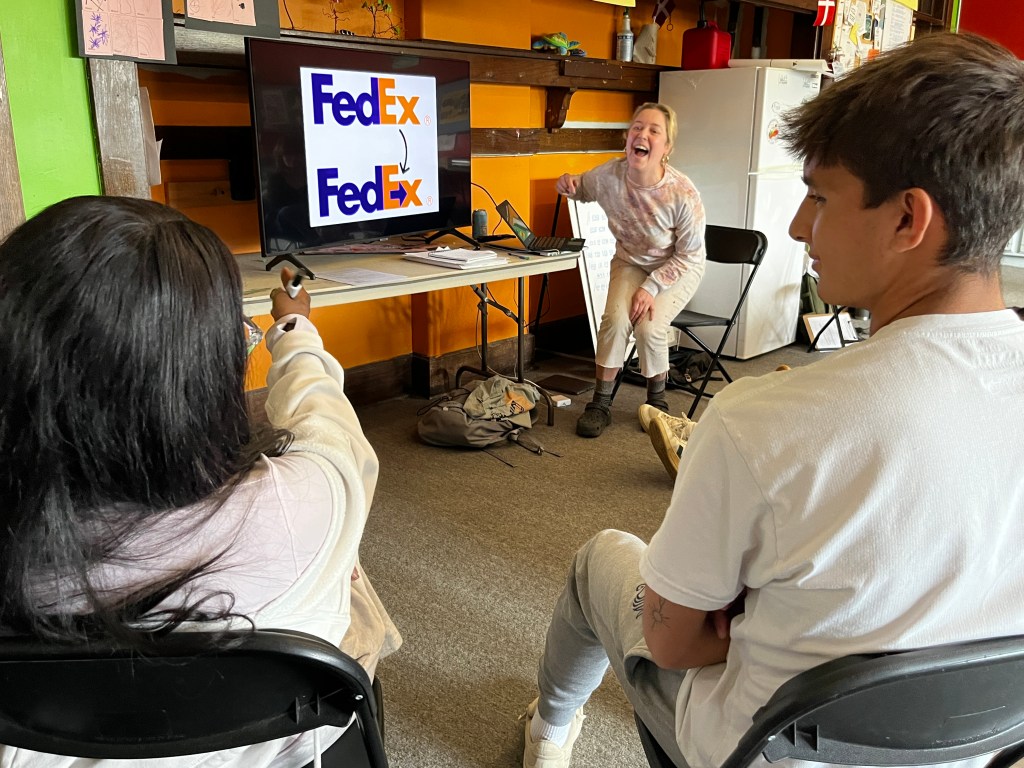
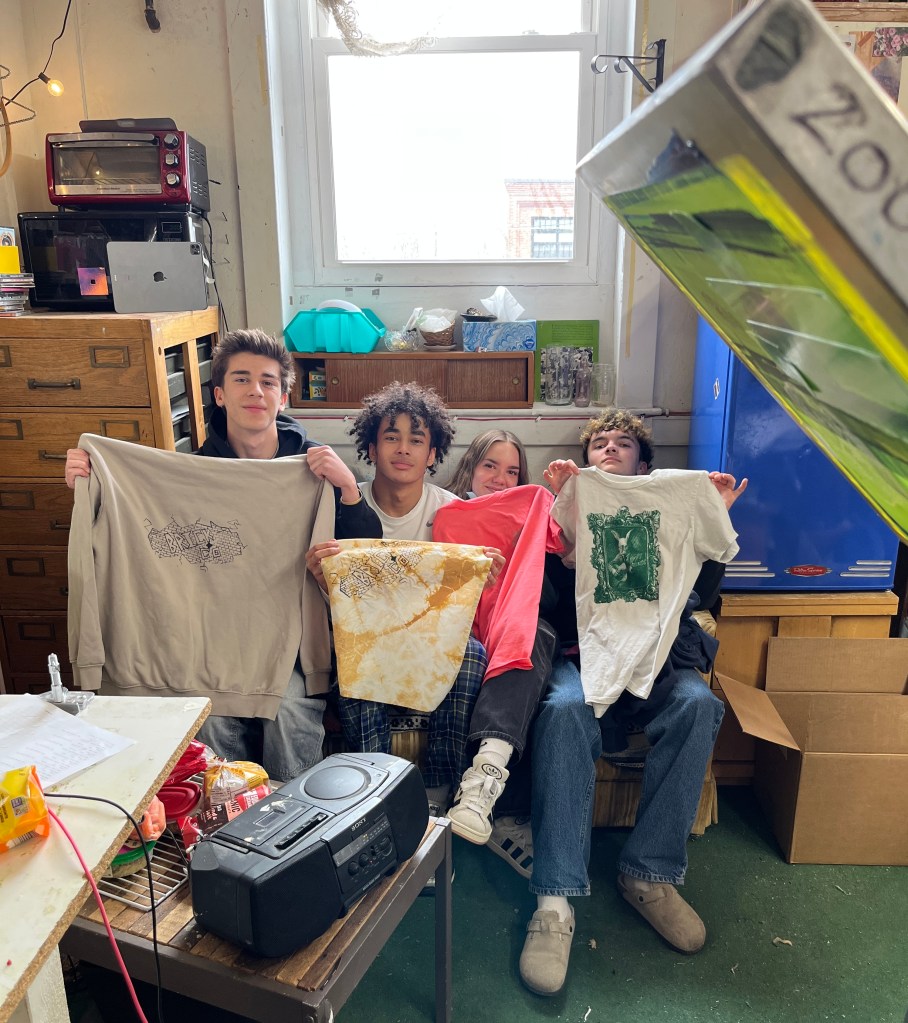
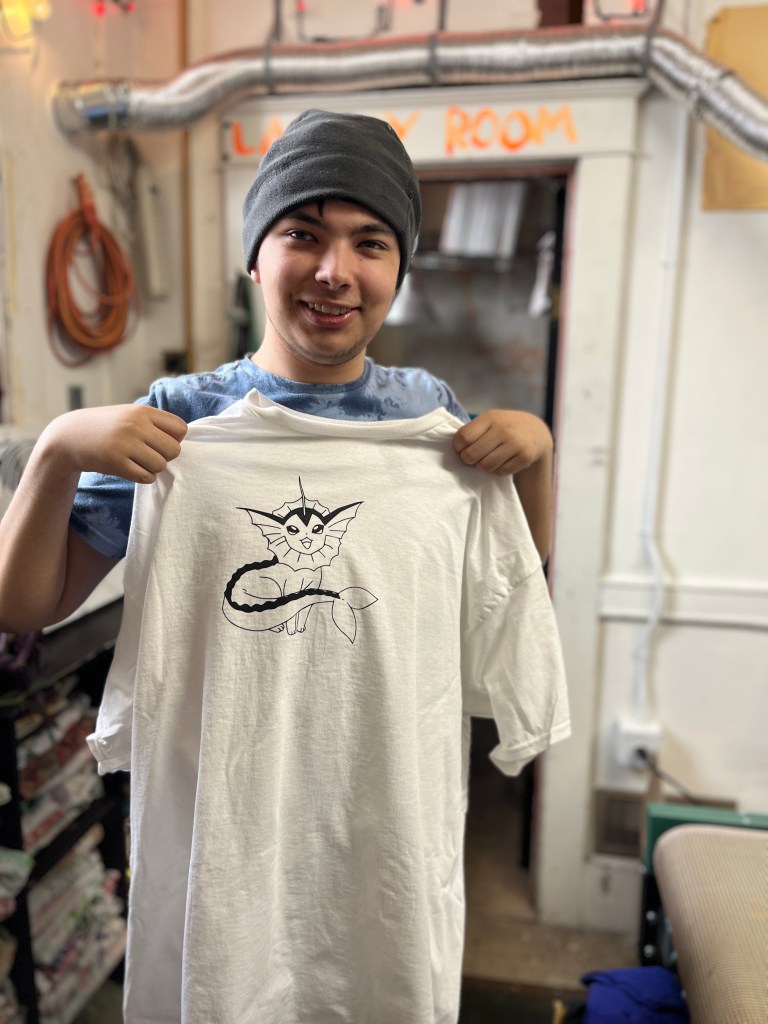
My personal logo is a sun with a cloud in front of it. This logo can explain my personality because sometimes I can feel a bit “cloudy”. And sometimes I can feel a bit “sunny.”
- Thomas
My logo describes me pretty well, I love music, and I love avant-garde art, so a quirky tweed suit rabbit is very abstract and cool.
- Harper
I think my own personal logo represents my love of fantasy and whimsical styles. Especially how I added a magazine clipping of two toads sipping two on a toadstool.
- Amelia


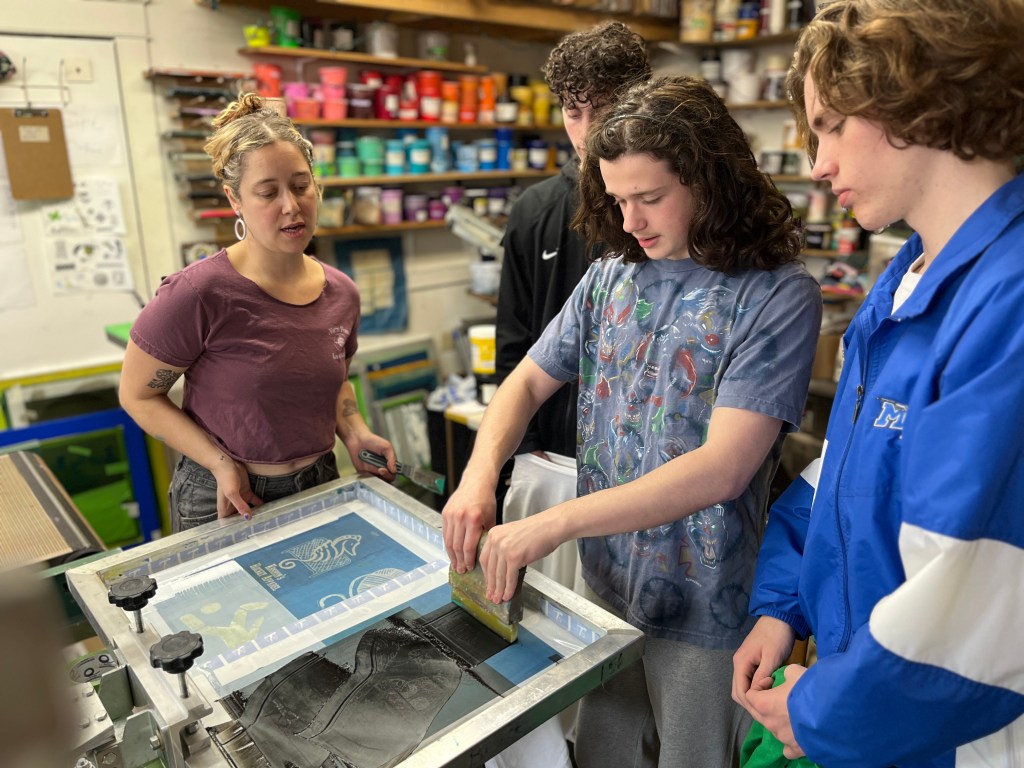
Amalgamated Culture Works really values efficiency and people there take their time to do well with the products that they make. They like to help with small businesses and help people bring their fun ideas to life, and I really like that about them.
- Izzy
I just really liked the feel of the place and also how much community was there between the workers and the shoppers. They clearly loved what they were doing and tried to show that through their work.
- Amelia
My main takeaway from today’s time at Amalgamated Culture Works was seeing the full screen printing process that we have been working towards for weeks. We have been doing each step one at a time, but they have the whole process right there.
- Jimmy

I currently have a closet dilemma, where I have too many clothes, yet there are more clothes that I want. How can someone with a consumer lifestyle change or be more responsible with their purchases? Where would be the best place to give away old clothes and still be able to feel like you’re earning something back?
Clothing is something I’ve always enjoyed. Even though I wasn’t the wealthiest, I’ve always had an expensive taste. Due to this, I would love to own a clothing brand that is affordable, with cool designs, sustainable, reliable, and reusable. I’ve been thinking about making a clothing brand that was sustainable and reliable with high quality materials, that the majority of people can all shop for. I want to use natural materials, and also recycle. Say you have an old hoodie you don’t want anymore. You can bring it back to the store and reuse the material. We can then change your hoodie into pairs of socks and underwear. I have just now realized that fashion is a problem, and by knowing this, I can change my consumer ways and maybe change the ways of others.
I must start now, and use these resources provided from BCL. Starting here, I can follow this pursuit by taking selective majors and minors in college to help further my understanding and be able to make an impact on a larger scale.
- Byron
even as seamlessly as fashion aligns with BCL’s curriculum, we would never have studied it as deeply without Emily Taylor. Emily is BCL’s third Teaching Fellow, and she has brought a lifelong interest in both fashion and environmental conservation. In the following reflection, Emily explores these themes, and invites others to join her. |
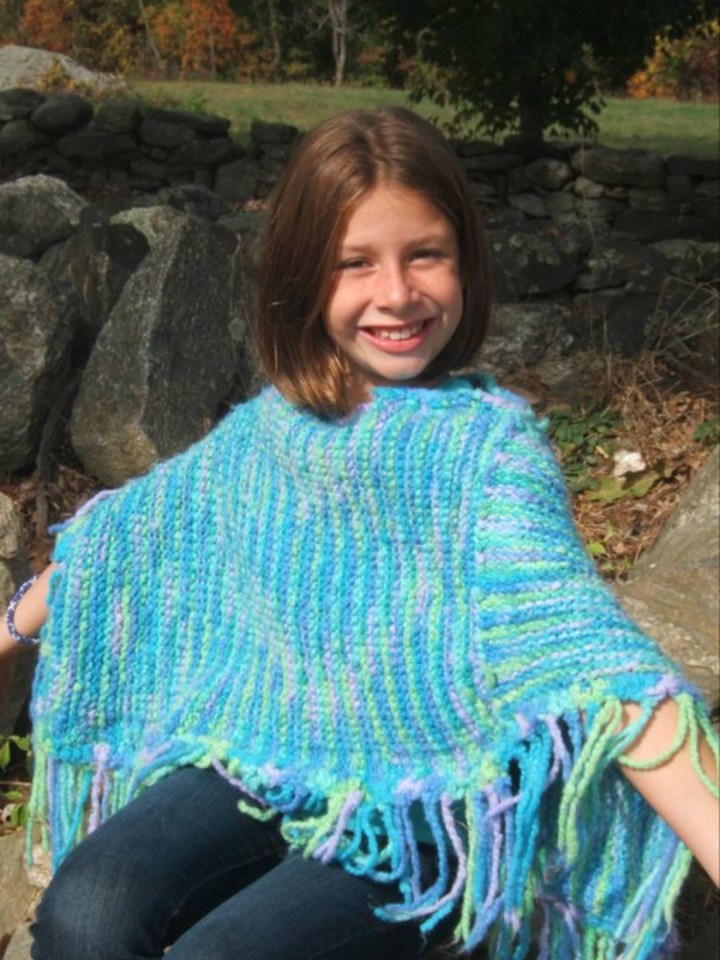
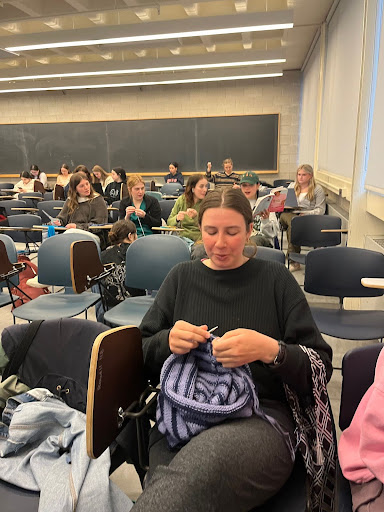
Throughout my life, I have had a close relationship with fashion. In truth, we all do. Many of us own sentimental clothing pieces – that one shirt from middle school that you can’t part with, something a loved one made for you, that dress that just makes you feel so uniquely you, and the list goes. We are deeply, emotionally connected to our clothing and other material things we own. I was nine or ten when I began having an interest in sewing; this was the age when I made my first quilt with my grandmother. The start-to-finish labor of love and complexity was fascinating to me. I loved the process. During my time at UVM, I taught myself to crochet and knit, rounding out my suite of fiber skills. I love the magic of making my own clothes and household items. It allows an emotional connection to an item, without researching online for months to find the perfect pair of jeans.


By the time I was at UVM, I had already sworn off Amazon, Walmart, Target, Urban Outfitters, and many other fast fashion brands due to their climate impact. At that point, I was shopping almost exclusively secondhand. If I couldn’t find what I wanted locally, I would decide I did not need it rather than having something shipped. I thought I knew the whole story. But then, in my final semester of college, I enrolled in a class, Sustainable Fashion, taught by Kelly McDowell, and quickly realized that I still had much more to learn.

The climate impact is only one component of the fashion world. Fashion is a deeply exploitative and untraceable industry. At every step of the process – and there are many more steps than you will ever know– the industry exploits energy, material, land, water, and humans. It is easy for companies to lie to consumers, hide information, and practice non-disclosure. Your tags will often have false or misleading information on them. Every material has its own negative externality. Cotton exploits water and labor, synthetics use crude oil and create microplastics, semi-synthetics might cut down whole forests, and wool often mistreats the animals it relies on, and causes massive pasture land management issues. In this class, I learned more about the fashion industry than I ever wanted to. Once my eyes had been opened, I couldn’t go back. But I also felt that I had a responsibility to continue to share the information I had collected.
BCL creates the space for each teacher to bring their niches and passions to the space. I bring my passion for fashion with me wherever I go. With printmaker Brit Langdon as our artist in residence, and fabric at the core of her work, I saw the opportunity to create space to explore this deeply interdisciplinary topic. I have found in my time with BCL that we often center and focus on topics that are deeply enriching to the curriculum and connect well to BCL’s Themes: Sustainability, Social Justice, Civic Engagement, Community and Sense of Place. All of these are tied to the problem of the fashion world, as well as ingrained in how we might find solutions.
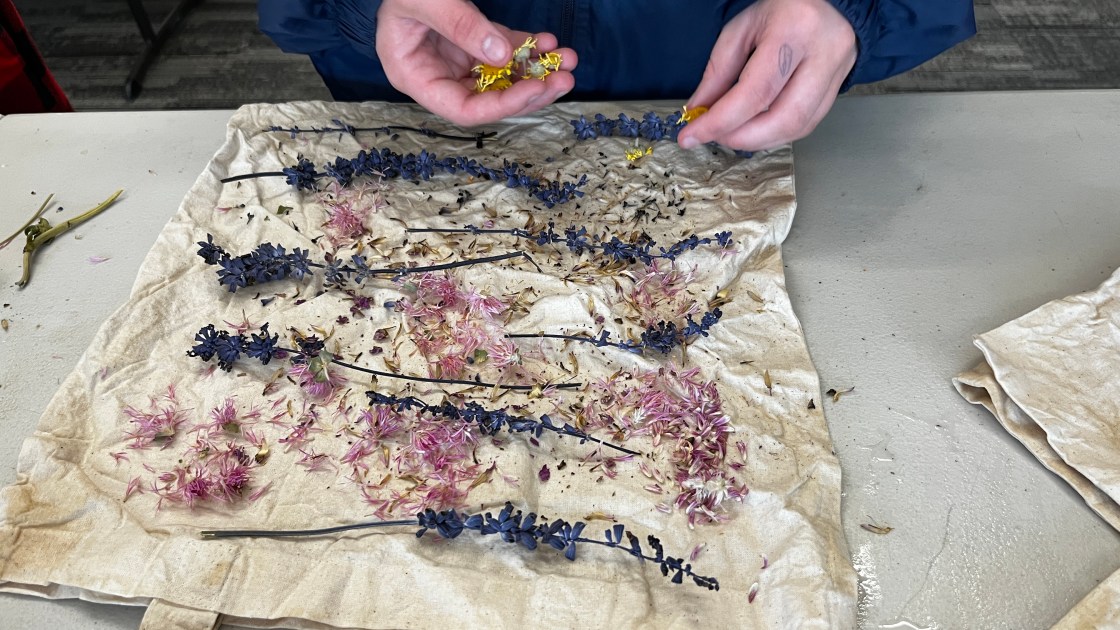
Many thanks to Kelly McDowell for early brainstorming, and helping me put together ideas. The scavenger hunt students completed was inspired by her design, and she helped me collect resources for students’ further research. I am also so grateful for all the community partners we were able to collaborate with on this project. We studied the history of mills in America at the Winooski Mill Museum. We explored the impact of synthetic materials on our land and water by working with the Watershed Alliance, Rubenstein Lab, Rozalia Project, and Cora Ball. We explored fashion innovation at the Fourbital Factory, and mending at the Sandbox. We invited in Shelburne Farms educators, Mallory Schmackpfeffer and Hannah Corbin, to explore natural dyeing. ( No joke, I felt like a fangirl, since since I have deeply admired their creativity and passion for months.)
More than anything, I have been so grateful to the students for their thoughtful reflections and writing. I never knew that this would be a topic that they would also find meaningful to explore but I am so glad that they have. I hope their eyes have been opened and they feel the call to action and change.
 Burlington City & Lake Semester