
By the time Burlington City & Lake Semester students arrive for their first day, they have spent somewhere close to 15,000 hours in school. With the exception of field trips, this essentially means 15,000 hours within the walls of a classroom. There is no doubt that deeper learning can take place in a conventional setting, and classroom teachers in Burlington and beyond are doing their best to help their learners engage, grapple, and grow. But there is something uniquely powerful about embracing the world itself as a learning environment. Outside, a world of learning awaits.
Each September, BCL students are returning from various summer activities, so the adjustment feels different than it would in January. Instead of helping students transition from school routines to a city-based program, the goal is to show them that the place where they spent their summer break has innumerable layers they haven’t seen. When we set out, we want to reintroduce them to the world they think they know, with a perspective they’ve never had before. Luckily, it only takes a day or two, and we’re off and running.


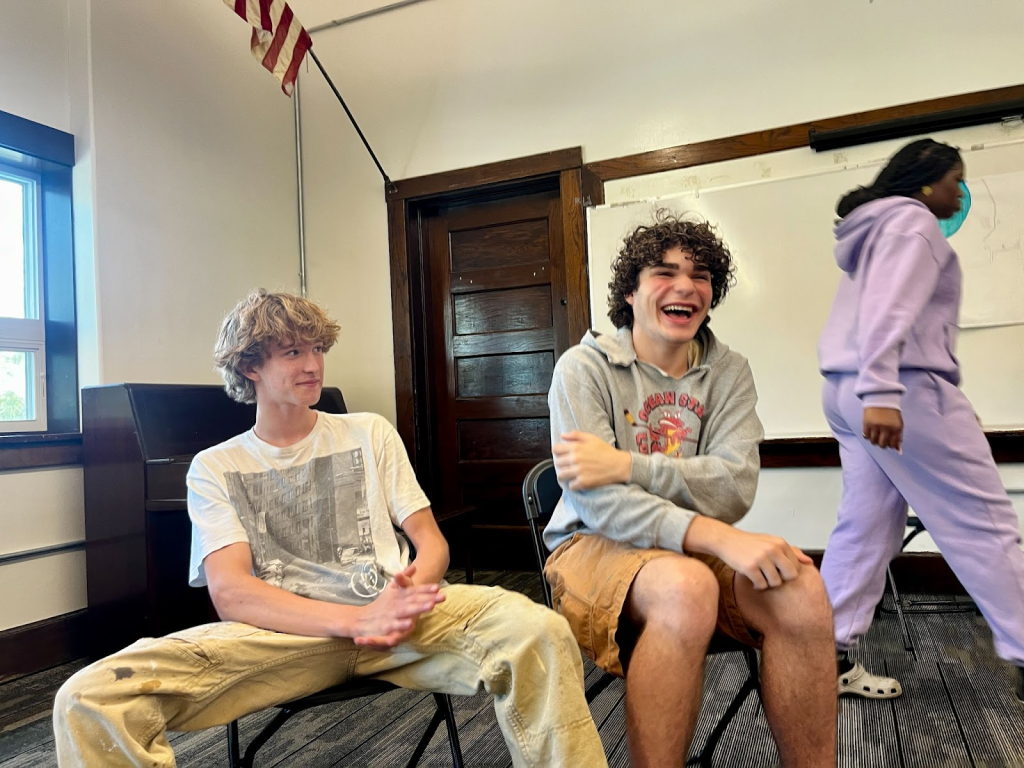
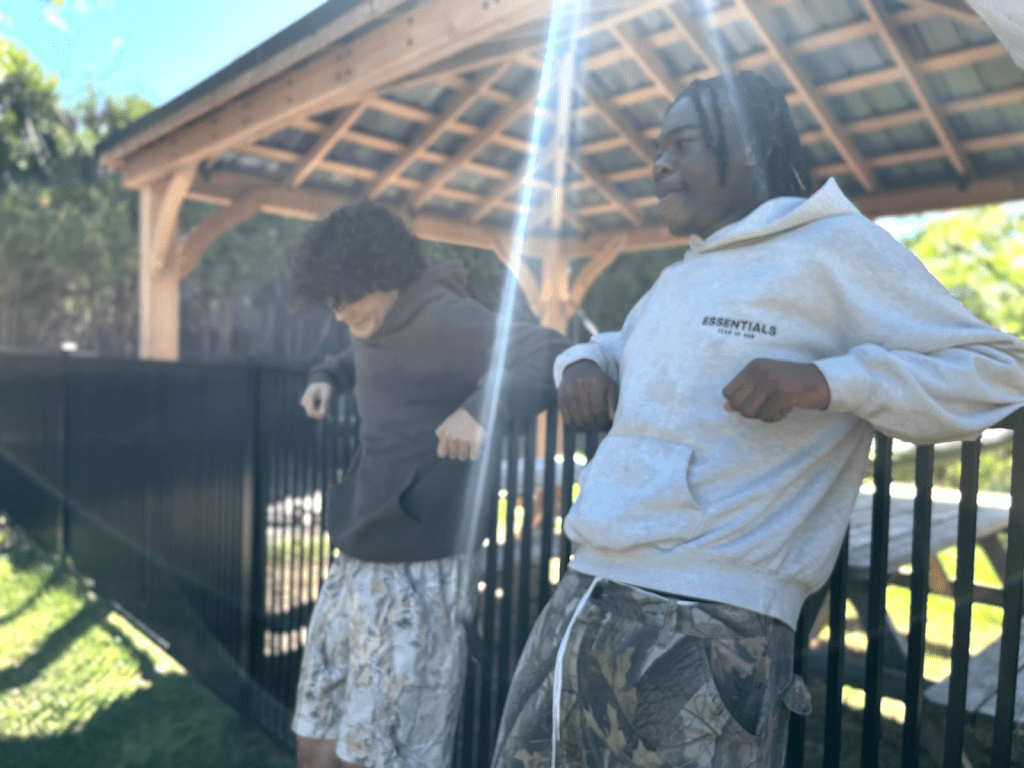
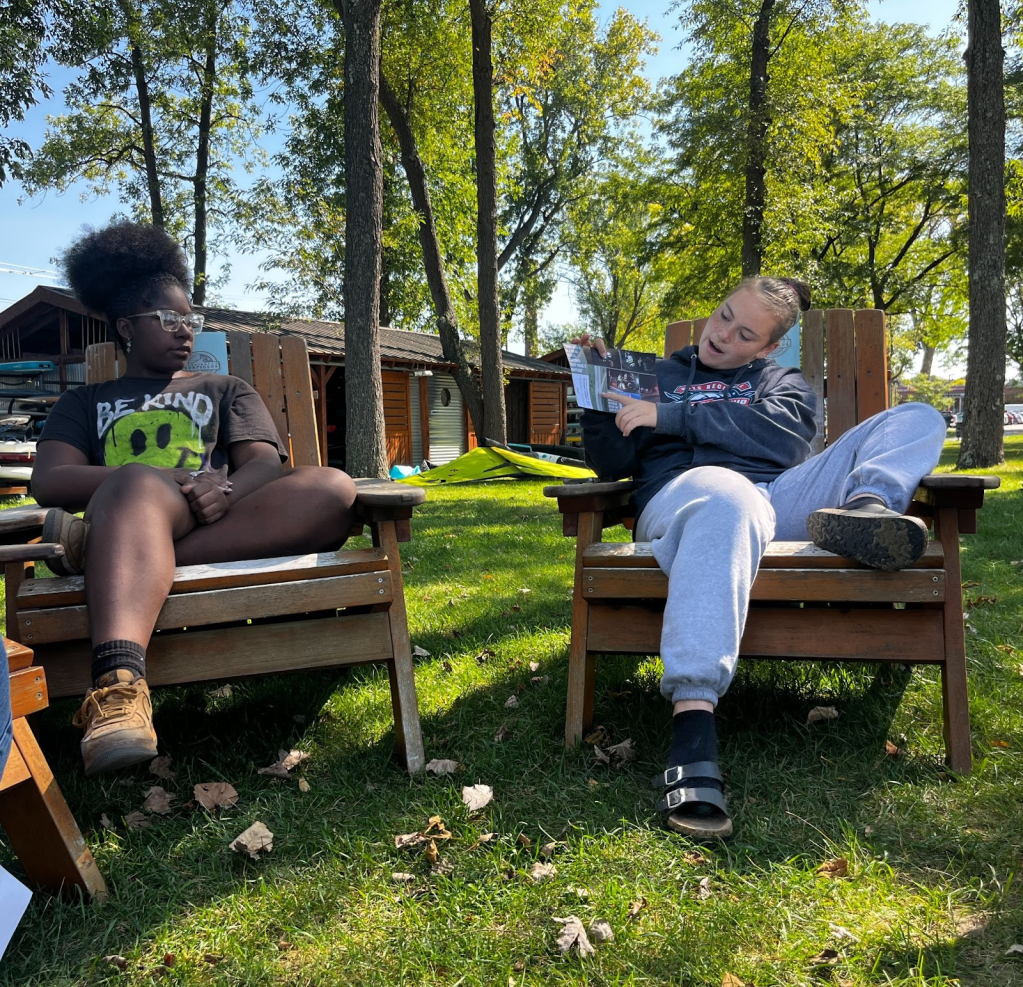
On the BCL website, one of the beliefs is “ We believe learning doesn’t have to happen in the classroom.” Learning outside of a classroom is more than just having different scenery. Where you learn affects how your brain sees the space around you. This is a different experience for me, and not being in a room where there aren’t windows helps my brain focus more, because it is out in the world and involves moving around. For me, BCL hasn’t felt like school, but like a place that has let my mind explore.
- Taelor
In the Mission & Vision part of the BCL website, they share their goals, including “To empower a diverse and representative group of young people as citizens, students, and community members through authentic, collaborative real-world learning experiences in and around the city of Burlington.” BCL brings students together in a genuine way to learn and have new experiences in the city of Burlington. BCL has also shown me more things to be curious about. In my Understanding Burlington project, I went to a new restaurant. The restaurant recently opened so you would think tourists and people living in Burlington would want to try a new place, but there wasn’t anyone there… It made me curious about why people don’t go to restaurants downtown anymore, because there used to be a lot of people going to restaurants, but nowadays there aren’t many people going.
- Anzal
One of my favorite days has been the day of our Systems Walk. We learned about what a system is and made a list of all the systems we interact with in Burlington. Then we noticed all of the systems we could see as we walked. I was shocked at how literally everything you see is part of a system, and some things are part of multiple systems at once! Just walking down the street, we saw Environment, Zoning, Municipal, Recreational, Educational, and that was just in the first two minutes. Later, we stopped and sat in a small park and took five minutes to notice one system in front of us, and evaluate if it was thriving or not. I had never thought about Systems before that day, and it really opened my eyes to how everything is connected.
- Harper
After sitting alone in Dewey Park for only 45 minutes, my perception and understanding of that piece of land shifted. [For my Understanding Burlington project,] I jotted down notes about everything I could see, hear, or smell. As I started writing, I thought about our BCL themes, and landed on Community. Initially, I thought that Dewey Park lacked community in a way no other park in Burlington did. There was no playground for children, there was not enough space to play sports, and there wasn’t a spectacular view… But I realized that not all parks are a place for constant action. The O.N.E. Farmers market is bustling with Old North Enders every Tuesday from 3 to 6:30. And maybe the community can show up in different ways. During my time, I saw about 10 different people stroll through Dewey Park walking their dogs, meaning there is a shared experience. Furthermore, Dewey Park is truly in the heart of the Old North End, and regardless of whether people just brush past or through it, it is a comforting symbol of the community that surrounds it.
- Cal
Early on, in each semester, we introduce frameworks that offer a foundation for our core themes. As we begin to unpack Social Justice, students partner with multiple organizations to learn about equality, equity, inclusion, belonging, power and privilege. Once students understand these frameworks, they are evident everywhere..
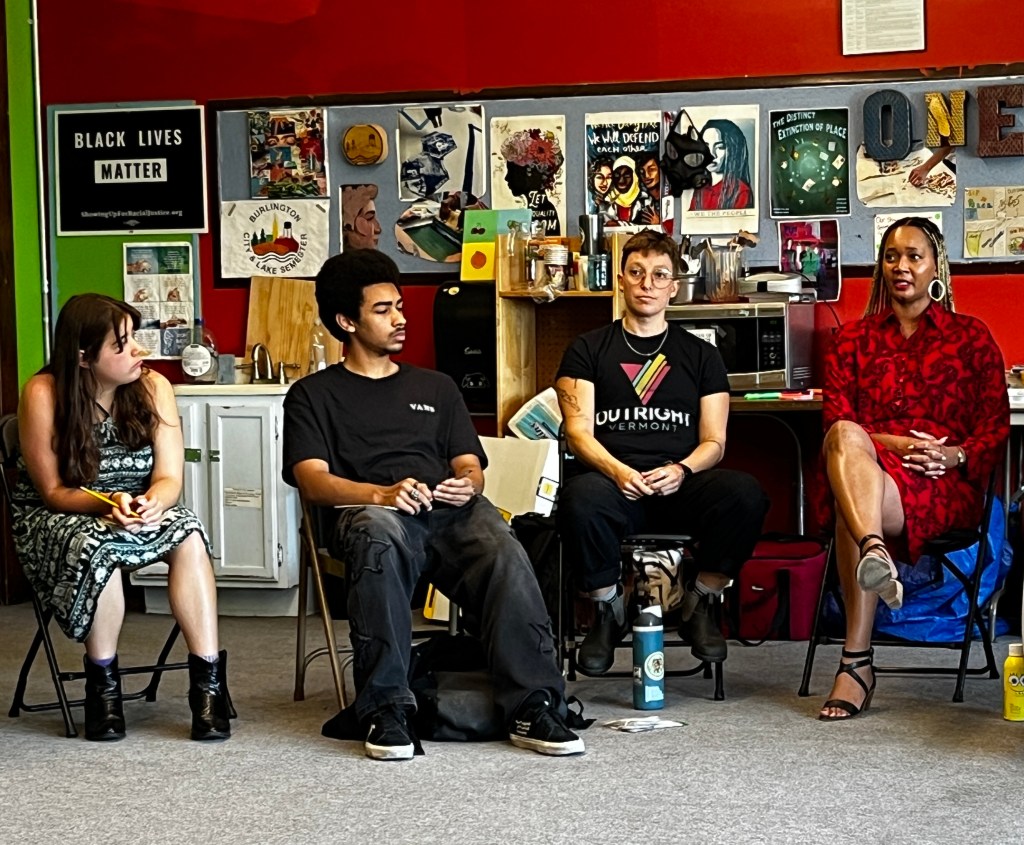


A few community partners who specialize in social justice came by the BCL classroom to share their work… Why can’t everybody be treated equally? Will there ever be a point where everyone is equal? I thought a little more and I really don’t believe equality will be solid among everyone. Moving forward, the next group proposed a word I’ve heard of but couldn’t define: equity. Equity is the acknowledgement of how much support someone needs to reach an equal state. This was a complete mind changer. Everyone can’t be equal by just being given what others are given – they need support.
- Taeshon
The first Social Justice station I got to go to was with Eliza from outright Vermont. They taught us about the difference between micro-agressions and micro-affermations. One thing that they had said that has stuck with me was when they were explaining how someone had asked them to have a “girls photoshoot.” They probably thought it was a compliment, but it was really a micro-aggression because it didn’t make Eliza feel seen as who they are. Another thing that Eliza talked about was the difference between inclusion and belonging. That was something I had never really taken into consideration but when it was explained in new terms, it made a lot of sense and helped to strengthen my perspective on belonging.
- Lucy
Throughout the day we explored equity and inclusion, one theme kept resurfacing: a thriving community is one where everyone’s voice matters, which left me with the final idea that I wrote in my journal, “Everyone is different and everyone has a different voice that is worth hearing. To have a strong and thriving community, you need to have the ability for everyone to share their voice and have it be heard.” The more diverse perspectives we bring to the table, the stronger our community will be. Diversity also helps people learn from one another, break down stereotypes, and build empathy, which leads to stronger connections and learning. This ties into my next response about making connections through vulnerability and strengthening community bonds in that way.
- Jamo
The conversation with Christian Berry [City of Burlington REIB] about inclusion and belonging was engaging. We talked about the effort it takes from people to connect with the community. (You can have as many events and gatherings as you want, but people need to take the time to get up and get out of the house). That made me think about all the opportunities I’ve missed by not putting that effort in. It also made me realize how much privilege I have without always noticing. The equity vs. equality vs. justice chart showed me that equality isn’t enough, we need equity, and even more, justice.
- Vera

We took a walk with Burlington Parks and Rec Ranger, Neil Preston, and talked about homelessness in Burlington. He knows almost every homeless person living in Burlington and spends time getting to know them and their background. Something Neil told us was that these people are “hopeless not homeless” and they are real people once you get to know them. This…leaves me with many questions. This past weekend, my friend and I went to try a new fishing spot and instead found stolen bikes, knives stuck in the ground, and around 70 needles scattered around the area. It was sad to see how gross the area had become. After talking with Neil, I think that homelessness in Burlington is something that has been slowly getting worked on, and the homeless population is starting to become seen differently in the eyes of people who know them and care for them. Still, it isn’t fixed yet. Our city still has a long way to go to make parts of Burlington feel the same as they did a few years ago.
- Eamon
My experience with Neil Preston and his partner, Jake, walking down to City Hall Park, sparked a surge of thoughts in my brain about the unsheltered. I began to put myself in their shoes and tried to imagine how I would survive in the world they live in. It also got me wondering what direction the state of Vermont is heading towards, whether it’s …helping them to get to a better place to thrive, and possibly work their way back into society. In an article about [the issue], I learned that in the past 5 years, the population of unhoused individuals has increased by 200%, and the state of Vermont has struggled to provide enough shelter.
- Emanuel
As we walked around Battery park…one of Neil’s colleagues, Kenroy, came running up to join the group, and gave a quick impromptu introduction and speech. He works primarily helping the unhoused in Battery park… In Battery Park, Kenroy hosts barbecues and movie nights. He knows most of the people there by name. The work he does in that park is not policing. It’s not traditional social work. It’s building what people really need – loving relationships… This interaction got me thinking about the unsung heroes. The author of Caregiving is what Makes our Cities Livable tells the story of her mother opening a communal kitchen which served food but also served as “caring infrastructure.” The author poses the interesting question of, “What can we learn from the invisible labor that sustains life in cities, especially in places that the formal state often overlooks?” Kenroy, Neil and others in similar positions represent to me the “invisible labor” that keeps cities going, particularly in service of those who are already struggling and on the margins.
- Miranda
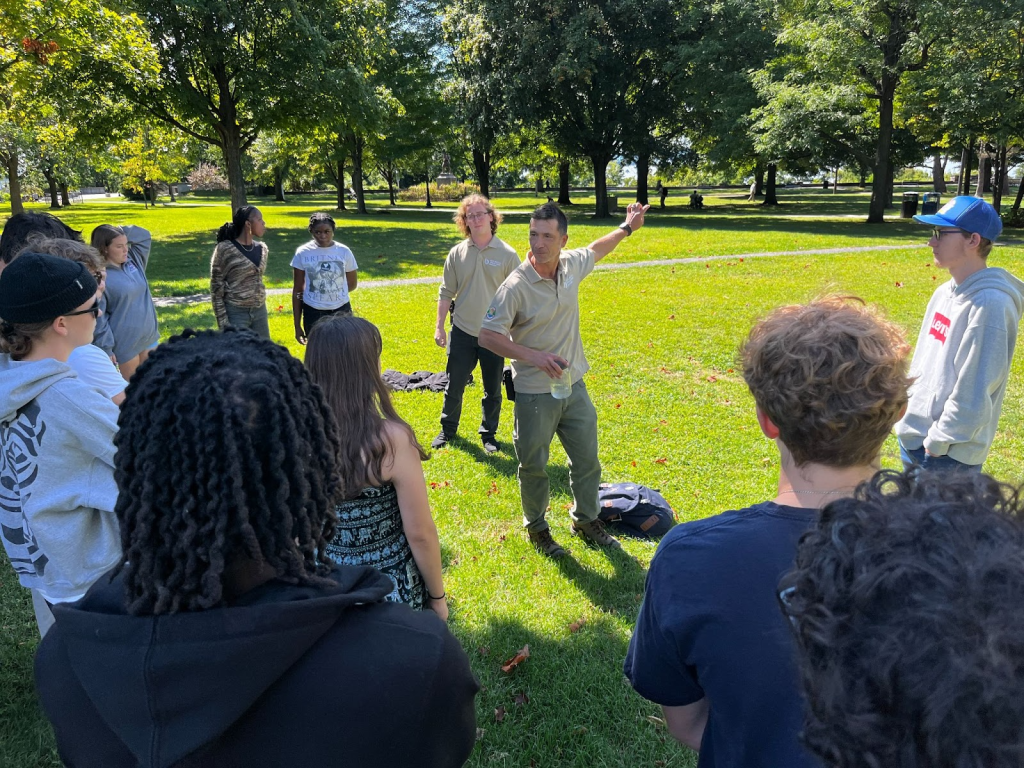
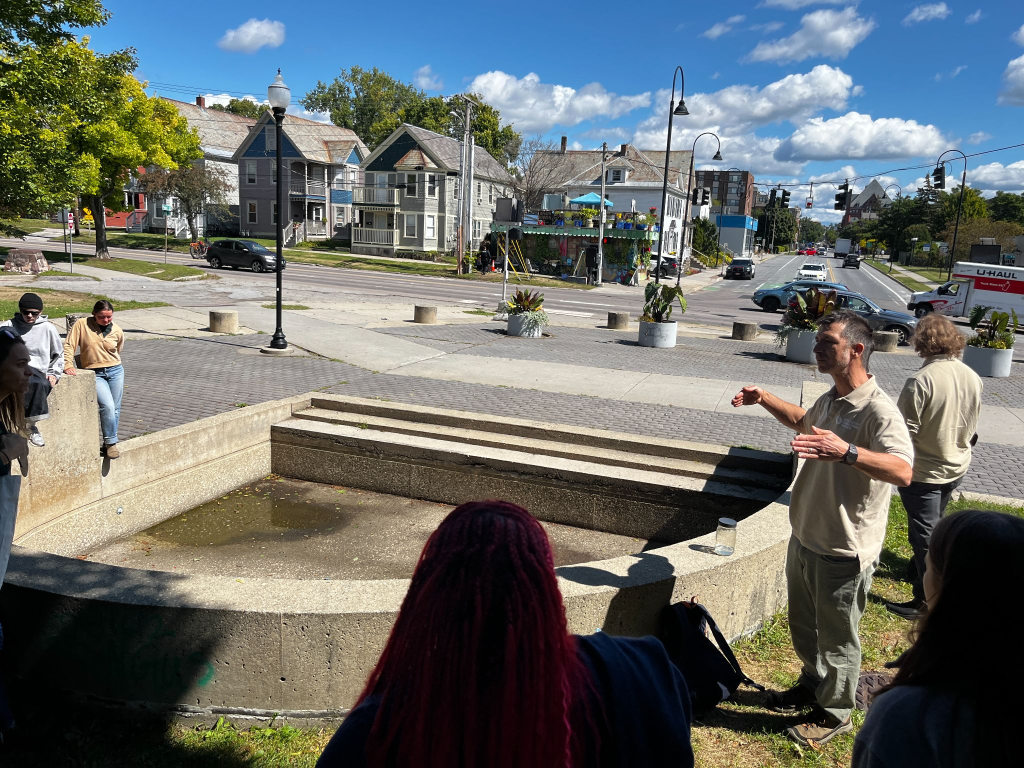
In caring for select members of the community, Neil ultimately cares for the entire city. Neil gave me a window into the behind-the-scenes care… I think that cities I have been to which have felt less livable may have had the weakest ability to care for their inhabitants.
- Jesse
The government should do more to make things more affordable for people, and give homeless people many more shelters to stay at, so they don’t have to stay on the streets. I feel like they should put homeless people who do drugs in drug counseling to help them have a better life… Not every homeless person is violent and does drugs, and if they had a place to stay, they would feel more safe. Before this, they had basic lives and then everything got messed up and then they just became homeless. We should really do more to try to prevent homelessness from happening.
- Jasmine
Truth be told, there are moments where I am hit with “compassion fatigue,” as some like to call it. I am filled with bitterness as my walk down Church St. is interrupted for the fourth time by someone asking me for my money. Anger courses through me as I watch a man shoot heroin into his veins just blocks from my school. I am with my baby brother. That’s not fair. What am I supposed to tell him? Yet just as often, I am hit with an almost crippling sadness. The man, who shot up next to school, had arms and legs that were covered in a tapestry of sorrow. Addiction is powerful. It is a sickness.
We too often look at things in just black and white. There are good people and there are bad people. There are good solutions and there are bad solutions. You have to feel this way or that way. But the world isn’t just black and white, there is so much gray. We have to feel compassion and humanity towards people in Burlington who are struggling. We are morally required to. However, we must also recognize [the] damage that is being done to Burlington right now. And put a stop to it.
- Sam
Neil serves as an important link between homeless people and the rest of the community throughout Burlington. He describes his job as being in “ the center of a hurricane” as he finds himself simply trying to help these people survive….He proves through his dignity and patience that small acts still matter and ultimately help solve the greater issue. Neil is one of those people who just make you want to go out and help your community.
- Felix
 Burlington City & Lake Semester