

One of the things that makes Burlington unique is how much of it bounded by water. The only political boundary is the manufactured line separating the city from South Burlington; the rest of our borders are alive. There is a reason that the title of the program includes both city and lake. This place is defined by the place where land meets water.
This semester, students have experienced a full-day residency at the Burlington Surf Club; spent a morning nature-journaling at the Waterfront with Sustainability Academy 4th graders; investigated archival maps, and backfilled the Waterfront’s industrial history; walked the shoreline with a local historian; met with the city’s Harbormaster; participated in citizen science research on UVM’s flagship research vessel; and sailed with staff from the Lake Champlain Community Sailing Center. Each encounter has deepened our relationship with the place where land meets water.


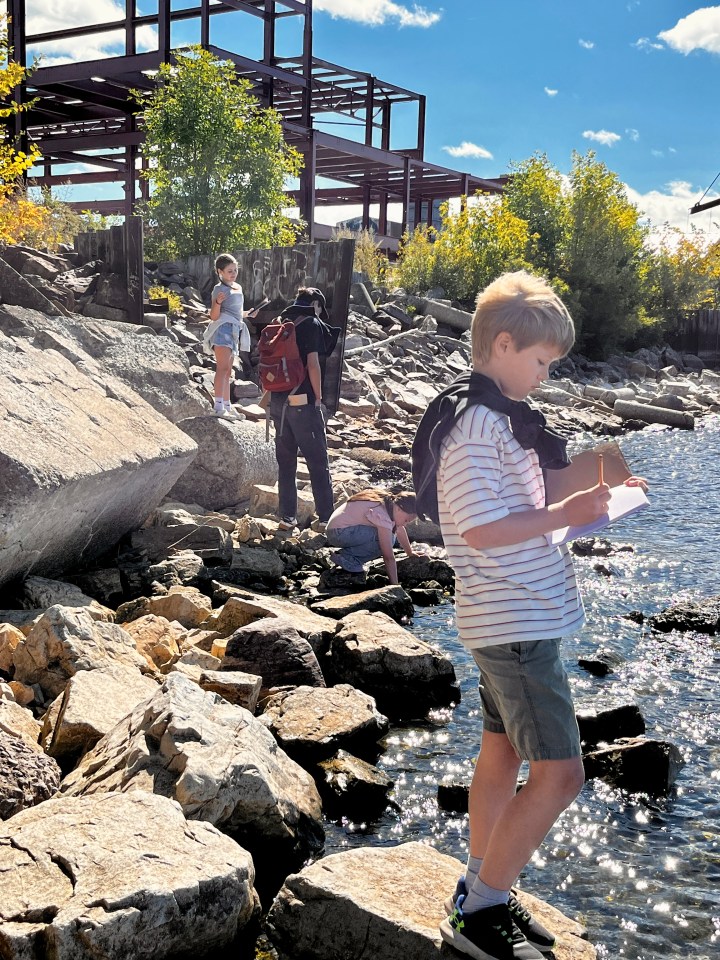
Nature Journaling is something that used to be a class activity at Flynn elementary school. We had opportunities to sit in the woods, go to the beach, and mostly draw what we saw. I thought it was great that we got the opportunity to do the same with the 4th graders at SA. Though my group was definitely a challenge, the observations they made were very wise and when we got them redirected they became engaged in the activities. I think that in many ways, nature journaling is a form of mindfulness, like we talked about a few weeks ago. It is a chance to stop for a second and take in the surroundings around you in a way that maybe you hadn’t looked at before. When we were at the shore the 4th graders, we focused on the landscape out on the waterfront. The breakwater, lighthouse, the trees in the foreground. I think it can be easy to get caught up on making each stroke perfect, especially someone like me who gets a perfectionist mindset but at the same time I think that is part of the learning environment. The art you create doesn’t have to be perfect because the environment around us is not perfect.
- Lucy


When I first moved here and went down to the waterfront, I admired the natural beauty and authenticity of it. It felt so untouched, like a true Vermont experience. The sun setting over the Adirondacks, the bike path weaving along the lake, families walking, people fishing off the docks, it all felt so real. But when I started hearing about the history of the waterfront, I realized it is not natural at all. The waterfront is completely artificial, built out of industry and human intervention. That moment felt like the rug being pulled out from under me.
The more I learned, the more it shocked me how difficult it actually was to build on the waterfront in the first place. It was not even land, it was filled water. In the article it says, “They questioned whether the railroad really owned the land beneath them that had been created by filling the water”. That phrase, created by filling the water, stuck with me. The ground I thought was natural shoreline was actually poured in and pieced together. It makes me wonder how many other “natural” spaces around us are really just human inventions disguised as nature.
- Vera
The article Evolution of Burlington on the Waterfront informed me that in the 1950s, the Waterfront was storing over 80 million gallons of gasoline. We can actually physically view this in the maps that we were looking at the Sailing Center. We also learned that the shoreline was created for industry… Later in the 1970s, frustration began to grow in the city due to the lack of importance the Waterfront held. So 10 years later, the mayor at the time, Bernie Sanders, decided to take charge and make the Waterfront a local space for locals and tourists to enjoy. Massive oil tanks were removed. I couldn’t imagine our Waterfront once being a dump land. Compared to other public places in our cities, I believe that the waterfront is one of the more welcoming places.
With our community having access to the waterfront we now see more Civic engagement as a community. there are opportunities for youth to learn how to sail get out on the water and experience opportunities they might have never had the chance to. Most stunning views in other states are private properties, meaning they’re not accessible to the public. A quote for my journal while viewing the Waterfront was, “It really looks like a community down here.” This makes me feel as though I should take more advantage of our public spaces.
- Emanuel
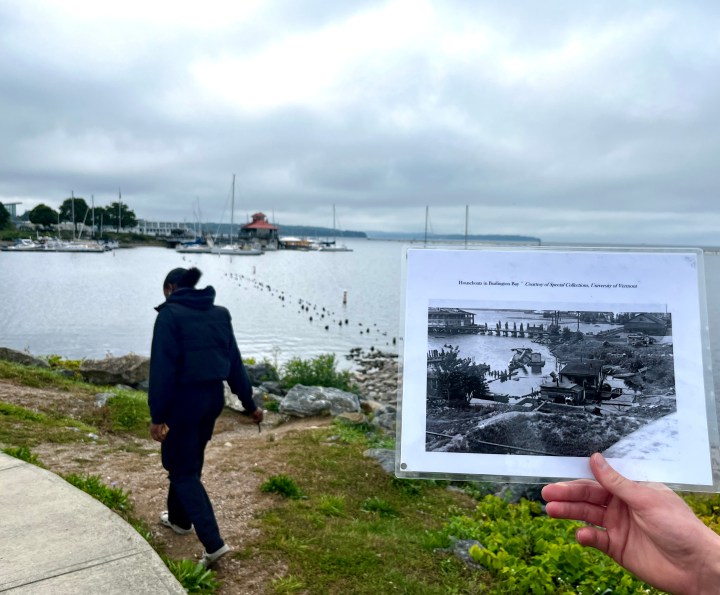


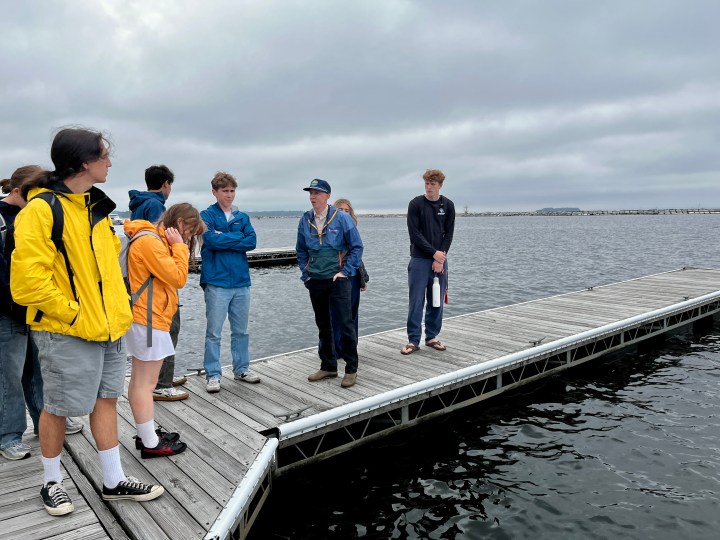
This drought is the result of increasingly extreme weather patterns. Instead of rainy weeks and dry weeks, it’s floods and droughts. In my journal, I quoted Erin from the public marina: “You may know we are currently touching ground on our eastern side. As a result of the drought , the hull of the barge is now resting on the sand. We’ve never seen this happen before.” When walking along the Waterfront, we could also see the old railway infrastructure peaking up over the water. Just before school started, I was at Secret Beach in the South End, and you could maybe go a hundred feet out into the lake before hitting water. However, this drought is affecting more than just the waterfront.
- Cal
In Early October, BCL spent the day at Kieslich Park. One of Burlington’s newest protected areas, Kieslich connects the lake and the Waterfront to North Avenue, just up the hill. Students learned about local plants’ superpowers from environmental educator, Jacob Holzberg-Pill; learned about the city’s conservation efforts from Parks & Recreation; reflected on stewardship with Burlington Wildways; and stepped into new ways of knowing–and understanding animals’ perceptions–with ecologist, Matt Kolan. At the edge of the city, where ancient sand bluffs meet the lake, the land itself was also a teacher.
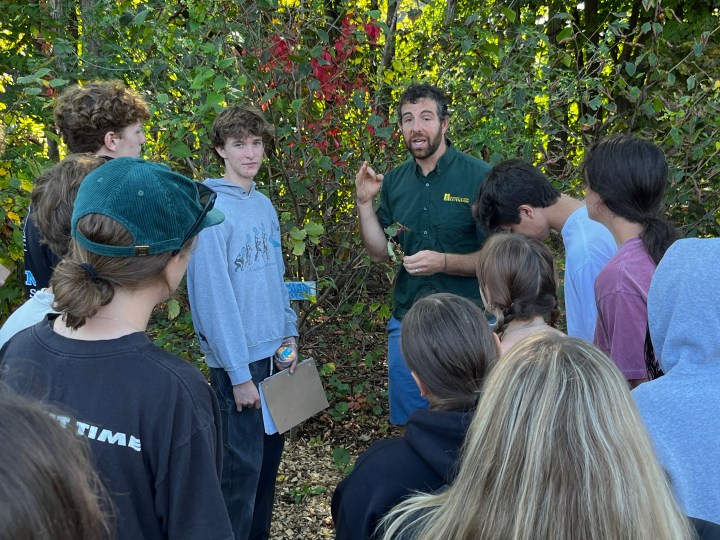

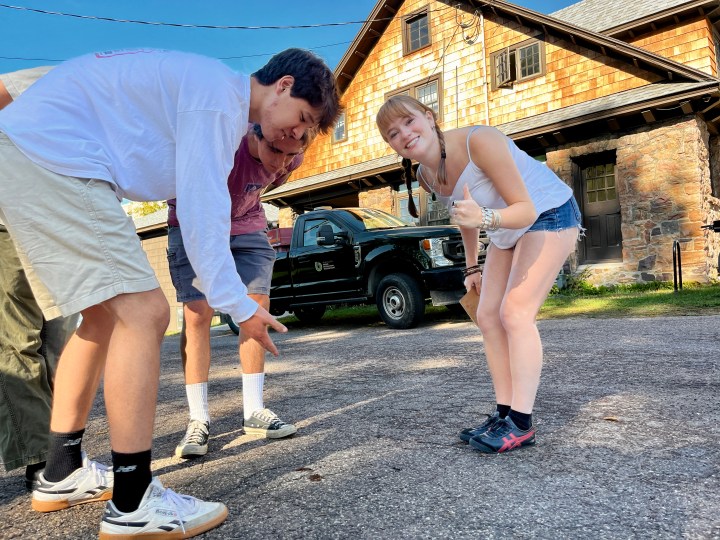
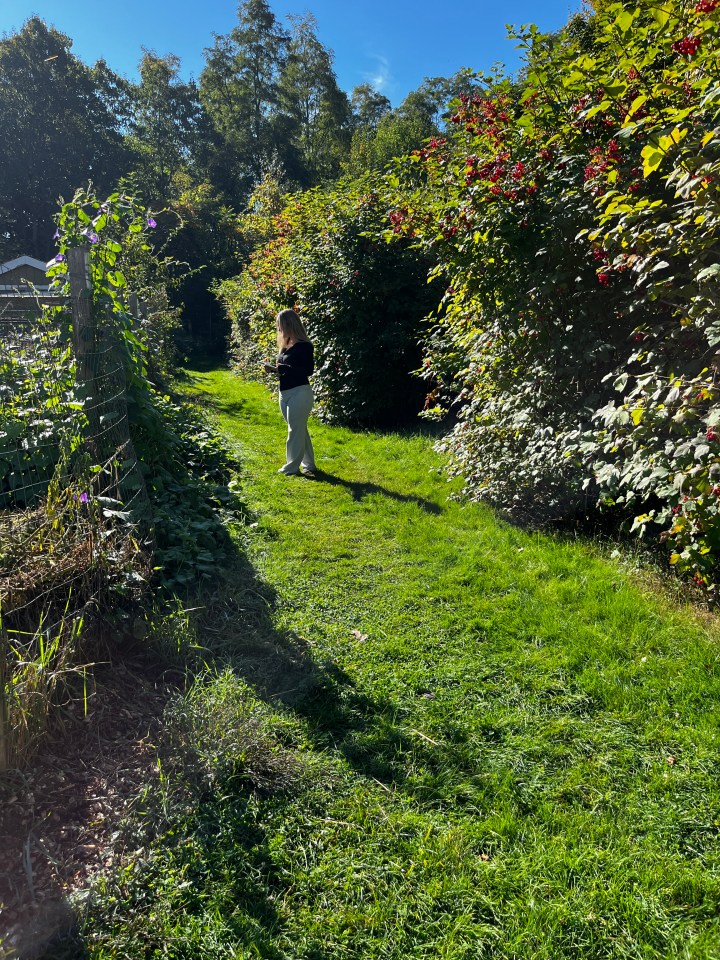

A connection I made today was with Daniel Schmidt, who I interviewed. He was really kind letting me stop him in the middle of his work day to ask him all about his job and what he does for the environment.
- John
There were so many connections to nature. [I learned that] you can tell an animal by its poop, animals leave fur when they dig a hole, and there are animals watching us 24/7.
- Jasmine
When we were going out along the trails it reminded me of the nature journaling we’ve done so far in class. Paying attention to the surrounding sounds and visuals is very peaceful. I wish we had more time along the trails so that I could sketch out the cool bench spot I found. It was also interesting to get smell other than a plant smell from a leaf. We were only shown two plants to sniff, and I wonder how many others there are that have unique smell? There’s so much more to learn.
- Taeshon
After spending time where the land meets the lake, students spent time where the lake meets the land.


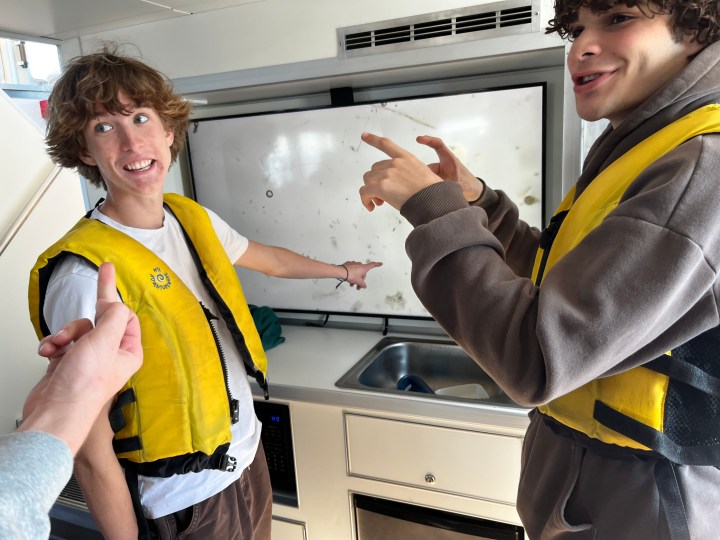
When thinking about the Lake, my main question is, is it thriving? This question was first asked of us before we boarded the Melosira, the UVM research boat, and I couldn’t think of an answer for the life of me. It seemed there was lots of evidence pointing in either direction, so I decided to do more research, and I have decided the lake is not thriving. A question I have for anyone who thinks otherwise is, how can a lake be thriving if we, as a community, cannot even use it for our pleasure? For example, “in the beginning of August, we have had 39 days of beach closures here in Burlington due to cyanobacteria, and that’s various beaches within our system being closed. Well, if we look at last year, the entirety of the season, we had 32 total.” This shows that the cyanobacteria issue in the lake has just continued to get worse and worse, and will continue on that same path moving forward. Overall, the lake is not thriving, and we as a community need to make a change for the better.
- Felix
[According to] Fish in Lake Champlain – Who They Are and What They Need, fish, plants, and other underwater species in Lake Champlain are in danger. “The Lake Provides a diverse set of environments that enable a wide variety of fish species to grow, avoid predators, and reproduce… However, the Lake Champlain ecosystem cannot produce fish in just any place, anytime, in unlimited numbers. Non-living, or abiotic factors (climate, sunlight, temperature, depth, movement of water, nutrient and dissolved oxygen concentrations, shoreline characteristics, and many other factors) work together to affect the amounts and types of plant and animal life that can be supported in the lake.”
A couple weekends ago I went fishing at Shelburne Pond. I didn’t catch anything all day due to the murky water and the quality of water. My friend pointed out the massive Northern Pike which was floating belly up, bloated due to the health of the water. This is a clear representation of what can happen to our local species if these problems aren’t solved.
- Eamon
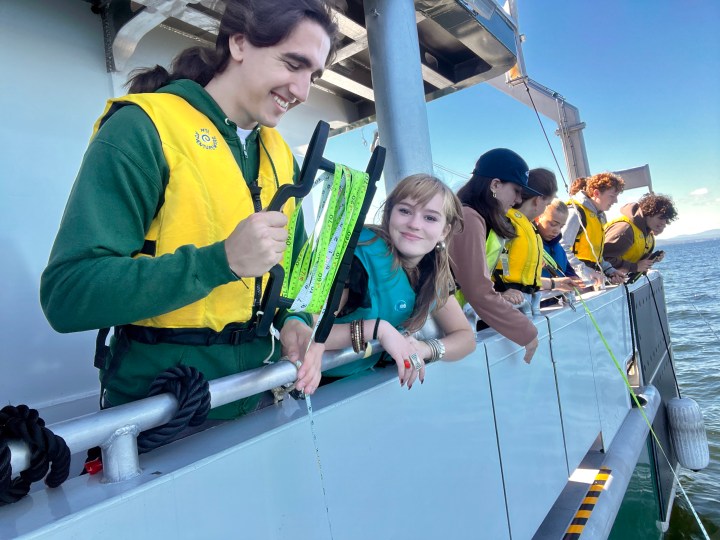
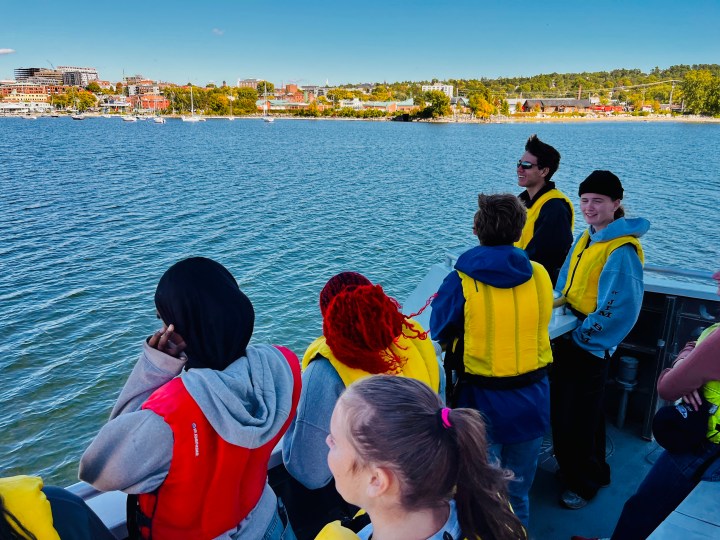
We got the chance to go on the lake on the UVM research boat, the Marcelle Melosira. We looked at what is in the lake through the microscopes. There were little baby creatures! This is interesting for me to think about. It is crazy that all of these things touch you when you go swimming in the lake.
I am wondering if the environment matters for creatures like this. Do they need to live in shallow water? In deep water? Because the lake is so low right now, are they still able to live? hat would happen if the lake keeps getting shallower each year? How would it affect the animals?
- Jasmine
Before we went on the UVM research boat, the Melosira, we were asked the question: “Who is responsible for the lake?”. In my journal, I wrote “All of us are responsible for the lake. We all enjoy the lake & play a role in some aspect of the Lake’s health. Since the Lake cannot fix itself, it is up to us to help it thrive.” I thought of this question in two ways, one angle being who is responsible for the current state of the lake, and who is responsible for fixing & maintaining the health of the lake. To me, both questions have the same answer. I believe that the people of Burlington, VT, are responsible for the state of the lake and also responsible for helping to keep the lake healthy. We all rely on the lake in one way or another, whether it be for drinking water, recreation, or a nice view.
Caring, or not caring, for the lake is a choice we all can make, and it depends on our own beliefs and actions. I believe that since we all rely on the lake and have a part in its health, we all should work to maintain it.
- Harper


It feels like almost everything in the lake is a threat. The fish that live in the water are overcome with nasty chemicals. I’d love to go fishing, but if I can’t get a satisfactory dinner from catching a fish then I’ve got to go somewhere that isn’t close to home. Most of my family really love fishing, so it really sucks that it has to be this way. Polychlorinated biphenyls and mercury are the chemicals that the lake’s fish have in them. Is there even a solution to getting the chemicals out of the flesh of fish? Can I ever eat a caught fish from the lake without having to worry about consuming some nasty chemicals?
- Taeshon
It was such a pleasure to spend time on the UVM research boat, the Melosira. It was a beautiful day, the sun was out and the sky was clear. It was fun too, looking at the phytoplankton and such in the microscope. I even discovered a big critter we nicknamed “the big guy”. It was also very interesting to hear the UVM scientists explain how everything in the Champlain basin, from the rivers in Cabot to the streams in Saranac Lake, end up shaping the health of our lake.
I think that protecting the lake requires both scientific commitment, like that seen on the Melosira, but also community commitment. The lake gives so much to Burlington. It provides drinking water, recreation, and a sense of place. If we want to keep enjoying it in the future, we need to take seriously the challenges of cyanobacteria, flooding, and pollution today. One connection I made was with our conversation with Erin, the harbor master of Burlington. The boat house is a community building, but it needs to be revitalized. The new boathouse will have to be able to withstand the changing climate and the effect it will have on the lake. Over the past two summers, the lake has been high with massive flooding events. This summer the lake is the lowest it has ever been in recorded history. What does that mean for our future? What does that mean for the future of the lake?
- Sam

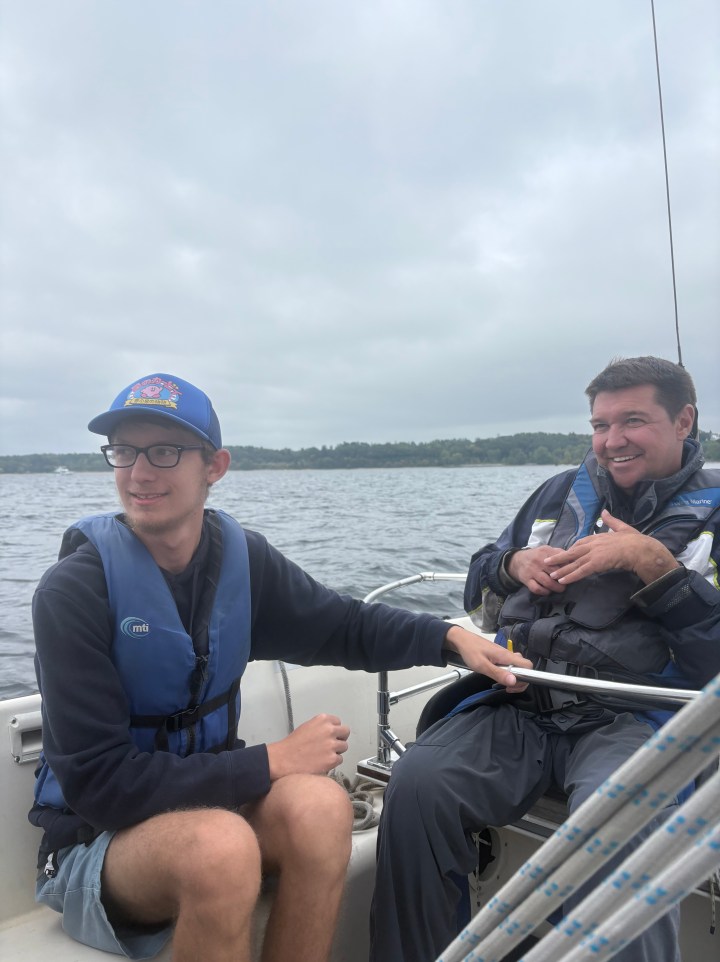

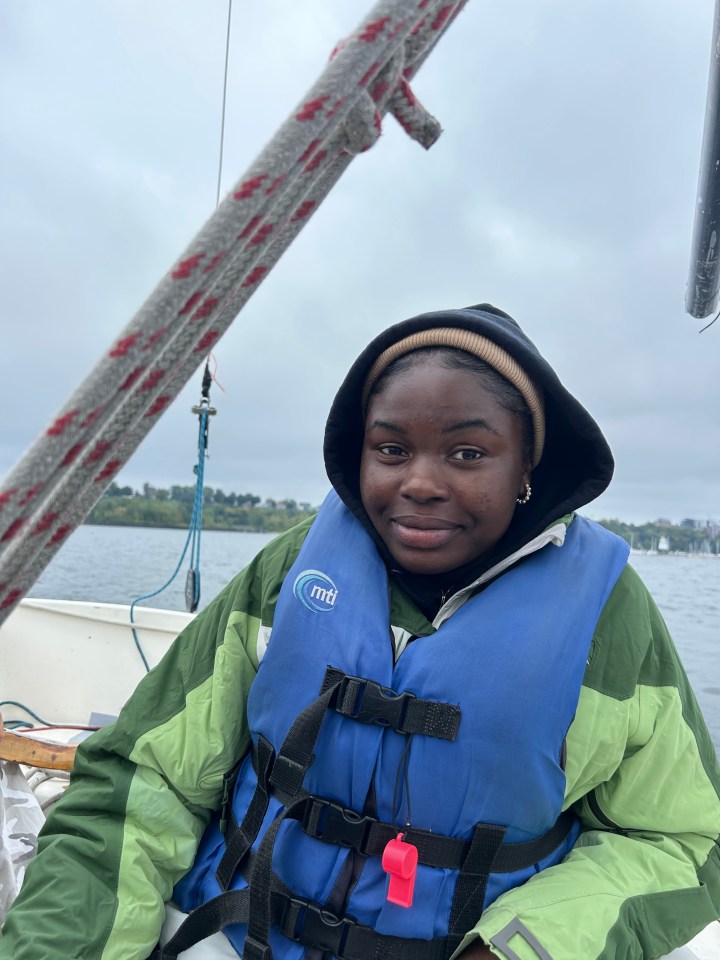
One of my personal favorite experiences in BCL, going sailing. It was such a fun and totally new experience for me as I had never been sailing before. It was especially fun since I had all this history and context about the lake and infrastructure that borders it. Learning about the lake historically, scientifically, through the context of waterfront infrastructure and through having fun out on the lake truly broadened and deepened my understanding of the lake I grew up on.
– Miranda



 Burlington City & Lake Semester
This is amazing! What eloquent writing. Reminded me of my own BCL experiences, what a dream!
LikeLike