
When asked to sum up what makes the program unique, BCL teachers often say something like “the city is both the classroom and the curriculum.” It’s a pat phrase, but it captures something true: this place is both the path and the purpose. It’s what, where, and why we learn.
At first, having school days unfold in the city can feel awkward or uncomfortable, but as the semester unfolds, students come to understand just how rich a learning environment this place actually is. They begin to question why they’ve spent so few school hours outside of the classroom. And they realize that there is far more to learn from the place they live than we can possibly explore in sixteen weeks.

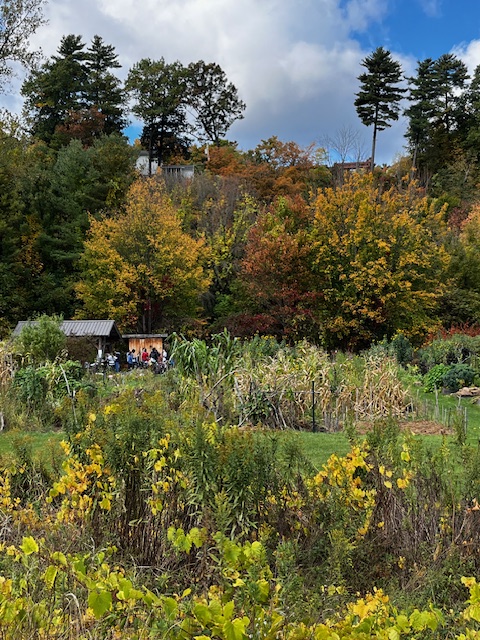
BCL, and place-based education in general, have led to amazing outcomes and new experiences… Before BCL, I had never even heard of place-based education, and now I think it is something that should be instituted everywhere. I have learned, experienced, seen, and done things I never would have if not for this program. I also have gained a new lens on the world around me. Through place-based learning, I have seen Burlington in a new light, and I appreciate it so much more. I feel so connected to the city and the community around me.
Overall, I have learned so much…both from this program and from my research today, but the main thing I’ve learned is that the learning never stops. Taking the time to truly appreciate the place we’re in is something that not nearly enough people do. I believe that place-based education can teach us about more than just a city, town, or even Earth. It can teach us about ourselves.
- Harper
Even though the term ‘third space’ is kind of new to me, I still understand the concept. When I think of third spaces I think of my best friend’s house, the waterfront, maybe even [a restaurant]. A third space is a place where you can go that isn’t home, school, work,etc. It’s a place you can hangout (specifically for free). Lately in BCL we have been visiting multiple public (possible third) spaces. Like the waterfront, the Boathouse, Ethan Allen Homestead, etc. But people are starting to notice the less and less amount of people going to these places. Could it be because of COVID? Or maybe because so many places require you to be a ‘customer’ to be able to sit at their tables?
The article I read all focused on one thing: we need to bring back third spaces. Without third spaces there’s no place to properly build a community in-person. There’s nowhere to go to connect with people and disconnect from your first and second spaces. Maybe as a community we can start to think about how to make and bring more people to the available, free public areas we have, and get third spaces back going again.
- Leahna


Since BCL contributes to the success of the city, and the city is our classroom, a thriving city means a thriving BCL program. We contribute to this success through city planning. When student voices are heard in the city, the city is a place that looks out for the needs of a larger variety of people. We also contribute to this success through civic engagement such as meeting with [city leaders] and discussing the future of City Hall Park. I have found that BCL does some of its best learning by helping the city thrive, leading to a continuous cycle.
- Miranda
My experience throughout BCL has changed the way I understand both the city around me and my education. Instead of learning only from books or teachers ranting about the past, we learn by being present listening to community members, observing real issues, and responding differently depending, based on what we believe and not what a book told us. BCL pushed us to step outside our comfort zones and see the city not just as a place we live in, but as a space filled with stories, struggles, and voices that [need] to be heard, rather than blocking them out like most of us do just walking down the street.
- John


Place-based learning can happen in a South End art studio…

…where things aren’t as they seem.
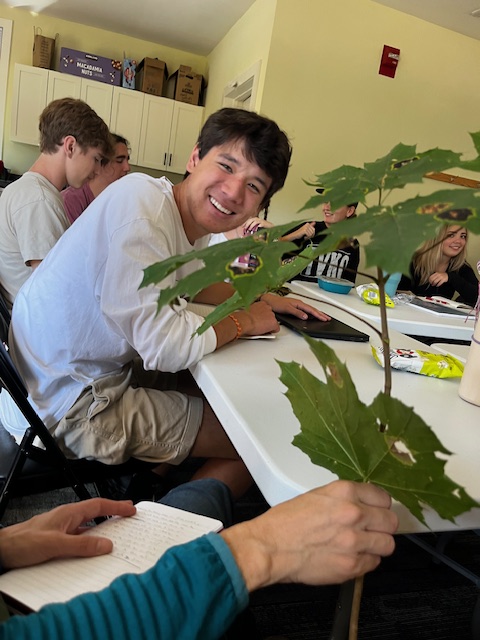
My experience throughout BCL has changed the way I understand both the city around me and my education. Instead of learning only from books or teachers ranting about the past, we learn by being present listening to community members, observing real issues, and responding differently depending, based on what we believe and not what a book told us. BCL pushed us to step outside our comfort zones and see the city not just as a place we live in, but as a space filled with stories, struggles, and voices that [need] to be heard, rather than blocking them out like most of us do just walking down the street.
- John
In my experience, one of the largest things setting my BCL days apart from my BHS days has been interactivity. In my other classes, “interactivity’ often emerges in blander forms, such as mixing ingredients for a chemical reaction. BCL frames interactivity in a deeper way. Instead of just doing things with our hands, we go to different settings. I think that setting and geographic location is just as important to the value of the Interaction as what you do with your hands. Going into City Hall to talk about the city holds a lot of power, in a way that the BCL classroom couldn’t provide… In my BCL experience, I have grown to feel more connected to Burlington, and hold a broader understanding of what is behind the doors of Burlington. I have learned small facts like animals use the old Civil War-era train tunnel to avoid the dangers of North Ave traffic. I have also learned things about broader systems in Burlington (Transportation, Housing, etc.).
- Jesse
On the Place-based Vignettes resource, there is a list of “Principles of Successful Place-Based Education.” Among these principles was “Learning is personally relevant to the learner.” The best BCL classes this semester have been ones that are particularly relevant to me. During our time with the city planners, I was thoroughly engaged. Talking directly with city officials about changes I would like to see in my own neighborhood made me feel heard. I wrote in my journal, “I like getting a bird’s eye view of my neighborhood. I’m surprised by how little I’ve thought about what the O.N.E. could benefit from.” It was nice to give some attention to the Old North End and where it could improve, for example, by planting more trees. When I drive or stroll through the South End, the streets are lined with big, tall trees. In the O.N.E., this is not the case. After our talk with Diane Hannigan, I wondered how this might affect the neighborhood.
- Cal


What makes BCL “BCL,” in my opinion, is all of the community-based learning we do with all of the different partners. When people ask me about the program and what I do during the day, this is exactly what I tell them. Burlington is the best resource we can have… Being able to be a part of BCL allows me to take a deeper dive and use place-based learning to my advantage. I think that place-based learning is a way of learning that every kid and teen should experience, whether it’s just a day at Shelburne farms on a field trip or it’s every day in a [city-based] classroom.
- Eamon
Tom Vander Ark wrote that place-based education “sits squarely in the middle of formal and informal learning.” That really feels valid for BCL. We’re always learning, even when it doesn’t look like a typical classroom lesson. The interviews, the group discussions, the fieldwork, all of it teaches in its own way. When we talked with local business owners about how they’ve adjusted to new city policies, it felt like every story connected back to something bigger. It wasn’t about memorizing facts, it was about understanding people and the systems they live in…
Since joining BCL, I’ve started to see Burlington differently. I notice small things that used to just blend in, like murals that show a neighborhood’s history or the way certain spots around the city bring people together. It’s made me more aware of how learning isn’t just about school, it’s about paying attention.
Sometimes I think about how different school could feel if every class was taught this way. What if everyone got to study the world instead of just reading the words in a book?
- Vera
 Burlington City & Lake Semester