
[R]ight now it feels like the world is locked in this deep struggle between love and fear, and it’s affecting all of us. It’s affecting our country; it’s affecting how we function and how we are as a human race. But that, to me, has become the central question of our time, “How do we move the world away from fear and toward love? How do we do that in our own lives?” By what we choose to speak up for in the public square, by the issues we choose to support, by the way we raise our children. I do think that our true nature is that of love. When we’re living in fear, I don’t think that’s really who we are or who we were meant to be. And the most clear way that we feel that love is in the form of relationships, which is why human connection is such a deeply important part of the healing that needs to take place in the world.
- Dr. Vivek Murthy, Former United States Surgeon General
During a BCL semester, it is common for several throughlines to emerge. As we study the city we live in, we also study culture, and trends in the larger world influence the topics we explore. This year, the theme of loneliness and disconnection made its way into many of our discussions, both formal and informal. Researchers use the term “loneliness epidemic” to describe what is happening in our country and around the world, citing the growing evidence that our fractured and toxic political climate, our attention-consuming devices, and the lingering impacts of the pandemic all have had detrimental effects on our relationships, both with one another and the places we call home.
Students earning Honors in BCL this fall listened to and discussed several podcast episodes in which the participants explore our innate need for human connection. Two such conversations were between former United States Surgeon General Vivek Murthy and researcher/author Brene Brown, and between journalist Ezra Klein and poet Ada Limon. We also read a series of essays in which writers describe particular locations in New York City where they find community and a sense of identity. Students responded to these texts with their own written portraits of places in Burlington they feel deeply connected to, as well as with poems that employ tangible, concrete imagery to capture the ideas of loneliness and belonging.
The students’ essays provide windows into what gives a place its flavor and character, and what love of a place can look and feel like. Their poems express both the experience of being alone, and how it feels to truly be in relationship with family, friends, and the larger community. Sharing these pieces is one way to combat the isolation and disconnection that many of us are experiencing in this current moment; we can discover common ground in these stories, and a sense that the real-life relationships we form with places and each other are far richer and more enduring than what can be found on any screen.
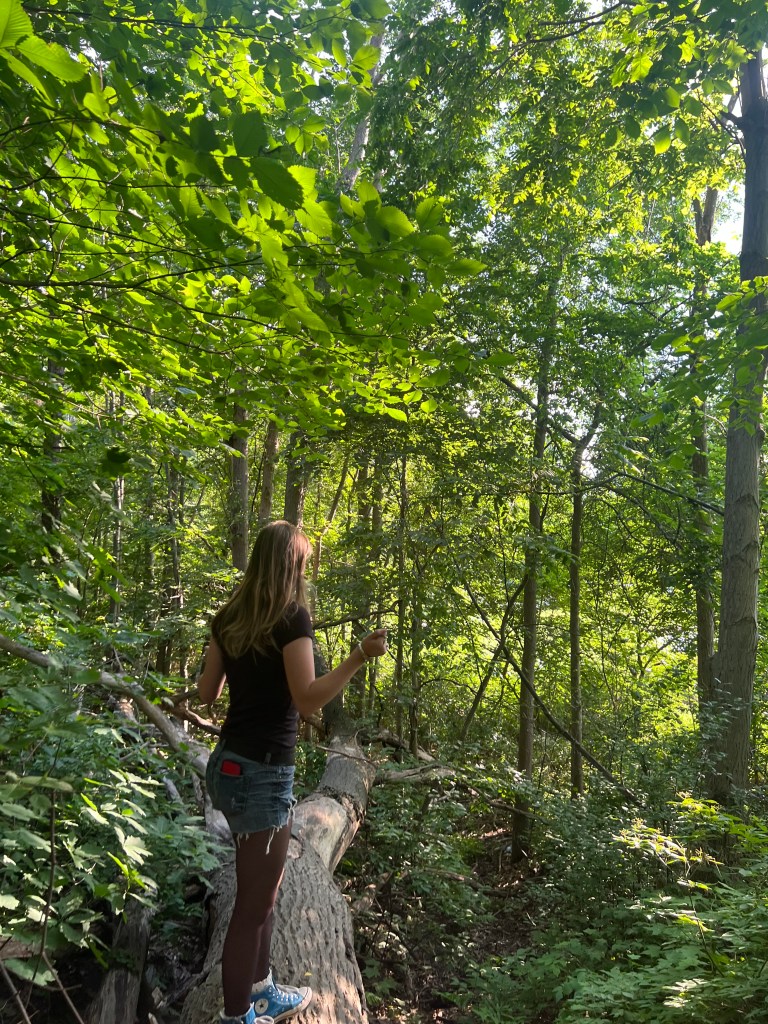
Playing with Calahan Park – Miranda Brown
I hear the sound of children playing on the wind, the soccer games behind me intensifying, and the soft smell of grass like a caress. This park has seen every form of myself. It was my most coveted play place as a child, the games and fun happening mostly beyond the playground itself. It saw me: tumbling, grass-stained and giddy down the steep decline behind the fence, teetering across the fallen tree, sheltered in the small patch of woods by the baseball field, and walking every day, sometimes through the tundras of snow, to my elementary school, but always arriving at school fresh-faced, because the walk itself was one big game. I watched the park as it let fiery red coat its trees and then let their leaves gradually slip off, replaced by slides of snow. The park watched the joys and heartbreaks of rec league soccer and our visits to the snack shack afterwards, which was the real appeal. Never strayed from my classic order of a ring pop and a hot dog, sweet and salty and massively unhealthy, making it feel mischievous. It watched me as I watched little league baseball games, whispering with friends on the bleachers.
As I grew older, playing in the park took a different shape. In middle school, it served as one of my main social scenes. I watched countless dates between people I knew occur there, although they were more public affairs than romantic ones. Two kids sitting on the edge of the basketball court as others watched them from behind the greenery covered fence. I sat on the hill next to the basketball courts with my friends, tittering nervously. I prayed that the boys playing basketball wouldn’t speak to me, although it’s what I always hoped for. I made new friends who I never truly connected to because the park friends were similar to school friends – they often never moved past the location you were friends with them in. The corner store up the hill served as the new snack shack, which was now only open on game days.
When I started walking dogs for anyone who would hire me, all my clients lived in neighborhoods surrounding the park, and it began to serve as a part of my job. I would let them run around on the fields or bring them looping through the paths and hills. I remember a small yippy dog tugging at the leash as we neared her favorite spot to be let loose, but before I unclipped her leash I let myself survey the rolling hills and the small strip of lake view. As I got into high school, I took the kids I was babysitting to the very same spot I would play as a child, except now the playground had a new design and big trees I loved were cut down. I see myself in the way the kids stumble and laugh, and I am brought back.
When I come to the park now, it’s mostly to watch my friends play baseball, tennis, or other sports, or to pass through while walking somewhere. The park watches me now as I remember all the times we spent together. I see the park change, but mostly I feel the way the park has changed me, and the way I have changed at the park.
Mount Calvary Cemetery – Sam Doherty
In the late summer evenings, before the sun has set, gravestones cast long shadows in the cemetery by my house.
Some stones are big, vast expanses of shiny granite and marble with letters carved legibly, starkly into their faces. Those tall obelisks and wide flat rectangles throw the longest shadows over the dried and dead grass. Some stones are smaller, rougher, with neglected chipped corners and words so faintly visible it hurts to read them. Occasionally, I bend down and attempt to decipher the language on the stone, to find out what person lies beneath, but most times I pass by. Some stones are laid flat in the ground, nothing sticking above the earth; you wouldn’t know they were there unless you stumbled over it, or you’d been there before.
At this point, the oppressive August heat of midday has subsided, and kids can be heard playing on the street, their voices lifted on a slight breeze, finishing their games before the dark, which has lingered long enough, finally arrives and dinner is called. Other times, not a sound disturbs the air except for the occasional car passing on Willard Street, a block below. The graveyard sits uncomfortably waiting for the dark.
When night arrives at last, lanterns come on near some of the bigger monuments. In the dark, they give the eerie appearance of floating spirits as you walk along the gravel road. The wind rustles the thin leaves of the towering black locust trees that were planted, so many years ago, to mark the outline of the cemetery. A train horn sounds, lonely and haunting, on the tracks below. The train is bringing a load of fuel for the power station, which worked hard through the day and now finally gets its chance to rest. They argue the steam that billows from the plant during the day is bad for our neighborhood, bad for our children. Maybe it is. I’m still here. In the cemetery, the moonlight reflects off the clouds in such a way you can watch them move overhead. On rare occasions, you can even see the stars.
The graveyard doesn’t scare me anymore, at least not in the way it used to. No ghosts nor ghouls will rise from the earth and creep into my bedroom at the witching hour. I have long since come to terms with the dead vastly outnumbering the living on my street. What frightens me is being witness to what may be the final testament to so many people. Each of these people, whose bodies have long since decayed, had someone who loved them, someone who hated them, someone they hated, forgave, then loved again. Those memories of human lives, soon if not already forgotten, are now encapsulated in a single rock. And then, even the stone will be gone. First the smaller ones will weather away, chipping and degrading until nothing is left. Then the bigger ones will go too. Season upon season, year after year of rain and snow, the final granite obelisks will fall and marble rectangles will crumble. Then, when you dig in the spot the bodies once lay, all you’ll find is dirt.
The graveyard by my house is really three separate ones, cut into thirds by Archibald and Pomeroy. I’ll never forget those street names, along with Henry, Brooks, Loomis, and all the roads that make up our tight-nit neighborhood. Those people got whole streets named after them, not just stones. Still, they mean nothing more to me than the thousands of words carved into the stones that surround my house. We, the houses and the cemetery, sit atop a hill. The northern most graveyard falls away to Riverside Avenue, which in turn falls away to the Winooski River. When summer rains come, the river swells and becomes almost terrifying. But we stay safe and dry atop the hill, bones and all.
In the graveyard by my house, people come to trade drugs in the soft night. They come in old cars, some clearly living out of them. The bumpers are rusted or sometimes a different color than the rest of the faded paint. Many don’t have license plates, just a half-hearted attempt at a temporary plate, taped in the back window. I’m sure some leave their cars without plates for a reason. Others can’t make it to the DMV or can’t pay the fee. Sometimes there are nice cars, too nice, parked in the cemetery or on the road beside. They don’t fool me; I know why they are there.
The drugs that are traded are the bad kind. The kind that turns your ankles and calves, wrists and arms, and after long enough, even your neck, into a tapestry of sorrow. Drugs that turn your life into nothing more than a constant search for the feeling of that first high. Drugs that strip away your life, layer by layer, literally leaving you with nothing besides skin and bone. The graveyard must be a nice place to buy and sell drugs, all things considered. It’s quiet and secluded, far away from the bustle of Church St. and the downtown where tourists flock. The two larger ones are full, with their last forever guests joining them in the ‘60s. I’m not sure I’ve ever seen anyone visit any of those stones. We used to play a game when I was younger to find the person born the earliest. It was fun, weaving in and out of the gray pillars and crumbling monuments, scraping moss, dirt, and years of buildup off stones looking for that magic number that started with “born.” We found old ones too: people born in the late 18th century, surely no record of them beyond their marker of death. Then, we would dare each other to walk past the children’s section of the graveyard, eerily filled with short, stubby stones. One had a baby lamb carved into it; many didn’t have names, as there is no point in naming an infant gone as soon as they arrive. This is my least favorite part of the cemetery.
Despite the relative peace and quiet of the two full graveyards, most drug deals seem to take place in the smaller third one. This one still has room for new arrivals in the form of a wide open field. Along with burying the dead, the field is great for baseball, at least it was when we were little. Now that we are much bigger, we’d be in danger of hitting the ball so far it would crash into the line of graves that creep steadily forward.
In the graveyard by my house, I find a sense of peace. Our city, however small, bustles constantly with the day to day movements of the people who call it home. In summer, people crowd the beaches of Lake Champlain and sail its coastline, laughing and jumping off of yachts and dinghies alike. The season is only officially over after Little Gordo Creemee stand closes its doors for the year. Fall arrives, people come in droves to see the leaves. Then winter, skiing every weekend, sledding when we were younger too. The graveyard stands quiet and stoic through it all. The cemetery by my house weathers the children, the addicts, and everyone in between in stride. All while holding, as best it can, the memories of those who came before.
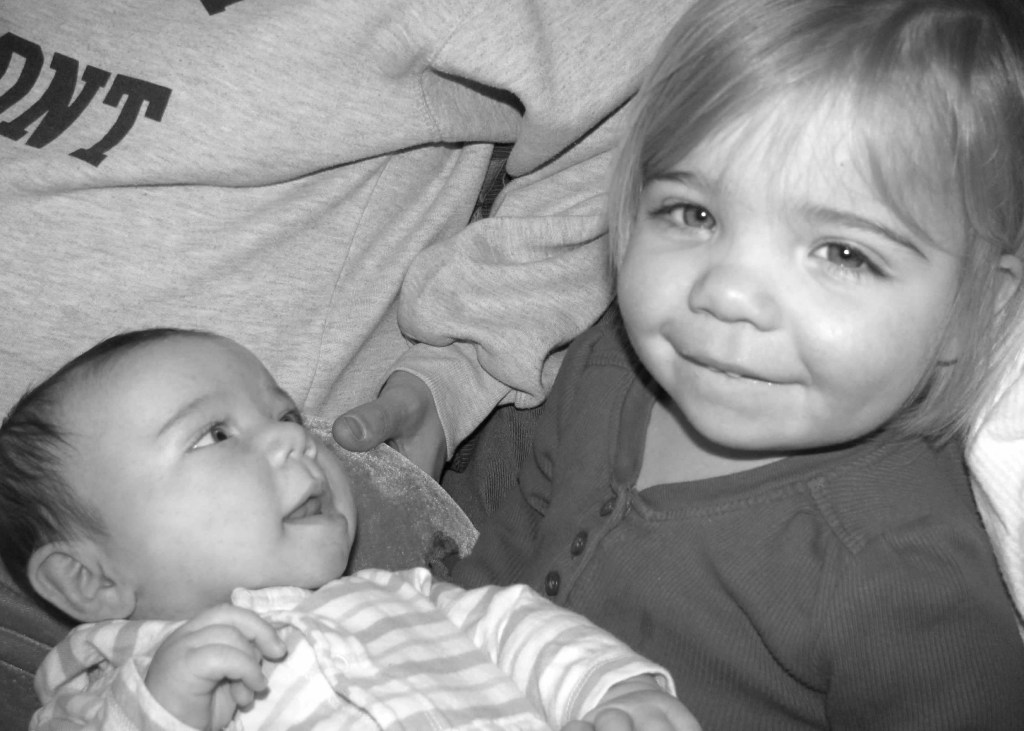
Two Poems on Loneliness and Connection – Harper Roof
To Juniper
After hours of giggles
And hugs
And kisses
And peek-a-boo
And staring
Can I just say one more goodnight
Please mama
I beg
And run in, so excited when she nods
I look into the crib
And see you lying there
Your big eyes look up at me in wonder
When the funny thing is
I couldn’t be more in awe of youGrief
I took the long way home today
Past the river
where we sat,
Past the shop
where you bought me
The ring.
I walked through the old graveyard
And wondered when I’d join you
Twisting the metal on my finger
As the birds
sang our wedding song
The Block – Jesse Fitzgerald
I moved across Burlington when I was four years old, and I remember very little from before that time. I do, however, remember the excitement of a new home and a new place. Burlington is a city with many distinct neighborhoods, and I felt the contrast when I moved. My family had previously lived in the Old North End, and there had been few kids my age nearby. I remember our neighbors as boring: they were either college students or elderly people. The tree-lined streets surrounding our new house held numerous young hearts, eager as I was to play. I made new friends and played outside every day, riding bikes and marking the sidewalk with chalk.
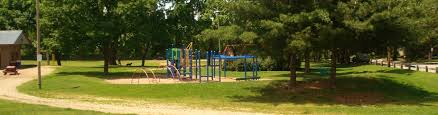
By first grade, I had a group of kids to play with. We all lived on the same street, and in the summer, our imaginations took us on wild adventures through the neighborhood. We excitedly burst out of our front doors every morning, and sadly went home every night. Specifically, our immediate block held most of our games. To the north, a basketball hoop saw sweaty and heated games of HORSE or 21. The road on the block’s eastern side had been recently paved, and we loved riding bikes and scooters on the smooth surface. At the south end stood Calahan Park. Baseball fields, playgrounds, woods, tennis and basketball courts, and fields made for great enjoyment. The park was often lush in spring and summer, and became a snowy wonderland, perfect for sledding or snowball fights in winter. Come sixth grade, the parents of the neighborhood mandated that we play outside only and maintain six feet of distance between ourselves. We couldn’t play basketball like before, so we had to be creative. It was springtime, so we were just getting outside after a long winter. Green grass and dry blacktops teased us with images of close-up sports games, but we remained distant.
In April of my sixth grade year, the boys across the street began work on a treehouse in their front yard, as did my dad and I. The idea for the treehouse came from a book I had read, in which the protagonist builds a fort in the woods and has magical adventures there. My father and I took large pieces of paper and laid them out across the floor of our living room. We took colorful markers and planned out the design and necessary resources. We gathered hardy pine lumber from Lowe’s and began sawing, measuring, and screwing. Over the next months, we filled the neighborhood with the sounds of hammers hitting nails, eventually finishing the project. The treehouse resembles a fenced platform about the size of a king-sized bed. It sits about fifteen feet up and is accessed by a ladder. Across the road, their fort took the shape of a small, roofed house in the branches. The summer was full of action-packed Nerf Gun fights. One team would occupy each treehouse and try to sneak across the road, avoiding detection. We played intense neighborhood-wide hide and seek games, coming home each night at sunset. When an apple tree produced rotten apples, we threw them at each other like snowballs, often ending in crying. I would go home with my hair matted with crusted, rotten apples, even the occasional stem.
Come winter, our little hands were too cold to play with Nerf Guns. We turned our sights on a tall and steep hill above the parking lot of local business Dealer.com. The hill became our skiing and sledding paradise, as well as a haven for snow forts. As we continued to spend time at home, the block served as grounds for countless days of fleeting childhood memories. Though I don’t play the same games today, I still find nostalgia and learning through scraped knees on the streets that make up my block, and hope I always will.
The JEM – Cal Simon
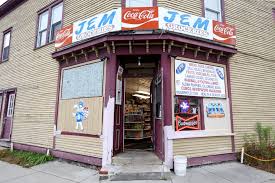
Walking to the J&M and back was always an experience. You’d walk by the Nepali house, the old guy who is perpetually fixing his van, the chainsaw man, and the hoarder who has had Christmas decorations up since you moved in eight years ago. Finally, you’d get to the corner, and Judy would see you from the steps of the store and call out to you, signaling the end of your journey.
Judy can always be found on the front steps of the J&M, chatting with people who just bought a pack of cigarettes inside. Her laugh booms from the corner of Archibald and Intervale, like a loud invitation to shop at her store.
Walking into the J&M, the lights were always dim and warm, a ventilator was humming, and an indescribable smell filled your nose. One of the first times I went into the store, I was with my older brother. He described the store as smelling like “root beer and diarrhea.” I always thought it just smelled musty, with some onion in the air. However, the smell is still comforting to this day. It gives me a sense of ease and safety. It smells like listening to my mom talk to Judy for what seemed like an hour. It reminds me of all the times I told Charlie —Judy’s son— about my baseball games, and how closely he would listen.
As a child, I remember tagging along with my mom or dad to go to the J&M at least once a day. There was always some item we needed, whether it be toilet paper or baking powder. I remember carefully perusing the front aisle, looking at each and every kind of candy she had, while one of my parents swiftly gathered whatever items we needed. After looking at all of the big bags of gummies and the boxes of Mike and Ike’s, I would reach into my pocket and fish out two or three quarters, and pick out some Lemonheads or Red Hots. I liked to get the Red Hots because my sister would never ask for any. After we checked out, we’d start back home, and I would make my candy last as long as possible.
There was also the walk home from school. My father would pick my sister and me up from I.A.A. and walk us home. After walking through the sunflowers in front of the grey house and past the daylilies behind the white fence, we would inevitably get to the doors of J&M. Hopefully, it would be a hot spring day, and Judy would have the slushy machine running. There seemed to be a million flavors to choose from. I would ask for lemon-lime, and in two seconds, I would have a white foam cup in my hand filled with sugary ice. Immediately, all of the syrup would be gone, and my friends and I would experiment with different ways to get more flavor from the drink.
Ultimately, J&M felt like a second home. A place that was there for you whenever you needed it. It wasn’t a chore to shop there; it was something to look forward to. There was never a rush to get out of the J&M. You could only hope you remembered more things you had to get, so you could stay and chat with Judy for a few more seconds.
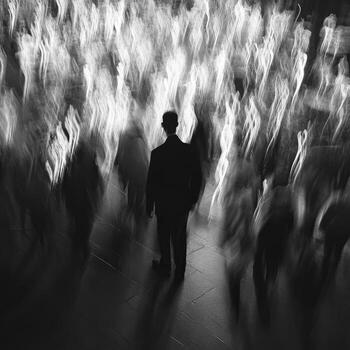
Two Poems on Loneliness and Connection – Vera Finkenzeller
The Seat You Used To Fill
There was a time where I was not lonely,
A time where I could look up and see you,
Your laugh folding into mine
Like two hands finding each other in the dark.Now, I sit across from your memory,
A faded photograph propped beside a paper cup,
Your smile holding the shape of a life
I still feel breathing beside me.Around me, strangers talk, chew, and hurry,
Their voices drifting like a soft static,
A reminder that the world keeps moving,
Even when one heart has quietly stopped.But here, in this booth of red and white,
I keep a small promise to us,
To share one more meal,
To hold one more moment,
To keep you close in the only way I can.Loneliness visits like an old companion,
Filling my tear ducts, drifting slowly down my cheek,
Sliding into the seat you used to fill,
But connection, true connection,
Lingers in the space between what was
And what I refuse to let go.So I sit, I eat, I remember,
And in the warmth of that remembering,
I am not entirely alone.Together But Alone
I laugh when they laugh,
Follow the rhythm of the room,
Speak in shared jokes,
They are like clothes that don’t quite fit,
But pass.I know their stories,
Their losses and loves,
But mine stay hidden inside,
Too fragile to offer
To people who wouldn’t understand.Because beneath the quiet,
I’m searching,
Not for attention,
But for connection,
Someone who wants to know,
Not just the outline of me,
But the mess,
The softness,
The real ache beneath my ribs.I stay anyway,
Hoping one day
Someone will see me
As I really am,
Open, honest,
Truly known.
 Burlington City & Lake Semester