
As the early weeks of the semester unfold, BCL students begin to explore the complex systems that lie just beneath the surface. It’s easy to take these systems for granted, but they are everywhere.
For example, when we see people who are homeless in our parks and on the streets, we may not have considered the full set of challenges faced by these people and the organizations that support them. We stroll under street trees every day, without appreciating their care, or their impact. We drive past keystone non-profit buildings without ever having stepped inside. We engage in transit–walking, biking, busing, driving — without understanding the infrastructure, investments, and decisions that keep our streets functional and equitable. We appreciate the city’s glorious sunsets over the lake without a passing thought to the non-human neighbors that live beneath the surface, nor the ways that human choices impact these creatures’ survival.
It’s common to walk away from a session with community partners with more questions than answers. And these questions aren’t simple. After all, it’s often unclear how to balance competing needs, especially when values are shifting and resources are scarce. The good news is that once these issues are made visible, they become indelible. Once we see them, they can’t be unseen. Every new dimension adds a layer of interdependence. The city, it turns out, is a fascinating textbook.
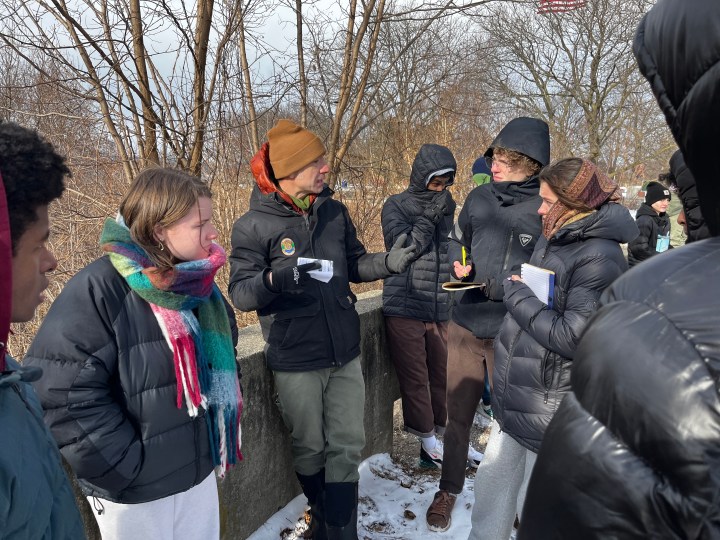
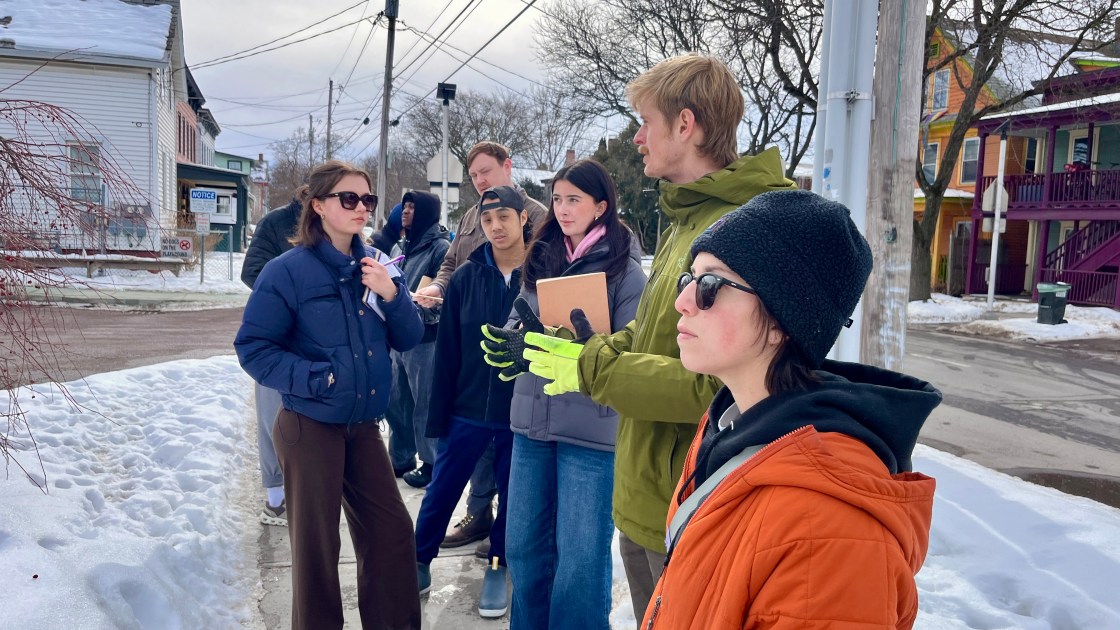
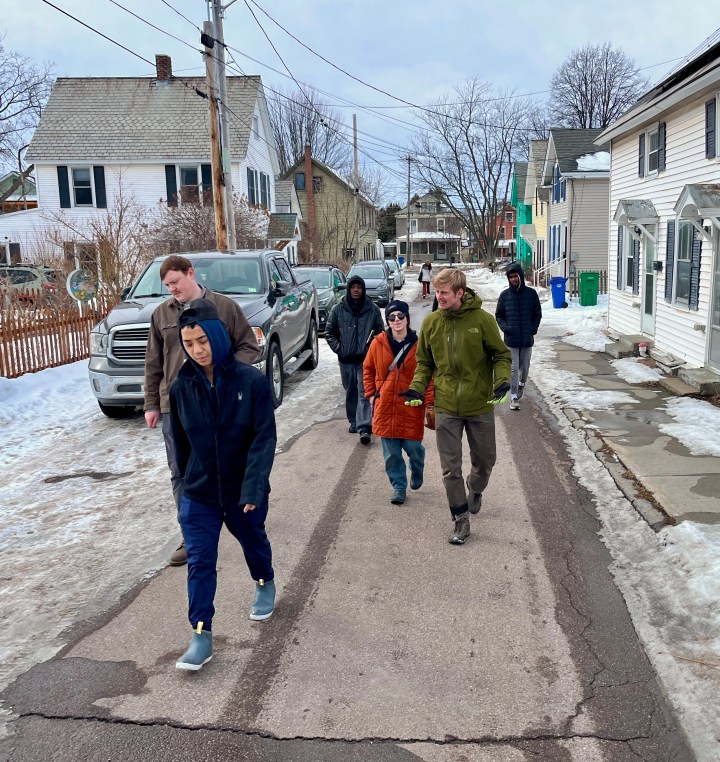
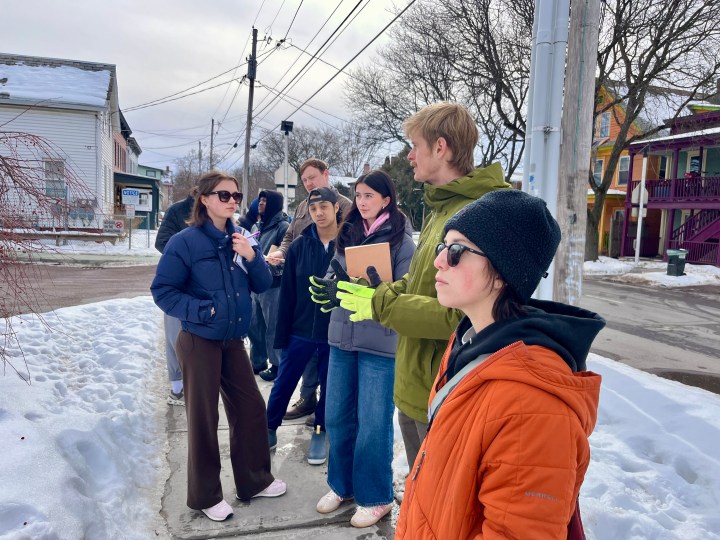
Neil [told us] that there are “weekly counts camps and number of people in the camps, there are city sponsored beds, food shelfs, and mental health services.” On paper these are interventions. But walking the same paths where people are walking with children and where tents line the tree line forced me to confront how limited those solutions feel. If, as Neil said, “fear is driven by not
knowing enough,” then the distance between housed residents and unhoused residents is not just economic, it is informational and relational. We fear what we don’t understand, and that fear then justifies not helping… The city’s sponsorship of beds acknowledges need, yet the persistence of camps suggest that emergency shelters without long term housing keeps people in a cycle without stability.Personally I felt my opinion and perspective change over the course of the walk. I have used parks as places of pleasure and recreation without ever questioning my right to sit or linger. Watching how quickly public discourse frames unhoused people as disruptions made me recognize my own complicity in who “belongs…” The walk with Neil made the crisis clear to me. Homelessness is
not just a policy failure but a daily disagreement over space and safety. Equity, I realized, is
not just about adding services, it’s about reshaping community narratives so that public
space is for everyone.
- Hannah
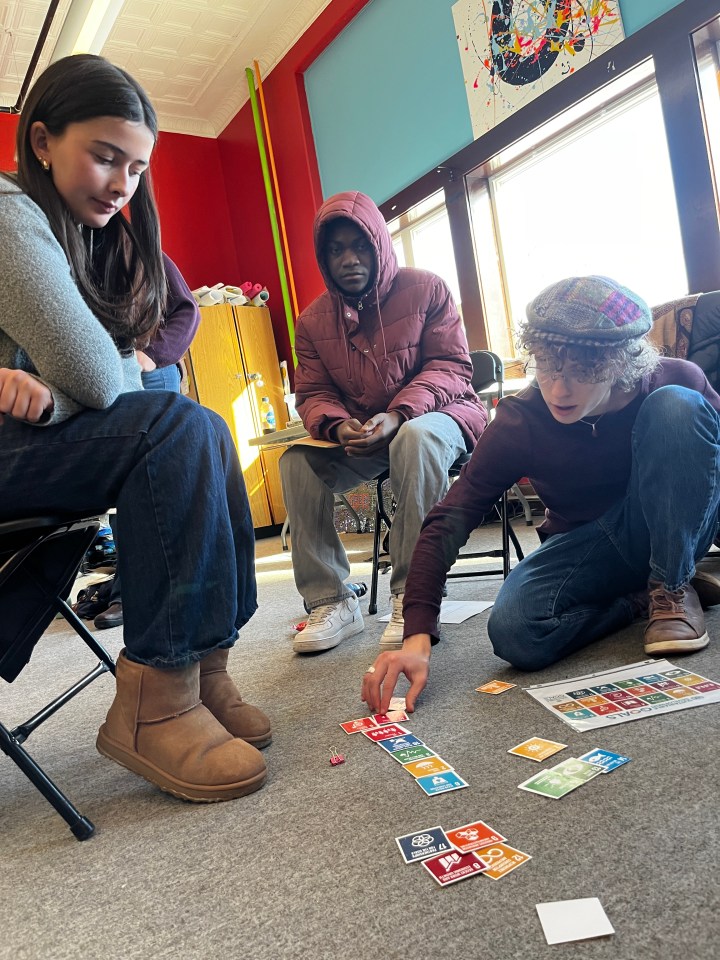
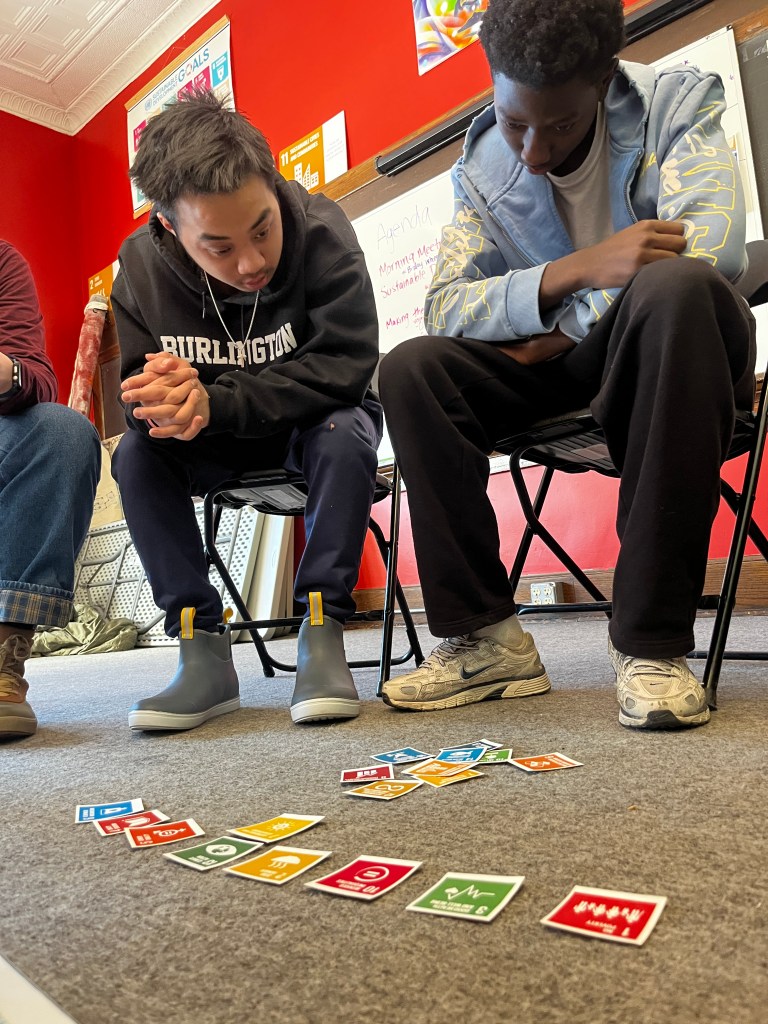
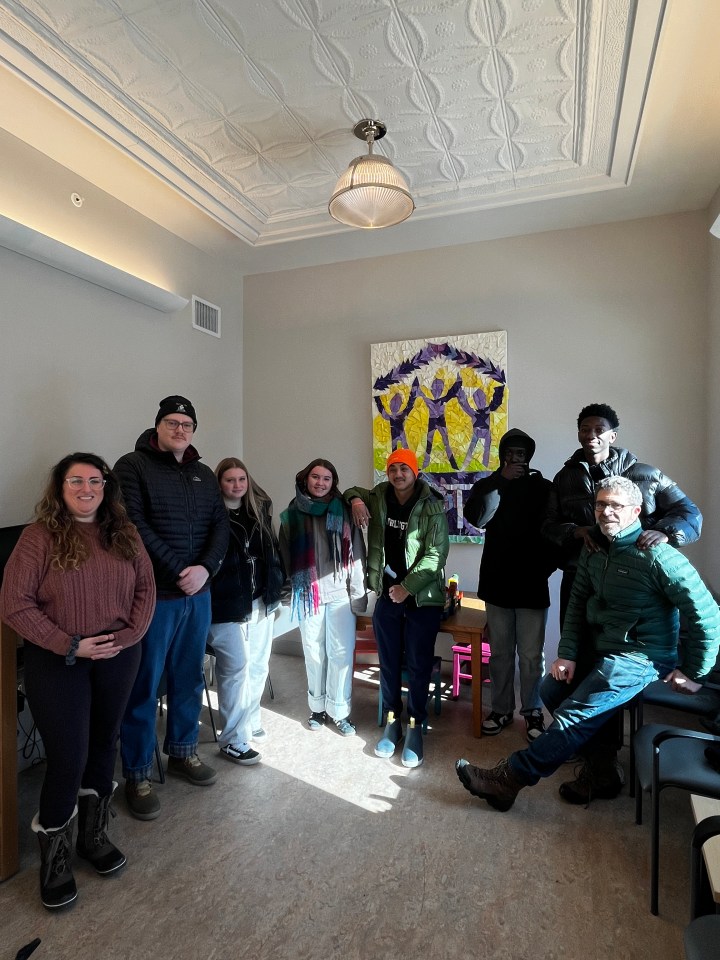
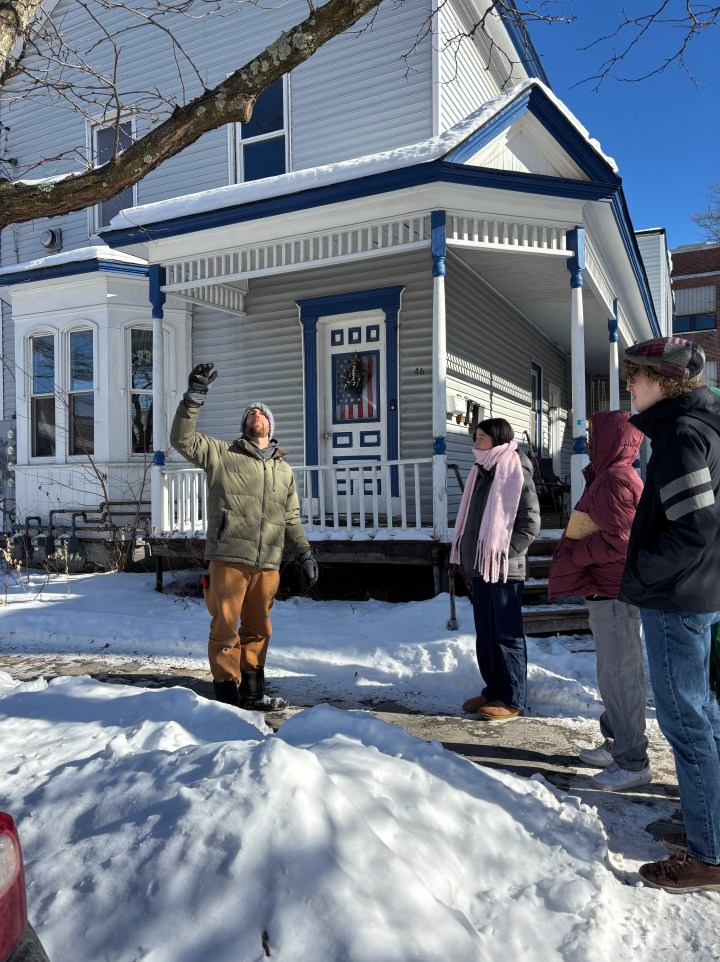
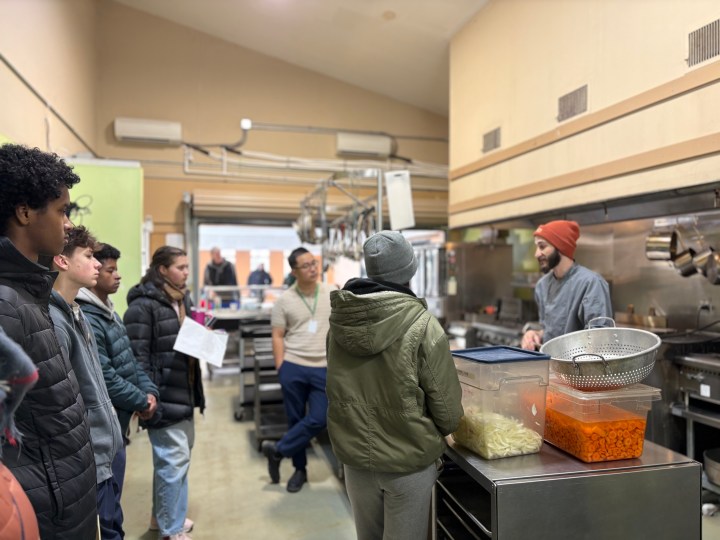
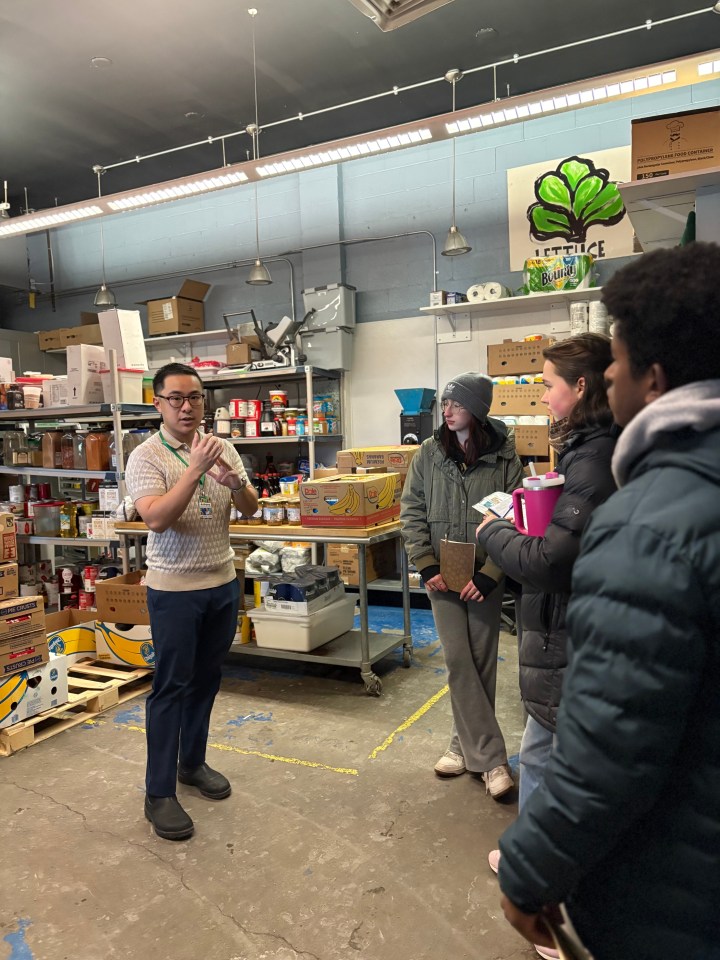
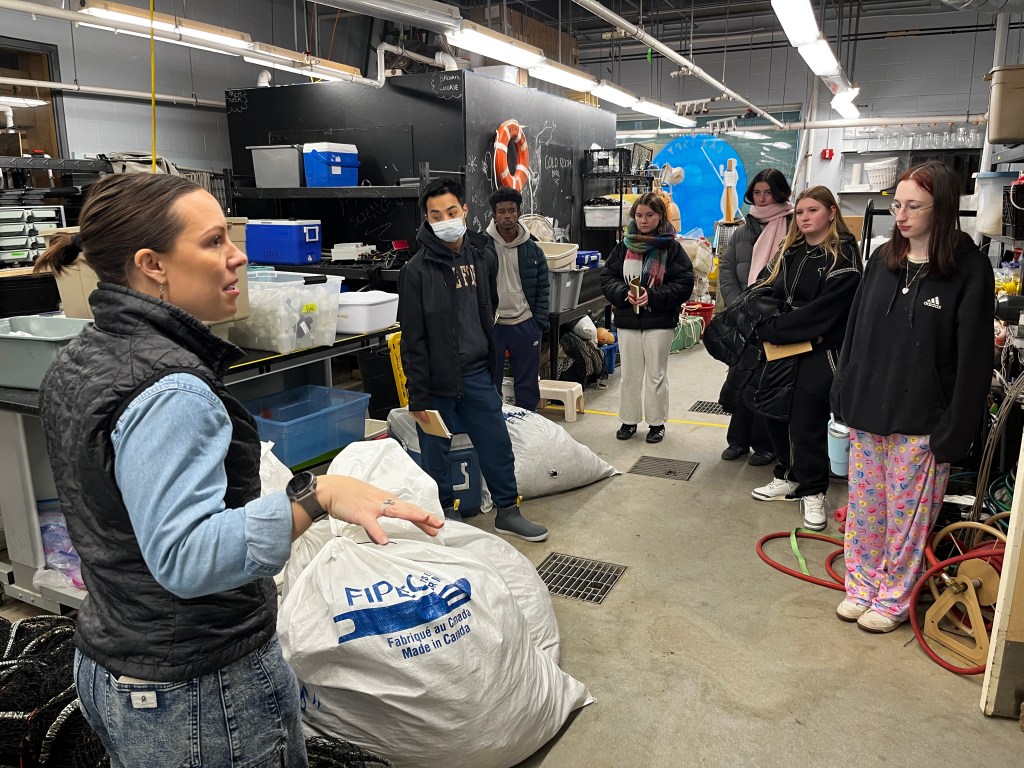
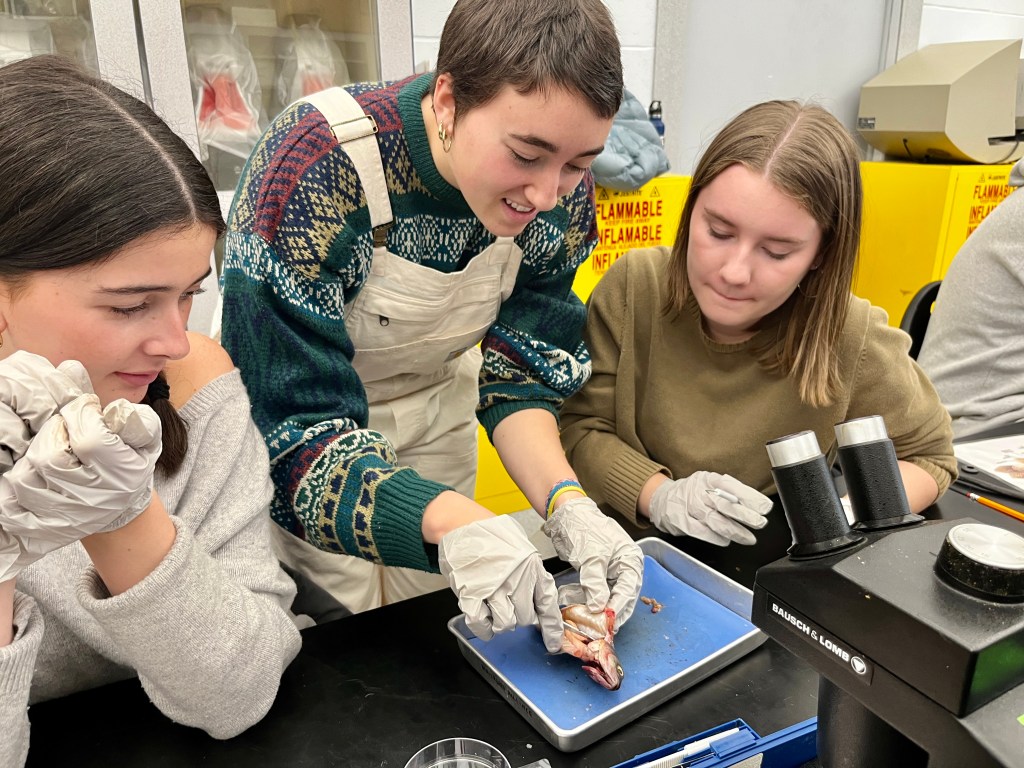
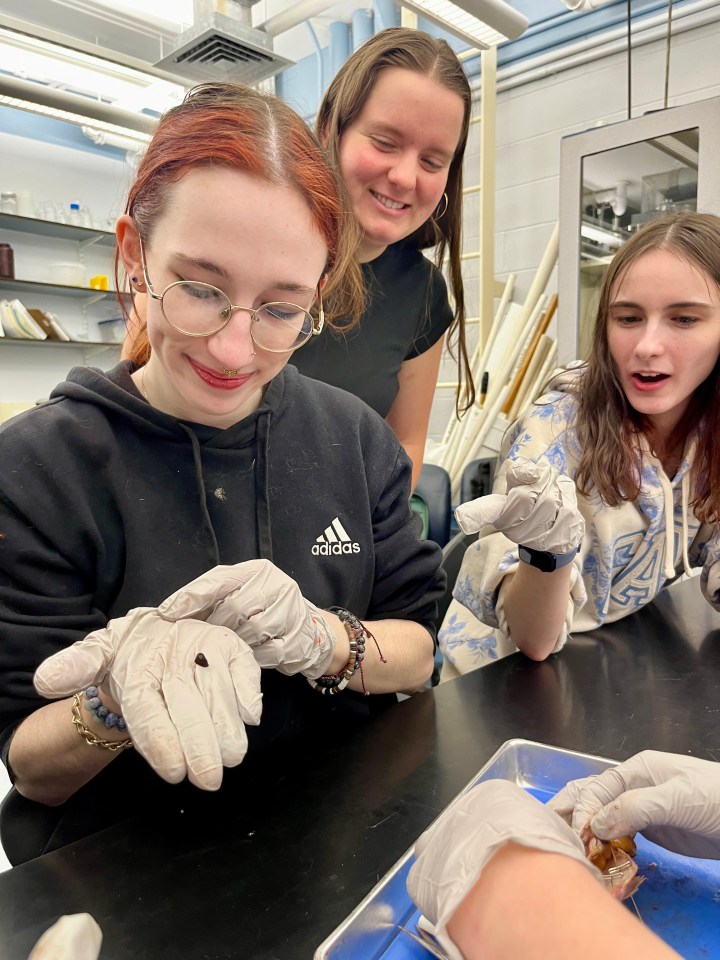
A specific moment I feel that was memorable is when we went to the Rubenstein Lab and dissected fish. It was definitely an experience! I went in not knowing what we were doing and when I found out [about the activity], I was a bit stuck and not prepared for it. At first, I couldn’t handle touching the dead fish without freaking out and we were all just laughing while trying to take the fish’s eggs out and everything. My favorite part and the most memorable was when I got to hold a fish heart. I’ve never expected a day in my life I’d ever hold a heart, and I can’t lie, especially a fish heart. I learned that it was so tiny… and that a fish’s brain is half the size of their heart.
- Taiya
When I was first reading an article about the UVM researchers studying microplastics in Lake Champlain waterways, I didn’t understand the significance of researchers lowering a net into the Winooski River. Andrea Stumpf and Anne Jefferson explained that microplastics are found almost everywhere and that they show up in nearly every sample. These particles are not just floating somewhere far away, they are here in our rivers, and in our lake. Reading this along with my experience dissecting a fish at the Rubenstein Lab and the Echo Center gave me a completely new perspective. It is one thing to hear about the statistics about pollution, seeing the microplastics inside them was truly eye opening. If these fish are ingesting these plastics, what does that mean for the rest of the food chain, and what does that mean for us?
Reading from sources and learning from the Rubenstein lab left me with a lot of questions. If more people could see what we saw, would they care more? Would it change the way they think about plastic use or environmental policies? And as a community, what responsibility do we have to protect our waterways, especially when the damage is not always easy to see? Overall, this experience made me more aware and changed my perspective. Sometimes it takes seeing something with your own eyes to truly understand how big of an issue it is.
- Frances
When we went upstairs [to the lab], it didn’t smell good, but it was fun to be with friends. I didn’t expect it, but we dissected a fish! It wasn’t the worst, and we worked together. The people from the lab kept complimenting us because of how fast we were, and because we were one of the only groups that had a fish with eggs.
I learned a lot about what a fish has in its system, and I took away a lot of new things from that experience, especially about how the lab team has to do a lot of work to see if the fish in the lake have any problems…and to keep them alive and healthy.
- Aime
One interesting experience that we had in BCL was visiting the Rubenstein Lab at the ECHO Center for Lake Champlain. While we were there, Ashley, who hosted us, gave us a tour of the lab. They dedicate themselves to studying aquatic ecology and lake science. The Rubenstein Lab is an important place in our community… The Rubenstein Lab researchers do different types of experiments, from being inside the lab to being out in the water.
I really enjoyed the time we spent at the Rubenstein Lab. I learned much more than I already knew about fish. When we were asked to dissect our fish in small groups, I wrote in my journal: “You can tell the gender of a fish by dissecting the inside of a fish. You can tell them apart by the reproductive organs located at the top, usually near the spine. The female has orange granules and a pair of ovaries, while the male has softer, white, V-shaped testes.” This experience made me think about my dream career after high school because I want to pursue a career in dentistry. I was very happy when I realized that I wasn’t very bad at dissecting a fish. I personally believe this experience made me feel like I can just be myself, which I liked.
- Dunia
Learning more about Burlington’s history changed my perspective. Something so ordinary now had once been new and surprising, and it makes me wonder what else has changed or been forgotten. Little facts like that remind me that history is not just buildings and maps. It is people, memories, and small moments that shape a place. It also makes me wonder about the people from back then. How would someone who lived here 50 or 100 years ago react if they could see Burlington now? Would it feel exciting, strange, or unrecognizable to them? And what about the older people who are still alive today? How do they see the city changing around them? Do they notice small details we overlook, or does it feel completely different to them too? Thinking about that makes me feel connected to both the past and the present, and it makes the city feel bigger and more alive than I realized.
- Najib
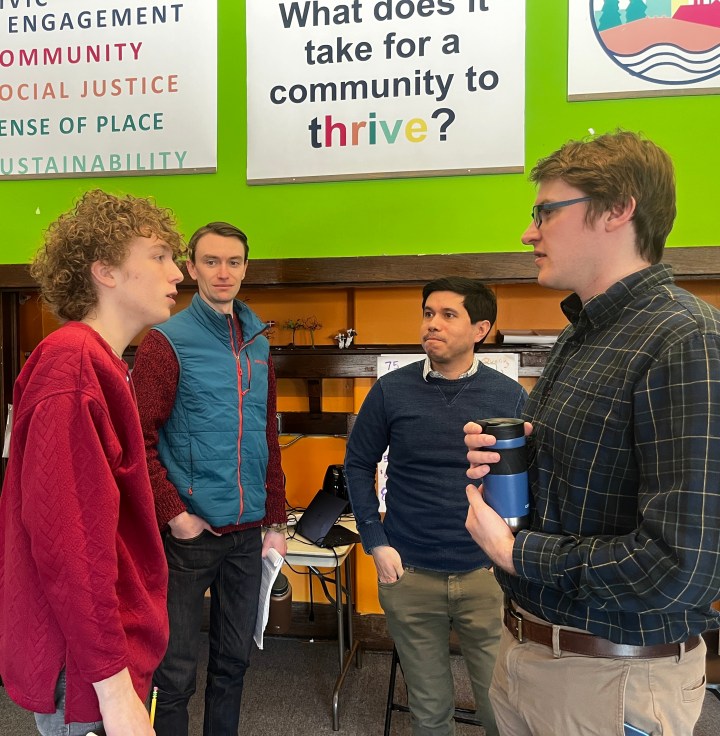
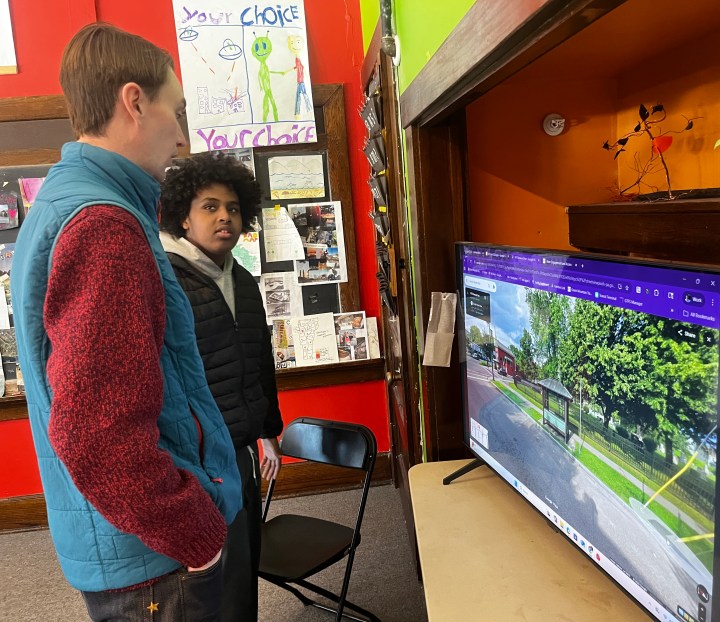
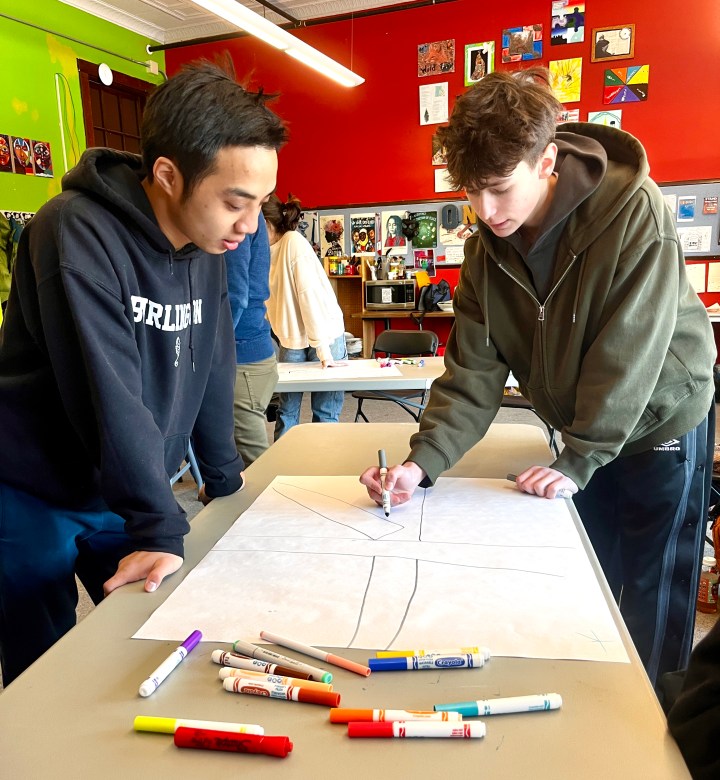
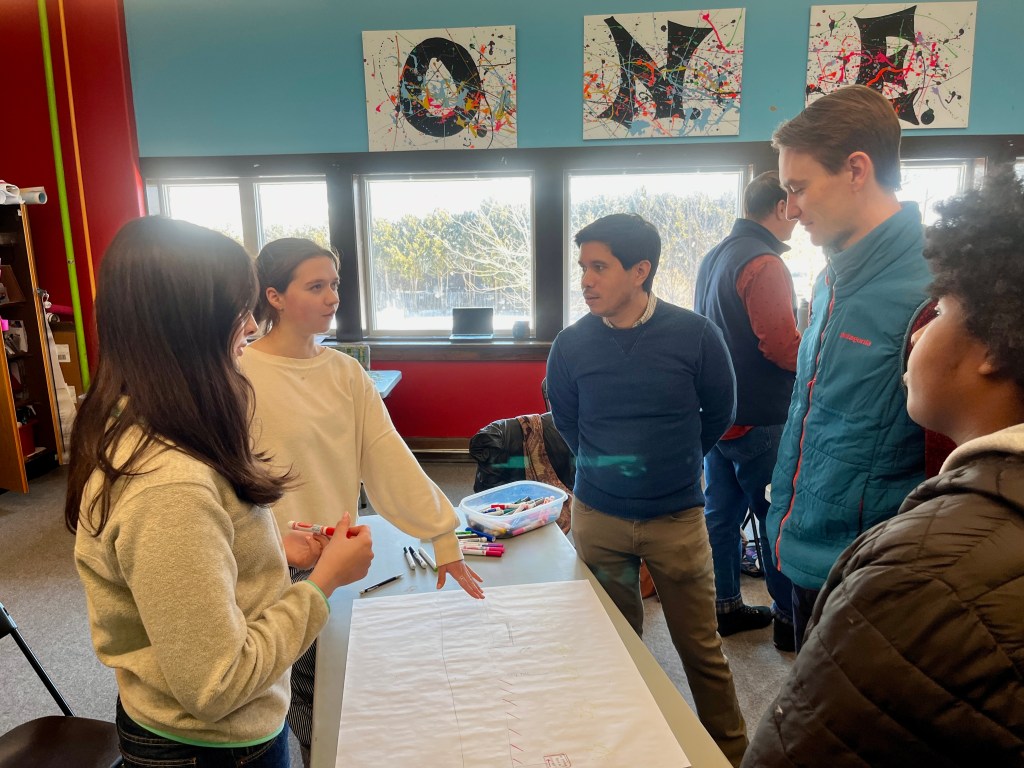
One experience that really stood out to me was our time with our GMT community partners: Christopher, Damian, and Connor. I am a long-time user of the Burlington bus system, with the bus being a key tool for my transit throughout much of my life. Changes to the bus system, such as the dropping of scheduled bus times and routes, can and have had large implications on my life and what I can do. For example, every Sunday, I have to go downtown for work, but since they cut the Sunday bus route I used to ride, I now spend a fair amount of the money I make just on a Lyft for the commute, especially during the winter months. To have the opportunity to meet the people who make the decisions over the services I use so much in my life was fascinating; it felt in a small way like [I was] in proximity to power.
In a VPR podcast, Peter Clavelle, the old Burlington mayor, said that in the 90s “there was a notion that public transit was important… We just failed to convince regular people.” It was especially disappointing for me to hear about this, [that we lost an] alternative future in which we have a cheaper more regular transit system… Now, the Burlington Bus system is failing to keep up with cost and is forced to cut service and increase fares on bus, further hurting ridership and revenue. This is interestingly the same “death cycle” mentioned by our BCL community partners from GMT, and it felt like once again such a gut punch to hear how this is happening to the service in my own city that I rely on so much. Ultimately, this section of the podcast had me wondering: how do we effectively spread the word and convince locals about solutions to problems affecting their daily lives, even if they aren’t paying attention?
- Keats
In March of 2025, according to Seven Days, Burlington voters passed a “pair of $20 million bonds, one to upgrade the water system and another to address deferred maintenance, such as crumbling sidewalks.” But this $20 million wouldn’t need to be spent if Burlington had continued to maintain the new things that it builds. There are many examples of Burlington’s problem with deferred maintenance, such as Memorial Auditorium, which “was a public auditorium and civic center in the heart of downtown Burlington built in 1927 to honor World War I veterans. It was closed in 2016 due to structural safety concerns as a result of many decades of deferred maintenance.”
One of the hardest things is training your brain to take care of your future self. I learned this the hard way when I continued to run on an injury that got worse and worse. If we can train our brains to take care of our future selves, like going to the PT when it first starts to hurt, we’re better off in the long run. But how do we train Burlington to take care of future Burlington? I believe Burlington should implement something called the Seventh Generation Principle. This comes from the “Haudenosaunee (Iroquois) philosophy that the decisions we make today should result in a sustainable world seven generations into the future…” We want Burlington to continue to be a place that people desire to live in, and if we continue on with this deferred maintenance problem, people aren’t going to want to live here… I believe that decision-makers should consider this principle when making the decision. Implementing the Seventh Generation Principle requires long-range thinking and more time and money than normal decisions. Currently, Burlington’s problem of deferred maintenance is kicking the can down the road. But if we implement the Seventh Generation Principle when deciding whether or not to maintain something or deciding where our budget should go, future us will thank us.
- Adele
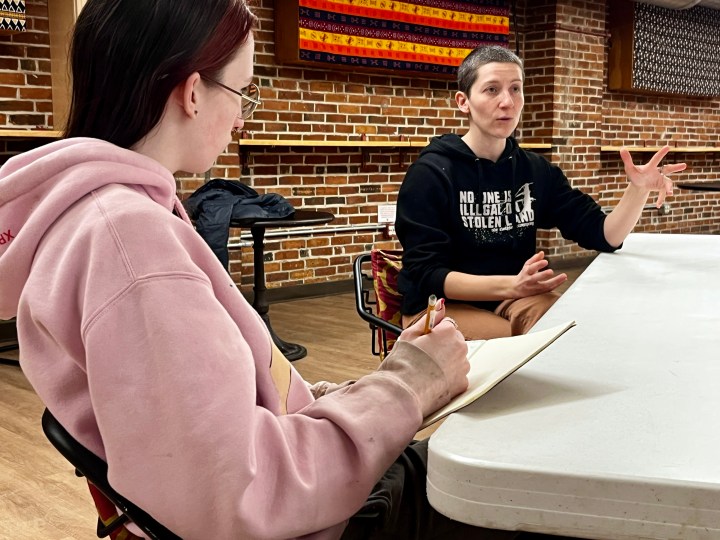
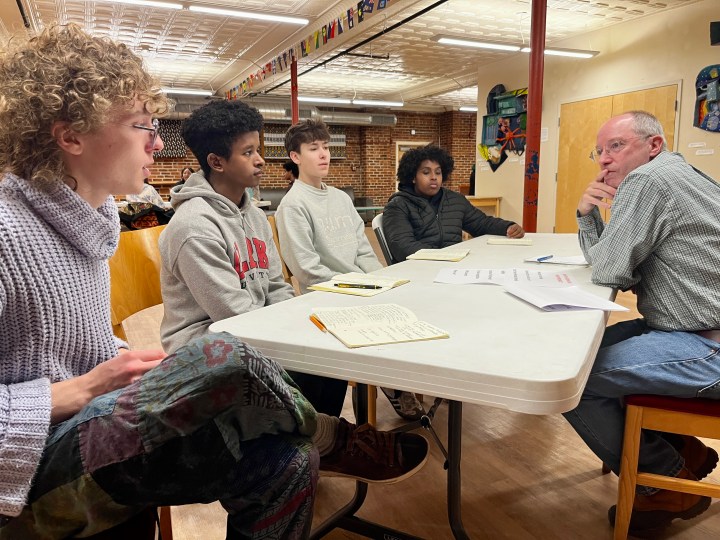
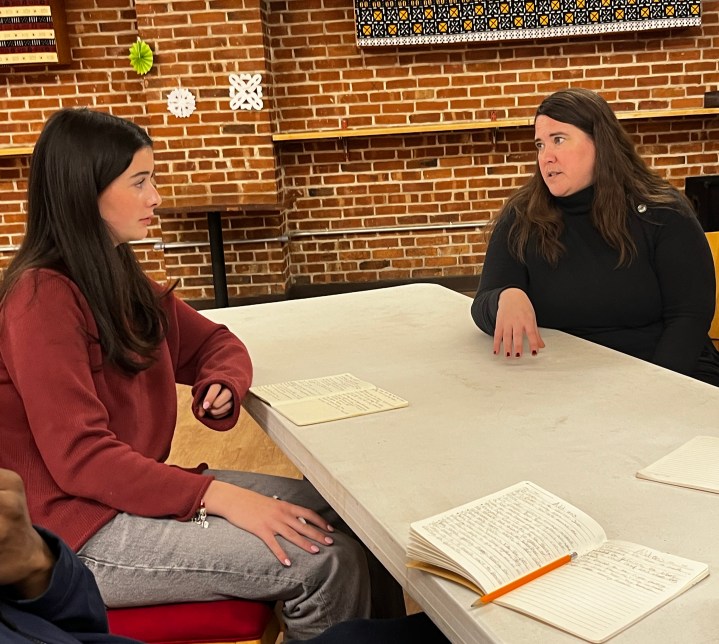
During our time with the community partners who work in housing, I learned about the
many factors that make housing unaffordable:● Housing shortages
● Construction is increasingly expensive
● Too many short-term rentals
● Too many construction/renovation regulations
● UVM students whose parents pay for housing
● Tariffs make imports needed for construction very expensiveThis experience opened my eyes to issues that Burlington was facing… I haven’t been aware of this issue because I don’t have to pay my own mortgage or taxes, but as I get older, these kinds of issues become more and more relevant to me. I am concerned about if I will be able to find a place to live after college if the crisis continues. When I got the chance to have a discussion with a UVM student at the Rubenstein school, I asked what his least favorite thing about UVM is… He told me that housing was a major issue. It’s not just homeless people who are affected by the housing crisis. Limited housing means families have to pay a lot more for their homes or rent. This makes me wonder, if the housing crisis impacts everybody, how can everybody work together to solve the issue and make housing more affordable?
- Welcome
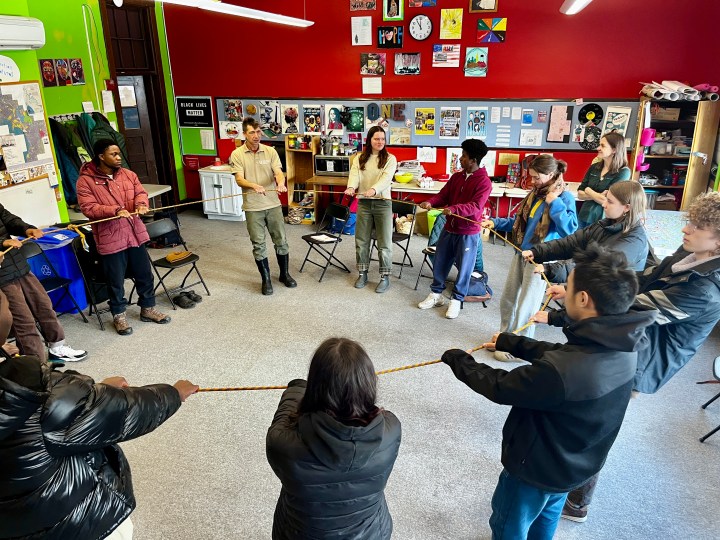
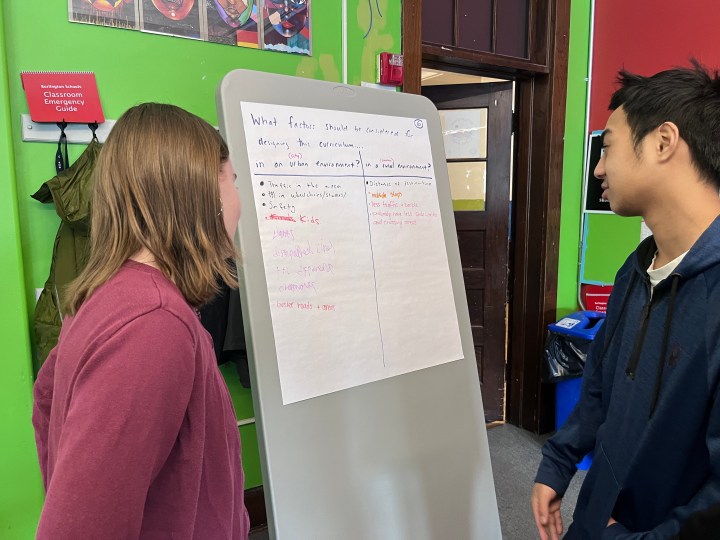
I feel like the most impactful one is when we were in the event hall with people from COTS and other organizations. Being with community partners [and talking about real issues] feels different from normal school, but it’s something I would much rather do. It’s better than be in a classroom that isn’t giving me these real world experiences.
- Selma
One thing that stuck with me is when they told us that “there are about 300 people who are living outside on a daily basis in Burlington.” This just shocked me. Purely left me flabbergasted. Mainly because I walk past the homeless a lot more than I think, and just hearing that estimated amount of people genuinely left me in awe. It makes me wonder what I can do to help. Just even the small little things I could do that could possibly make a big difference. The worst part about it to me, is that I complain about being out in the cold even if it is just for 25 minutes. People that are homeless have to sleep in that weather. What do you think you can do to support the homeless? Even if it just a small act.
- Michee
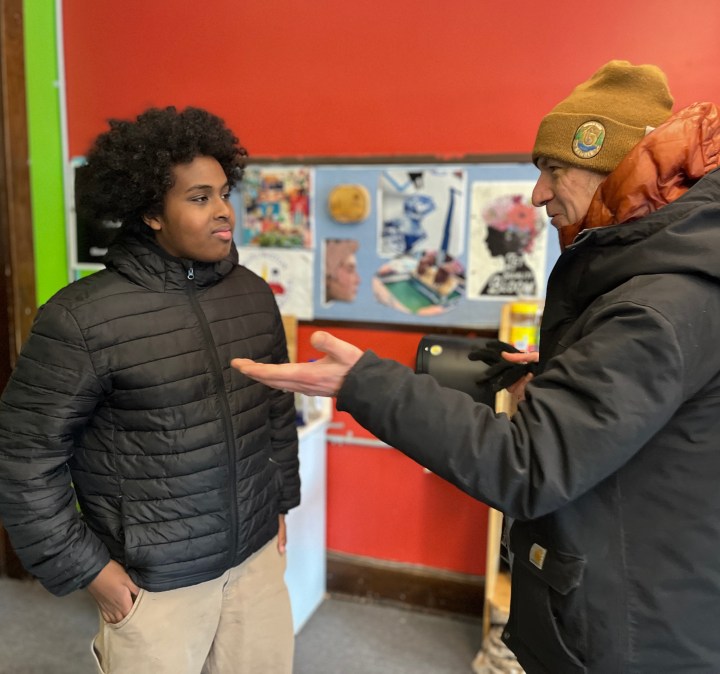
Our conversations with housing experts connected to our conversation with Mikey from Chocolate Thunder Security, and how eye-opening that conversation with him was for me. “Most of us are one wrong decision away from being the person we see on the sidewalk,’ Mikey said. This is a perfect example of how a community is not thriving. It’s so easy for us as humans to fall, and so hard to dig ourselves out of that hole. I honestly gained a new perspective on the homelessness epidemic, and I [am more aware] of how I don’t care that much. I should rephrase that, I find that I have a sense of apathy towards the situation, and that’s something that I learned about myself that I didn’t know. It’s unfortunate, and I can feel empathy for these people but it’s [hard when ]I honestly don’t see it as much in my everyday life.
- Mahdi
 Burlington City & Lake Semester