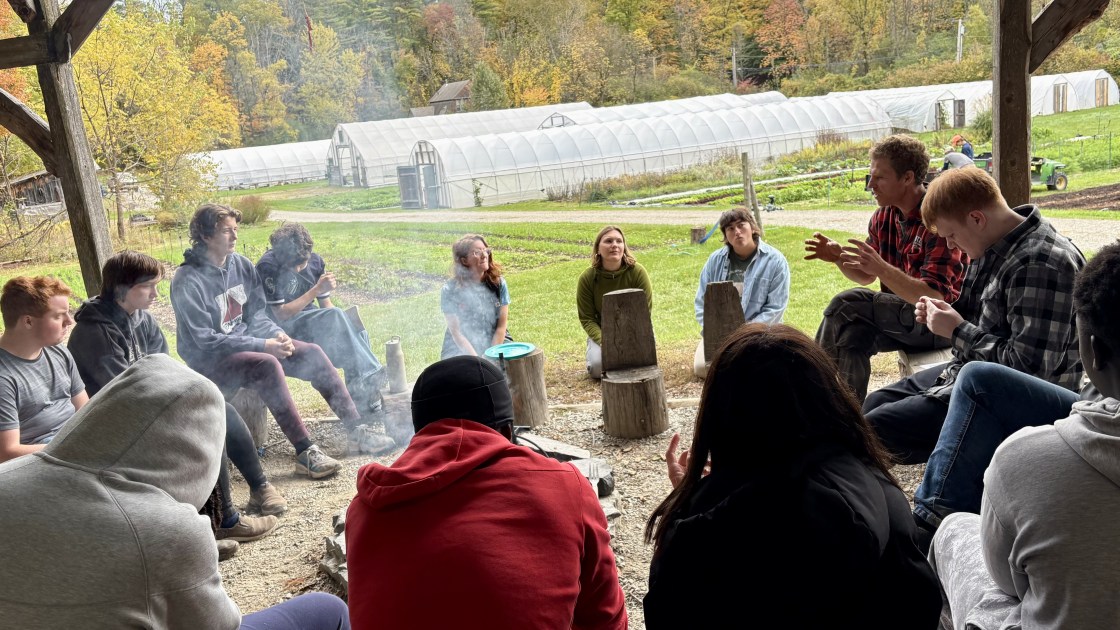
Burlington City & Lake Semester is a city-based program, and exploring urban systems is what we practice every day. Once a semester, though, we visit the beautiful grounds of lead partner Shelburne Farms to explore the systems of a working farm and dairy. Shelburne Farms’ mission is to “inspire and cultivate learning for a sustainable future,” and our time there with the educators, farmers, plants, and animals gives us a chance to practice systems thinking in an agricultural setting.
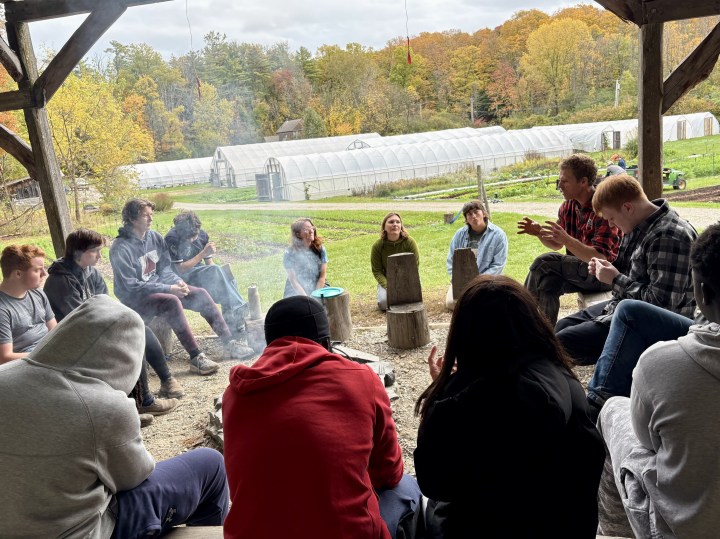
In October of 2026, our visit coincided with peak foliage. Everywhere we looked, the season was in full celebration. At the end of our day on the farm, we asked our students to consider the question, “What is alive on the land?” Students’ answers were grounded in place, from the sunlight that kept us warm when the cool breeze from the lake swept by, to the microorganisms decomposing organic material to keep the soil rich, to the vibrant foliage indicating the changing of the seasons.
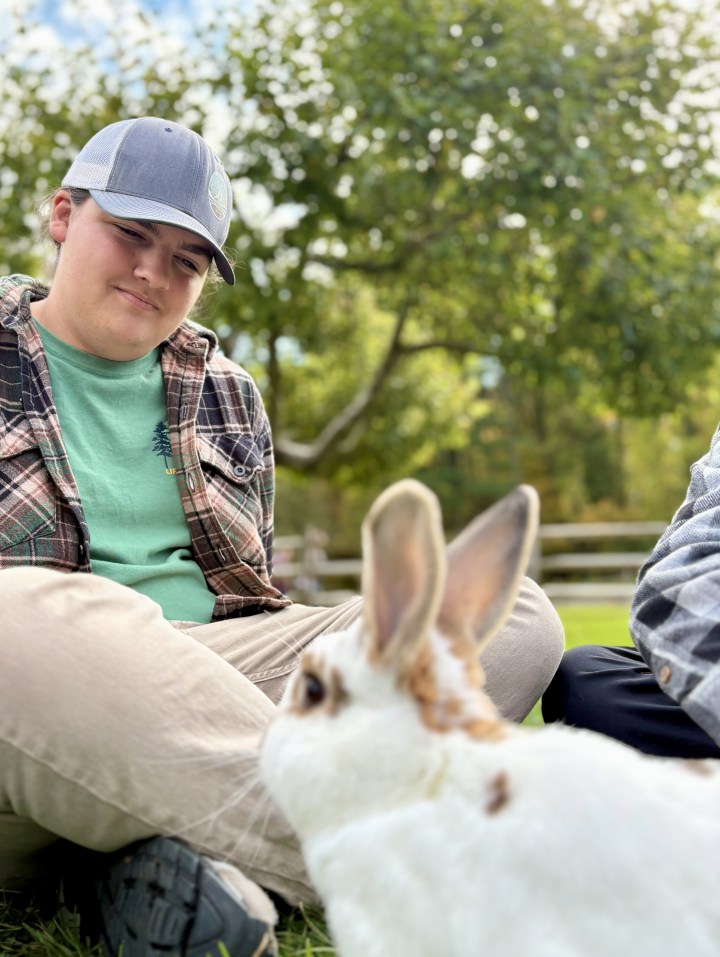
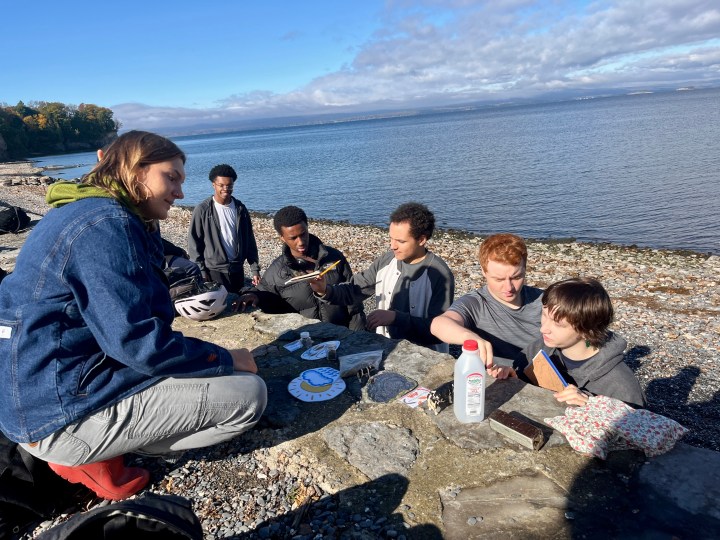
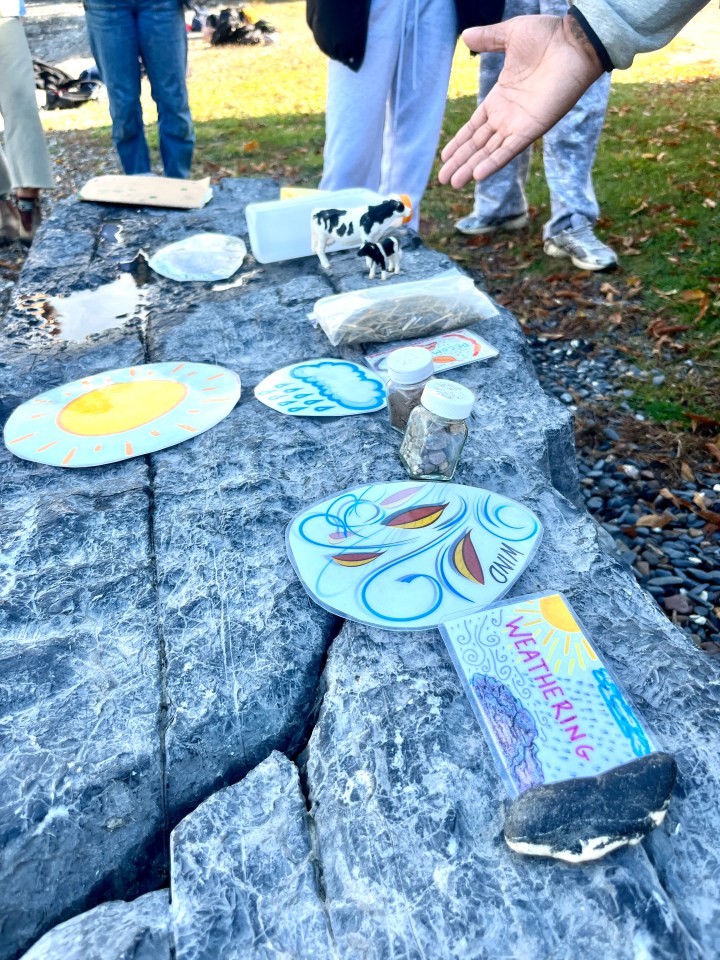
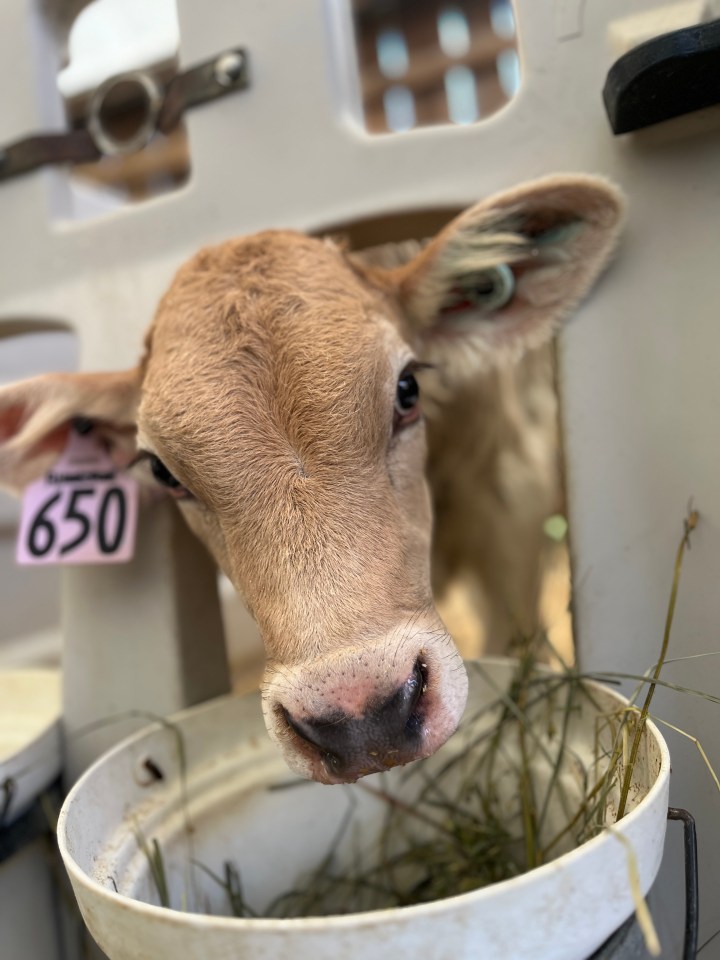
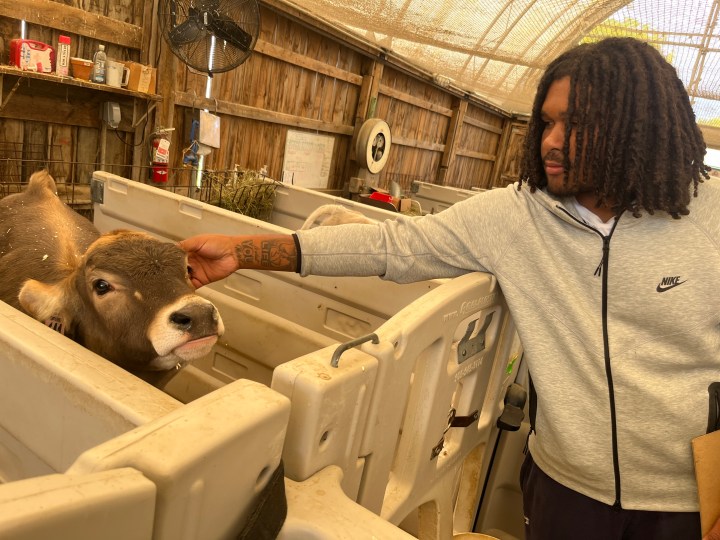
Our day started on a beach of Iberville shale formed millions of years ago, indicating that where we stood was once an ocean. We connected the story of cheese making back to the formation of these rocks. The processes of weathering, erosion, dairy, and farming highlight the interconnectedness of the land to the food we eat. Brown Swiss cows are at the heart of Shelburne Farms’ cheesemaking system. We visited the dairy and met calves who were only a few days old, one year old heifers, and the milking herd. There were many heads scratched, many tongues that reached for those hands–and new best friends made!
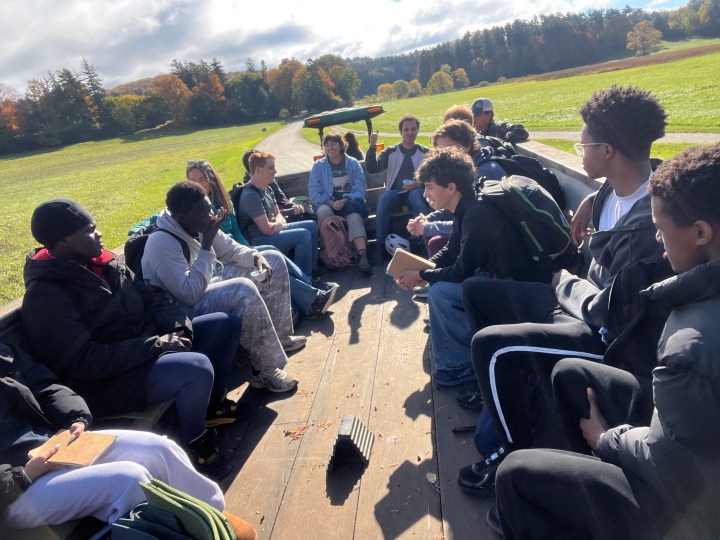
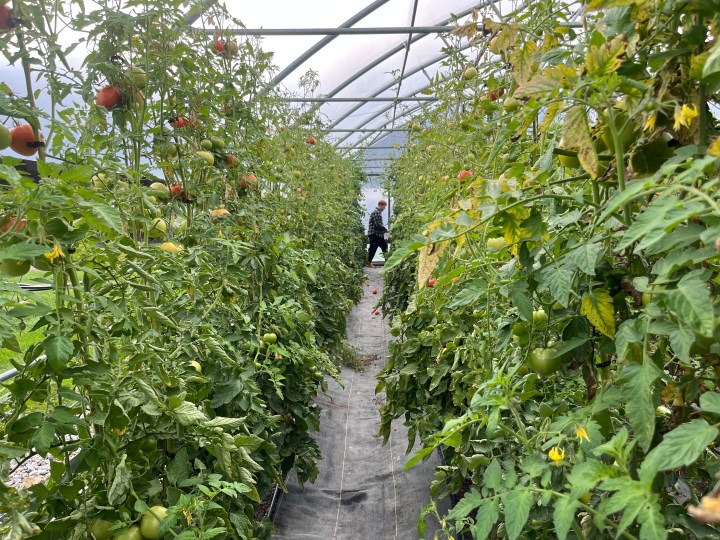
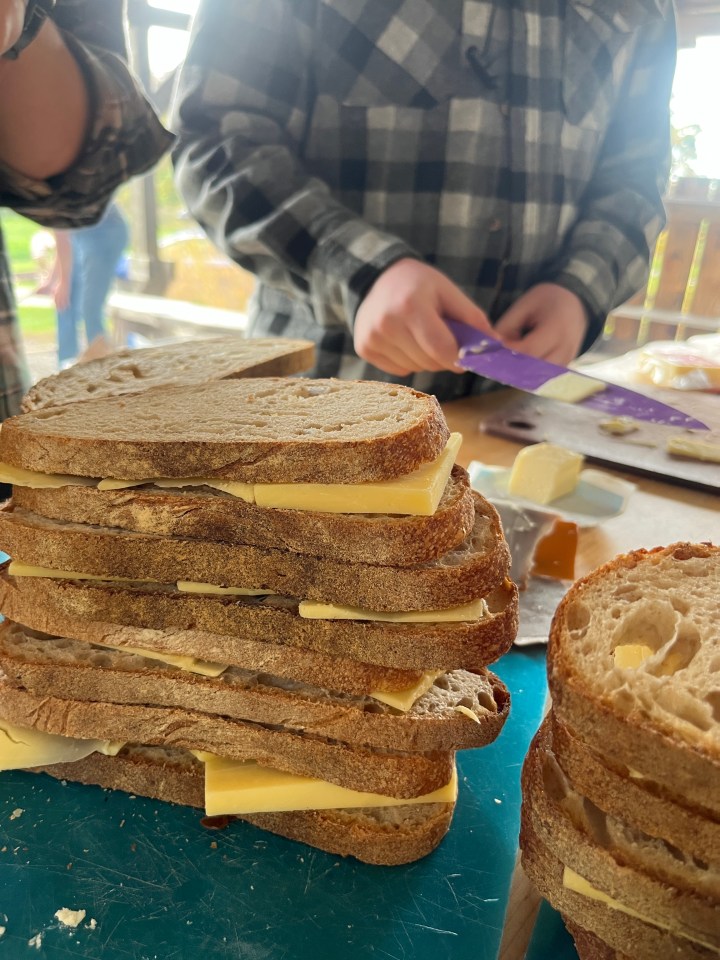
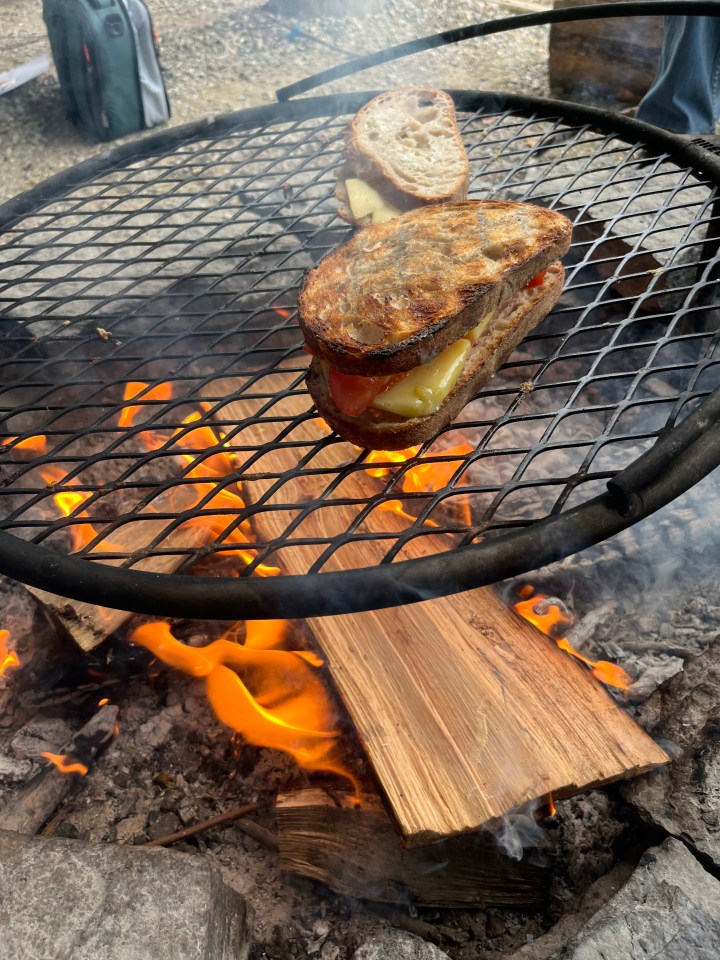
We further explored this concept of connections to the land on a tractor ride to the Market Garden. We took a tour of what was growing and cheffed up a salad, cobbled together an apple crisp, and made grilled cheese sandwiches over the fire. Josh Carter, manager of the Market Garden, shared his philosophy on what it looks like to grow food for the community using regenerative practices.
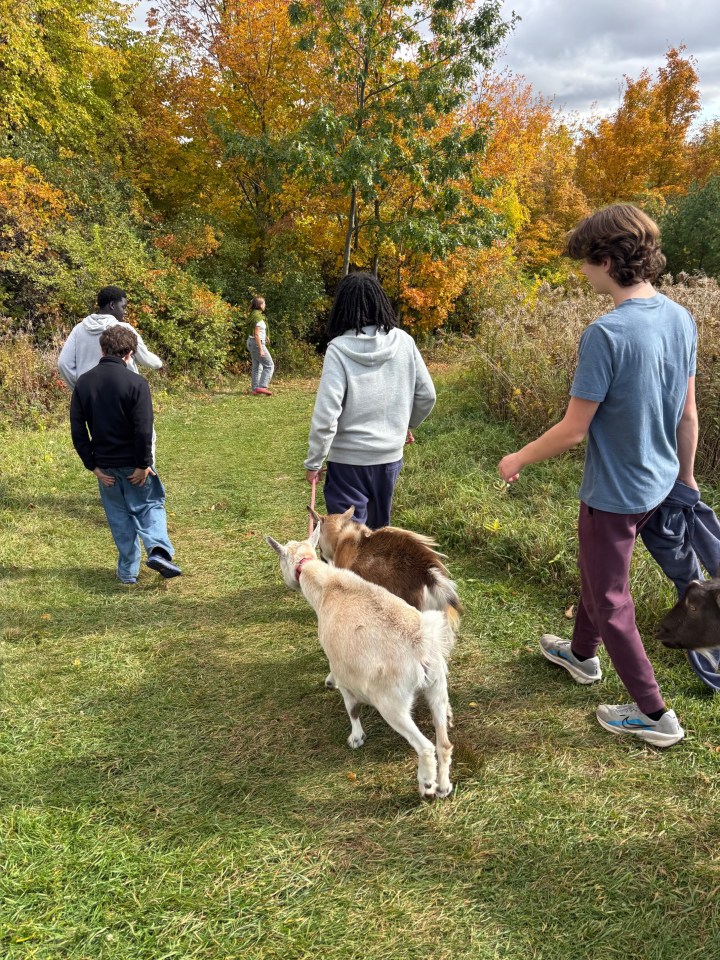
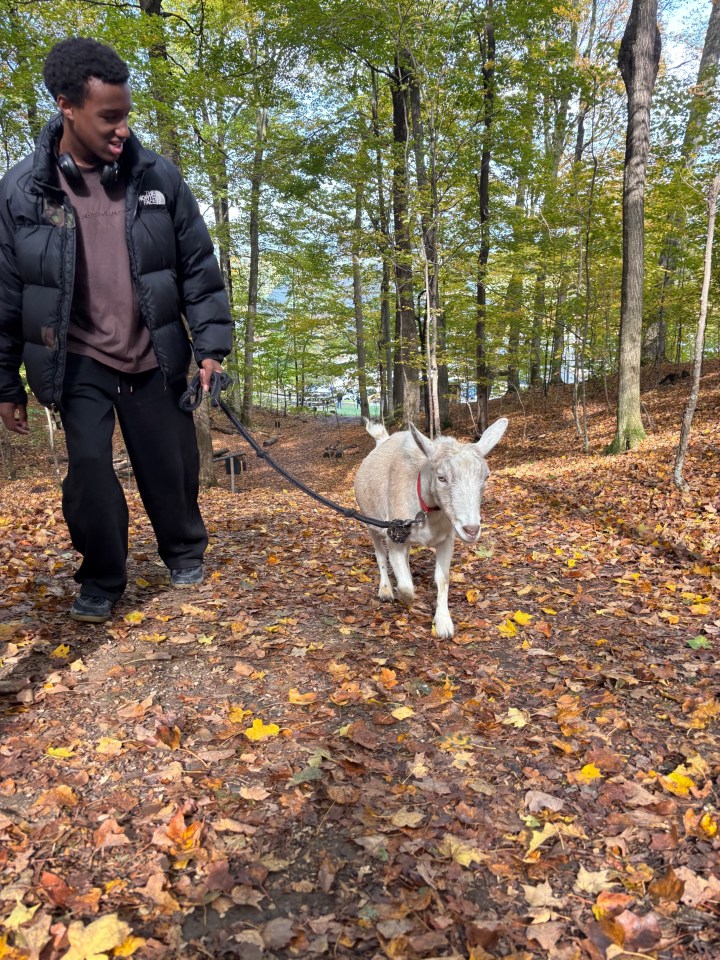
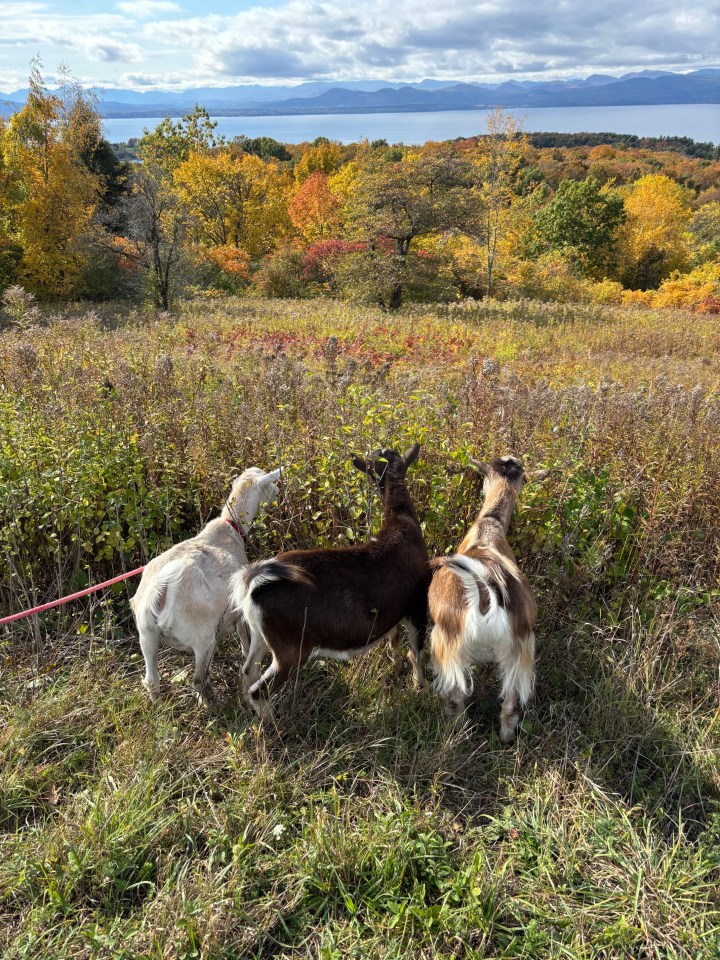
We ended the day with a visit to the farm yard, where we were greeted by goats, sheep, cows, and horses. Students hiked up to Lone Tree Hill with a trio of goats and were met at the top by a beautiful view across Lake Champlain to the Adirondacks. Our day was centered around the joy of having the land as our teacher, and will be a reference point when we encounter other systems. No matter the landscape, a thriving ecosystem benefits all who are a part of it.
The land has taught me what is a contributor to certain cycles. I also learned what is involved in the process of making cheese.
- Max
The land teaches you how much it needs you to take care of it and how much you need it to live. The land taught me how many things it provides.
- Ibrahim
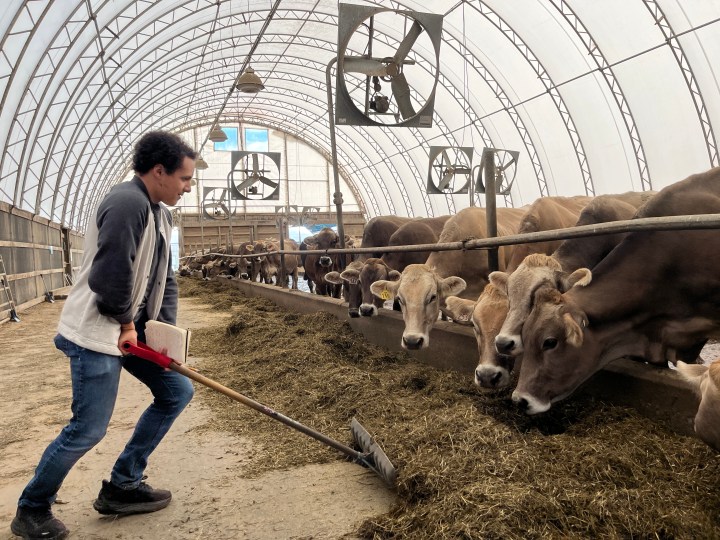
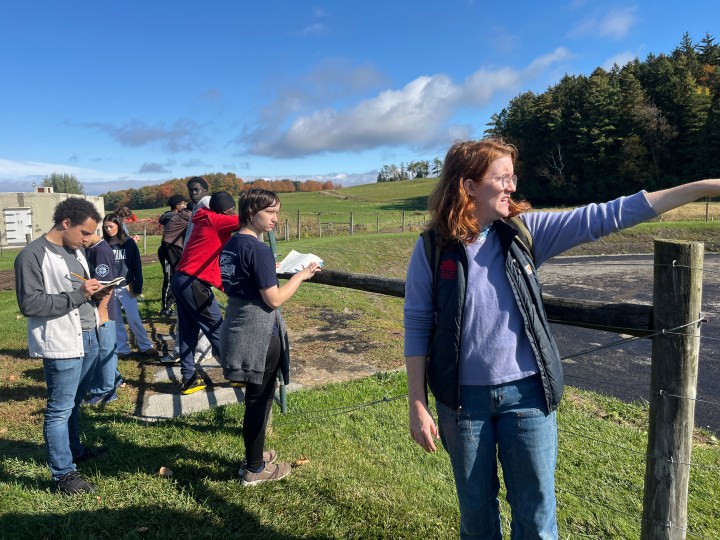
Some ways Shelburne Farms lives up to [their mission] is by having a sustainable way of taking care of their crops and their animals. The animals create manure, and then the manure is used to create better crops. The manure pit also stops more runoff.
- Anu
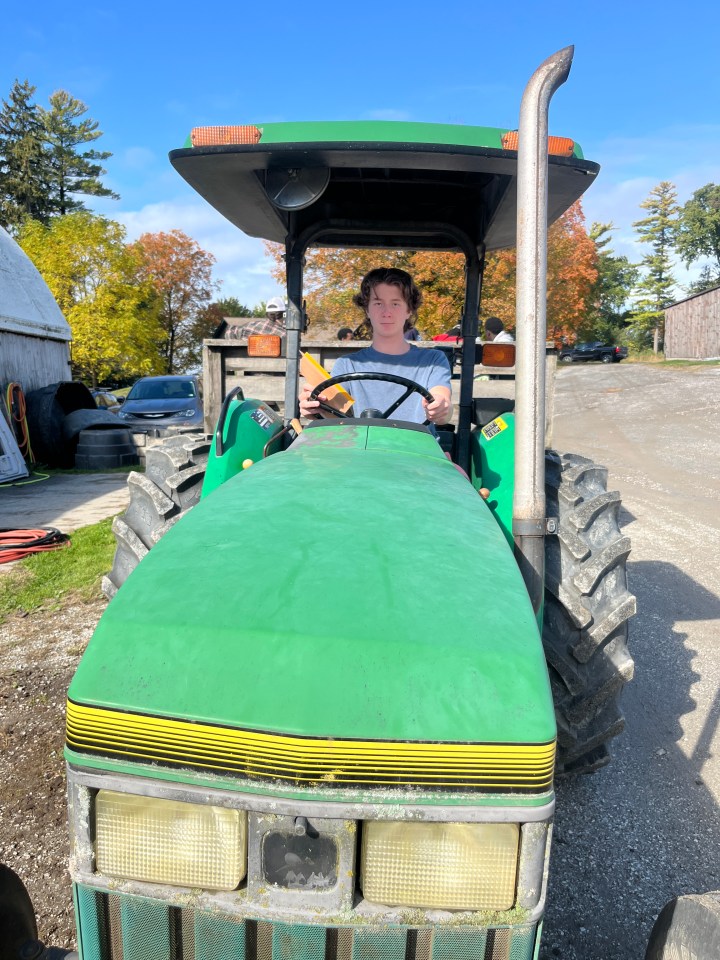
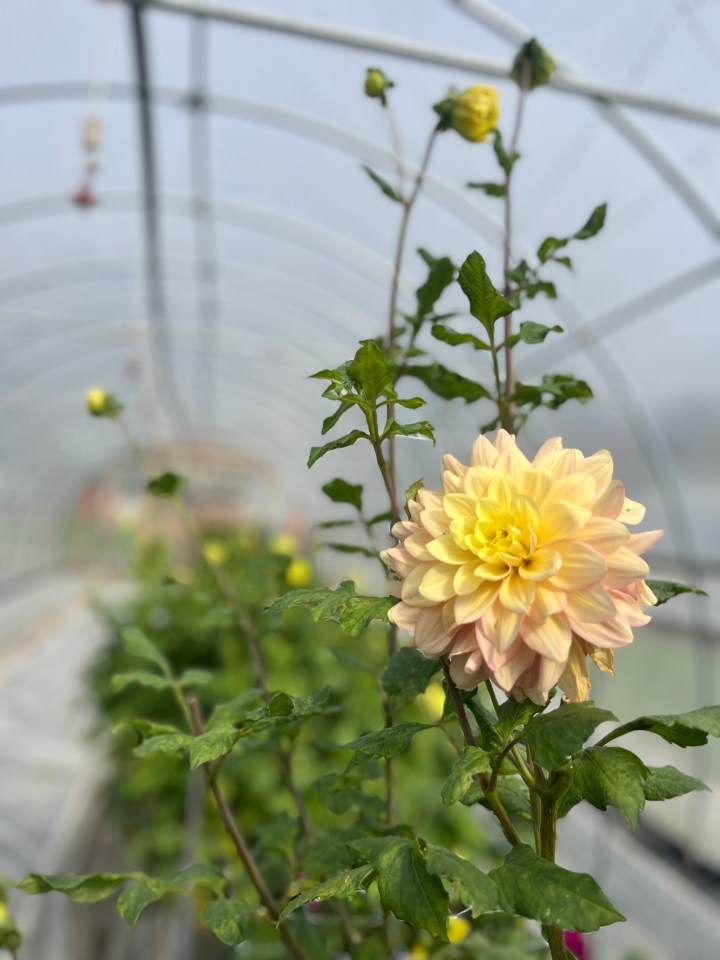
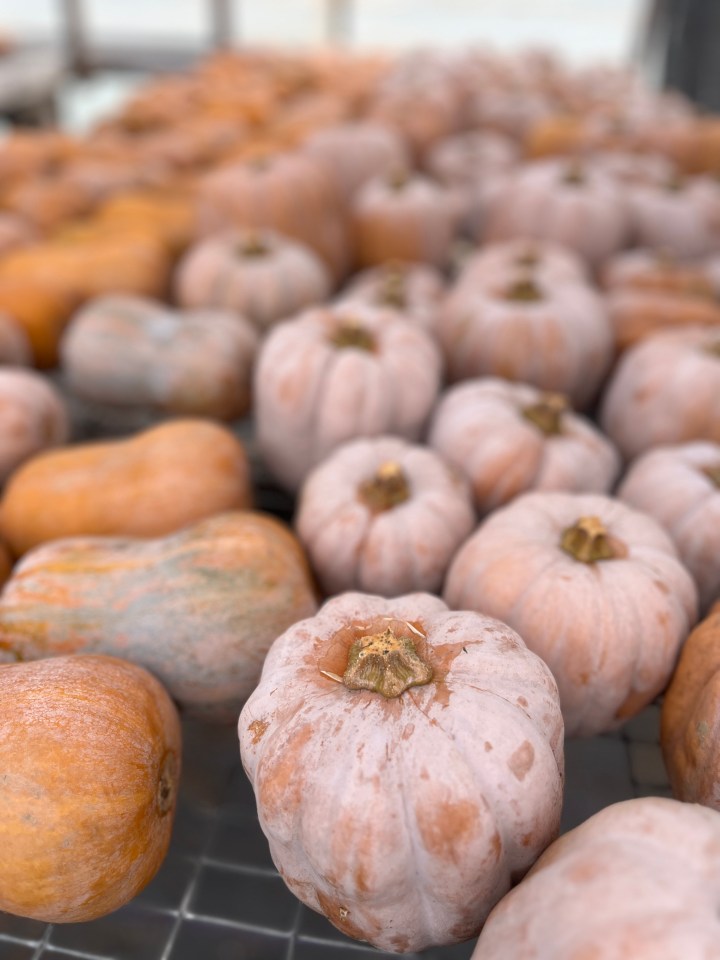
I see Shelburne Farms giving people confidence to start their own farm. I see people taking inspiration from the food and the animals themselves.
- Arizona
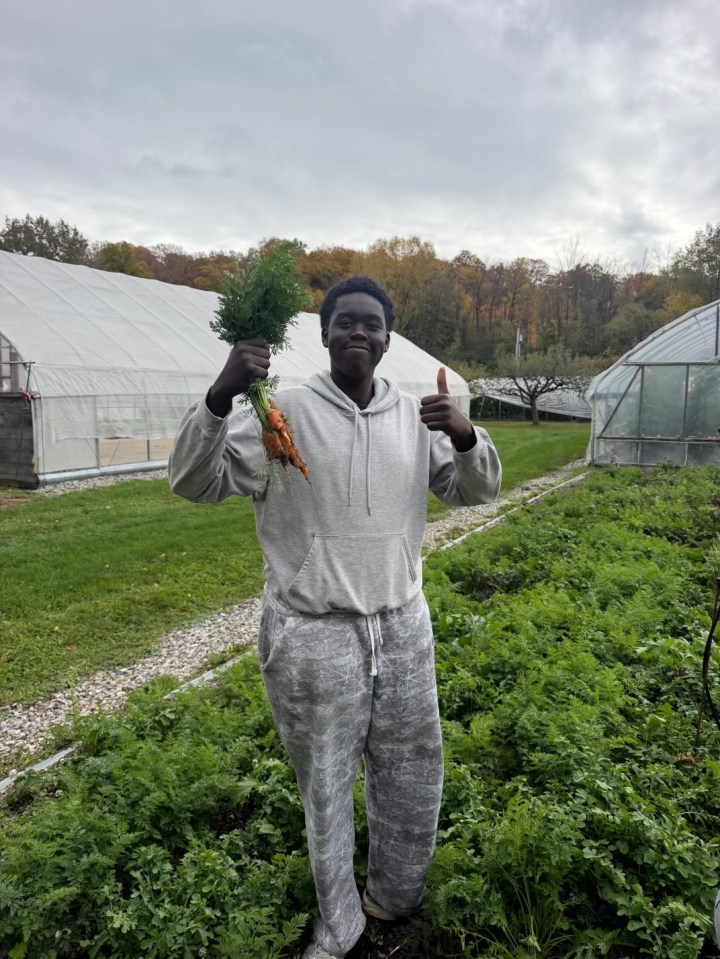
I learned that around 21,000 pounds of cheese is made per year from Shelburne farms. I learned that they have fertilizer pits where they spread it out across the land. They also grow all kinds of vegetables.
- Guthrie
I think the land is a teacher because you can learn from it. Either through experience or from the legacy of your ancestors. I think today the land has taught me that humans are not in control of it but are still responsible for it as is every animal.
- Enoch
Land was there before humans; it gave us water and food to eat, and a place to live. The land has everything we need to survive, we can also learn from it.
- Mach