I’ve always felt like a wanderer; that we have so many places we could explore and learn about. But I think you can feel all kinds of gravity, wherever you are, every day in different ways. And often, through human contact, you find your best gravity — a real conversation with someone, just a simple, simple exchange of words, can give you a sense of gravity. I’ve always loved the definition for contemplation: “a long, loving look.” And when you take a long, loving look anywhere, you feel more bonded with whatever you’ve looked at. You feel as if you recognize it, you see it, maybe it sees you back, and you’re participating in a world where it exists.
- Naomi Shihab Nye, Poet
How do you come to know a place? How does that place come to know you? Throughout a BCL semester, students do a deep dive into Burlington, a place that many have called home for their entire lives, and others have known for just a few years. We study the city: its people, its natural beauty, its challenges, its past, and its present. We envision what the next decades of Burlington might look like, and consult with community partners who are helping to create that future. Along the way, students also explore their relationship to place, and consider how the city has been the setting for so many moments of their lives, both significant and mundane.
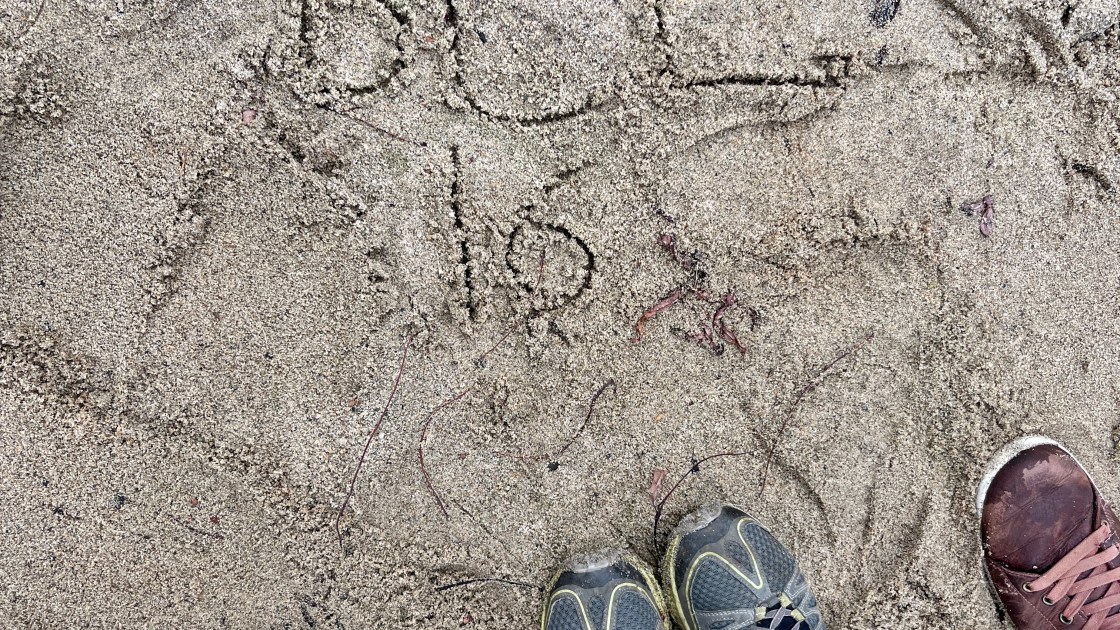
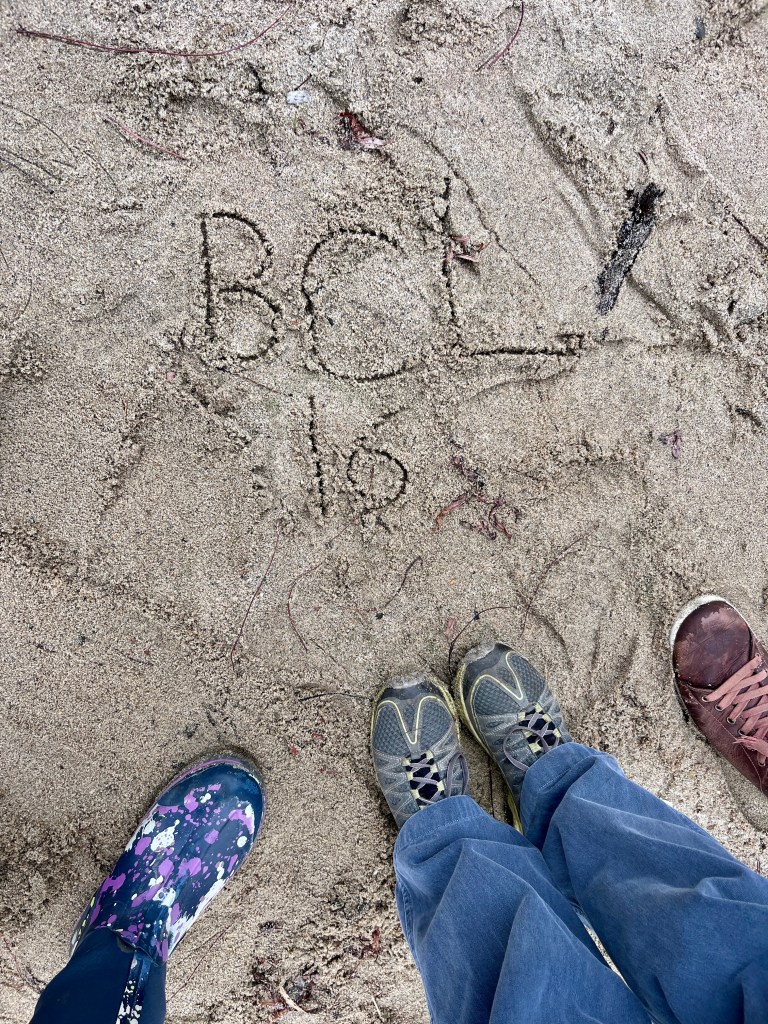
This semester, students earning Honors in BCL16 wrote about the places in the city that have provided them with joy, calm, growth, inspiration, and possibility. Many of these are “third spaces,” places apart from home or school where they can be fully themselves and connect with others. Some of these places are recently discovered gems, others are ones that they began visiting long before they can remember. Each of the following essays is “a long, loving look” at places that will remain a part of them, whether they stay in Burlington, or move away after graduation. Our city is better because of how freely these young people share the singular gifts of their talents, insights, and perspectives. As these places have shaped our students, our students have also shaped them.
Seventeen Years: A Timeline of Change – Frances Neary
Eight months old. I am being pushed in a stroller. I don’t remember the moment, but I’ve seen the photos. My sister leans over, making faces at me while my parents laugh as we roll down the twisting path. Oak and pine trees stretch high above us and somewhere nearby the water glitters in the distance.
Three years old. I’m frolicking through a wide grass field while purple shirts run by me. It’s Thursday Night Kickball. My dad and his team – a group of his close friends, many with kids my age – scatter across the field. Someone slides into home base while another laughs with a drink in hand and a toddler balanced on their hip. I chase after the red rubber ball that’s almost as big as me while the whiff of barbecue drifts through the air and the hot August sun begins to set.
Five years old. It’s the middle of winter and the grey sky stretches endlessly over Lake Champlain. My best friend and I stand bundled in layers beside our moms. The cold air bites at my nose as we carefully step out onto the frozen lake. The ice creaks softly beneath our boots. Everything feels quiet and huge, like we are walking somewhere we are not supposed to be.
Seven years old. Spring break. My cousins and I race between the playground, the bike path, and the rocky shoreline. I climb up the playground and begin my ascent on the parallel bar slide, its yellow paint chipped from years of kids climbing before me. As I push myself forward, my hands slip. Suddenly, I’m falling face first in the wood chips below. I taste dirt and bark as I slam into the ground. The world spins while my mom rushes over to me. Later we’ll learn that I broke my elbow.
Ten years old. My best friend and I wander through the park like little explorers. Some days we chase sunsets along the water, watching the sky turn pink and orange as the sun disappears behind the Adirondacks. Other days we trek through the small wooded trails or sit on the shore, crafting messy mud pies in the sand. Our hands and knees are always covered in dirt.
Twelve years old. The pandemic. Suddenly, this park becomes one of the only places that still feels normal. Or as normal as it can in the middle of a time like this. I bike loops along the path almost every day, watching spring slowly turn into summer, and then fall. People pass by wearing masks, giving each other space as they walk or run. Birthday parties happen six feet apart under pavilions. The world feels strange, ghostly, but here life feels steady.
Fifteen years old. Now I am a teenager, and coming here isn’t quite the same as it used to be. I no longer spend entire afternoons pretending I am a forest fairy running through the woods, and I only catch the occasional sunset. The lake no longer freezes over every year, and my best friend has moved away. Even the structure where I once broke my elbow is being torn down to make room for the new, more accessible playground. The parking lot where I once learned to ride my bike is now where I am practicing for my driver’s test.
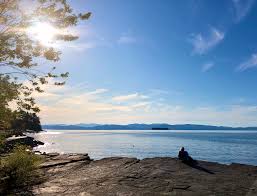
Seventeen years old. When I stop and look around, I realize this place hasn’t really changed. The lake still stretches endlessly toward the mountains. The wind still rushes through the trees. Kids are still running through the fields where I once chased the giant red kickball. Oakledge Park holds pieces of every version of myself. Even if I don’t come here the way I used to, part of my childhood will always live between the shorelines, the trails, and the fields beside the lake.
Vivid Coffee Roasters – Welcome Kaplan-Block
It is January 18, 2026, my birthday. After having cake, I tear open a little black envelope that my mom has gifted me. The envelope contains a $75 gift card to my favorite cafe in Burlington, Vivid. I don’t know how many teenagers would be excited about getting a simple gift card to a cafe for their birthday, but I am thrilled that I don’t need to drain my pocket on arguably overpriced coffee and chocolate croissants for the next few weeks.
I remember the first time I went to the coffee shop with my composition class during the first semester of junior year. As a treat, our teacher let us finish writing our essays there, where he bought everyone a hot drink. I noticed a vibrant communal space that was memorable for me from then on.
A few weeks later, on a half-day, I leave school and walk towards Church Street, thinking that I am drowning in homework and need to find someplace to do it. I don’t want to go home because, based on some pattern recognition, home is not a place where I can be productive. Being home makes me want to sleep or watch TV. I then decide to do something I have never really tried before: go to a coffee shop and do my homework there.
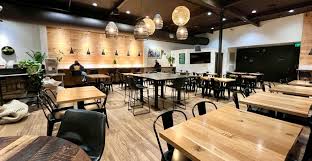
The cafe is next to the popular Ben & Jerry’s. When I walk through the door I am hit by the pleasantly strong wave of heat and the smell of coffee and sweet cinnamon. There is a front area which has two-person tables, a high-top table by the window, two large brown leather chairs, and a sofa. I order a hot chai and a chocolate croissant and walk over to the back area. The back of the cafe is much larger and has rows of 4-person tables and stands alongside the walls where people are on their computers, working or chatting with friends. I find my own spot at one of the available tables in the far right corner of the room. I set my backpack down in the chair next to me and pull out my school work.
I look around for a minute and observe the room. It is filled with people of different ages, from old to young, socializing or working. Friends are seated at tables, drinking coffee and talking. The people working have their headphones in and are focused intensely on their work. Some are on calls, some are typing on their computers, and others are reading. I eventually settle down, put my headphones on, and start doing my own homework.
I am not sure if it is because I can see other people being laser-focused, or if it is the croissant, which has a delicious chocolate and buttery taste with a crispy exterior, but I find myself being surprisingly productive. I manage to get through a lot of my homework and feel good afterwards.
Ever since, I have been going to Vivid after school or on the weekends to get my school work done, as well as to just enjoy people watching. I have come to appreciate the coffee shop for more than just the coffee. In truth, the gift card was a gift of experiencing an environment where I can be productive and witness the community gather and interact with one another. Third spaces, like Vivid, help communities to thrive because they promote connection.
A Piece of Sunlight – Najib Ahmed
Pomeroy Park in Burlington is more than a park to me; it is where I go when life feels heavy. In the summer I run there and play basketball just to clear my head. The sound of my shoes hitting the ground and the basketball bouncing on the pavement starts to quiet everything in my mind.
Every drop of sweat feels like a worry leaving my body. It falls to the ground like rain washing dust off the earth. The harder I run the lighter I feel. It reminds me of the idea in the Qur’an that with hardship comes ease. When I keep moving it feels like my problems slowly get smaller.
On the basketball court the ball hitting the pavement sounds like a heartbeat. Every shot feels like letting something go. Sometimes I miss, but that’s just life. Like the line from Rocky,”it aint about how hard you hit, it’s about how hard you can get hit and keep moving forward.” Missing a shot just means you grab the rebound and try again.
On Fridays they give out free produce and it makes the park feel alive. After running, eating yellow watermelon or pineapple feels like eating a piece of sunlight. The fruit is sweet and cold and it cools me down after being in the heat.
Summer itself feels like seeing an old friend you haven’t seen in awhile. The kind of friend who only comes to visit for a little while but you know they will always come back again. When the warm air and sunlight returns it feels familiar, like something you missed but never forgot.
After the long Vermont winter, the sun hitting my skin feels different. It feels warm, like the world is giving me a hug. In those moments Pomeroy Park doesn’t just feel like a park, it feels like a reminder that even after cold seasons warmth always comes back.
Beach House – Hannah Harris
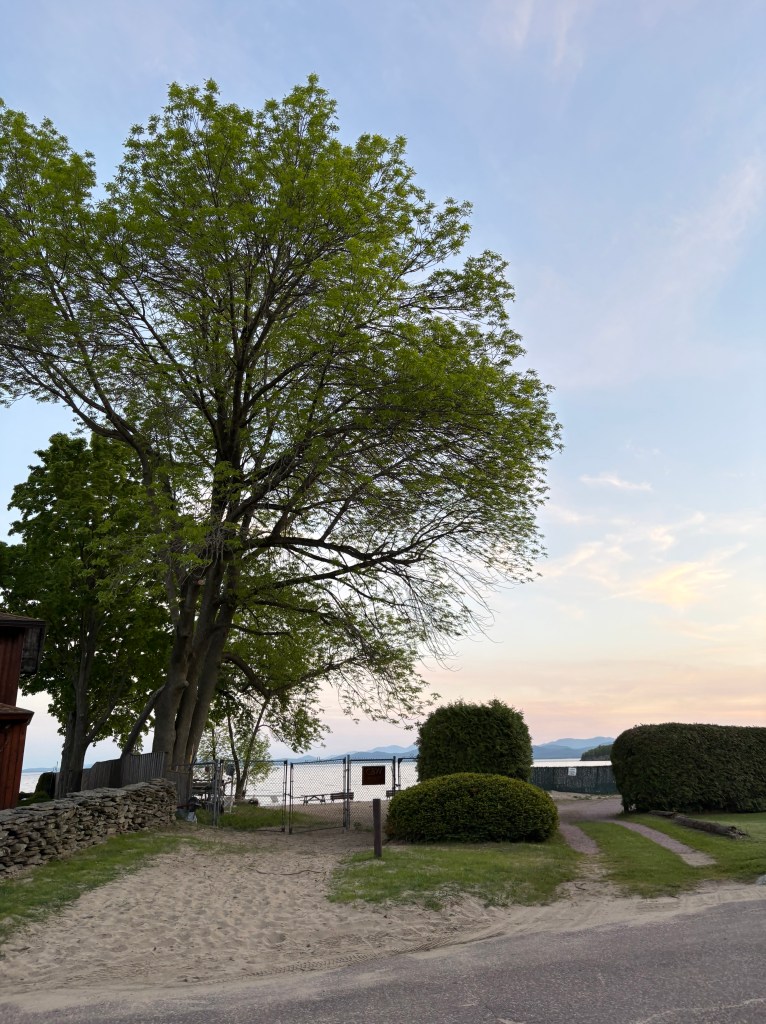
Crescent Beach Drive isn’t just a street, it’s the street that leads to my world. Just a thirty second walk from my front door lies the Crescent Beach Association house. It’s a grey and white building and doesn’t have much inside besides some beach chairs and a tiny kitchen. But it holds the best memories. The house was built in the 70’s by a bunch of people who lived in the neighborhood. They built it as a place to grill out and have beach parties. It was built with care and love. Ever since I can remember I’ve been at the beach house. Summer there means grilling out, swimming, and my mom lathering me in sunscreen until my face is a pale white. It’s my favorite place and favorite season. Every June as the air begins to shift, the neighborhood feels like it’s waking up. The beach house isn’t just a nice place to swim or hang out — it’s home. It’s close enough where you can hear the waves of Lake Champlain from inside. One of the most striking features is the massive garage door. When it’s rolled up it frames the Adirondack Mountains like a painting, a blue line where the sky meets the earth. In the heat of July, the lake is full of activity: brightly colored paddleboards, kids tubing on boats, and the gentle chaos of the community in its element.
But the true magic happens on the very last day of school. That day, the beach house becomes the gateway to freedom. We host our annual end of the school year party, a tradition that transitions everyone from the stresses of classroom life to the relaxing vibes of summer. As the day goes on the beach is packed tight with everyone I know. We share food and stories of the school year and hopes for the coming summer. Even at sunset the beach is still alive. My friends and I always run straight into the lake without thinking, the water always colder than we expect. The first jump sends a shock through my body that makes everyone scream and laugh at the same time. Soon there are splashes everywhere, everyone jumping in behind me. As the day goes on, stories from the school year come spilling out, tests we barely survived, funny moments in class, and teachers we always complain about. Somehow everything feels lighter there. In those moments surrounded by the people I love, I realize the beach house isn’t just a place to swim; it’s an anchor that keeps me grounded.
“Yes, and…” – Adele deRosset
I arrive with my pink backpack and my older sister. I’m so nervous, but at least I have her. My mom and dad wave goodbye. I look back at the building in front of me — it’s ginormous, it must be 50 ft tall with red brick walls and marble stairs in the front. I push hard on the heavy first floor door labeled “Robin’s Nest.” I walk into the room, and it’s full of toys. I think I’m going to have fun here.
On the first day, I play with my sister, make lots of friends, fall asleep at nap time, eat my lunch, and have the best time. I get to do my hair in pigtails and wear a dress with little pink butterflies that my grandma made me. Robin’s Nest, my preschool, is the place where I began to understand “yes, and.”
“Yes, and” was something that my mom taught me from birth. Whenever my sister and I played, there was one rule: always say “yes, and.” We weren’t allowed to shut down each other’s ideas; instead, we had to build on them. And even though we often contradicted each other with our “yes ands,” we didn’t say no, because when you say no, the game ends and the fun stops. Little did I know this was the number one rule of improv. I was raised to be a theater kid. My sister and I built worlds with “yes, and” — we played bird boarding school, pirates, princesses, and more. From A to Z, alligator western to zoologist, my sister’s and my imaginations ran rampant. “Yes, and” made our stories more interesting, and allowed us to work together. Preschool helped — more friends to play with — and we taught them “yes, and” too. When they finally learned not to shut down each other’s ideas, the games became even more fun.
As I grew up, the Old North End Community Center, which houses Robin’s Nest, became less scary and more familiar, and “yes, and” became even more important. My first play at Very Merry Theater, also housed in the Community Center through my elementary school, was Peter Pan. I was a fairy mermaid princess, and I had the time of my life. The best part was nobody told me no — everyone agreed on the world we were building together and said yes. I wasn’t told, “No, you can’t be a fairy princess mermaid.” I was told, “What’s your name as a fairy princess mermaid? What color is your tail?” I got to dance, wear sparkly costumes, and watch my sister play Wendy. Saying “yes, and” with new people was so much fun, and I made a great group of friends. We walked from our school to the Very Merry Theater before rehearsals and clambered up the stone stairs, using the sides as slides. The red brick building became even more important — yes, it was my preschool, and it was where I did theater for the first time.
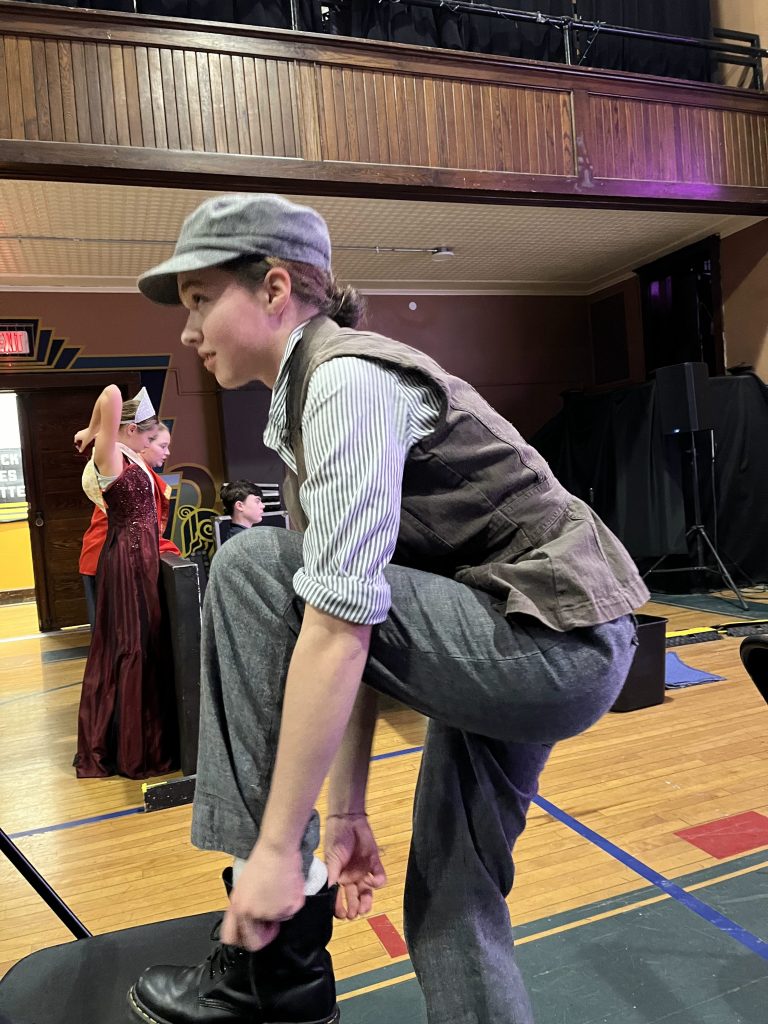
From preschool to 5th grade, I spent a lot of time in the ONE Community Center. I grew to love the old hardwood floors and the radiators you could jump up on. The stage became a big part of my life. I eventually ended up playing lead roles like the Witch in Big Fish, and Dimitri in Anastasia. I grew to love theater as much as I loved preschool. I got to build those worlds with other people. I had lots of playmates, and everyone said “yes and”.
But this year, a new use came of this Community Center. I began to spend even more time there than I ever had before. I go to school there, leave, then come back for play rehearsals. Spending ten hours in this building regularly has helped me to get to know it better and to grow to love it even more. I began to notice the non-profit organizations, the community dinners, and the murals on the walls. I realized how vibrant this community center is and just how many people this one building helps. It has watched me grow up.
“Yes, and” has also changed for me this semester. Originally, it was just how I played with my sister, then how I acted with my friends, and now how I show up in the community. Burlington City & Lake has taught me that an inclusive community where everybody is brought in is essential to a thriving community, and language like “yes and” helps us bring others in — if no one is shut down, no one is left out. BCL has taught me to think about people and community in new ways. Yes, someone is homeless and they’re part of the Burlington community. Yes, someone may not have a green card, and they still deserve to be treated as a human. The ONE Community Center has grown to mean so much to me, and “yes, and” has become a motto in my life — both are familiar, like a hug when walking in.

